It seemed like it was all happening in our garden last year. Here are a few of the highlights.
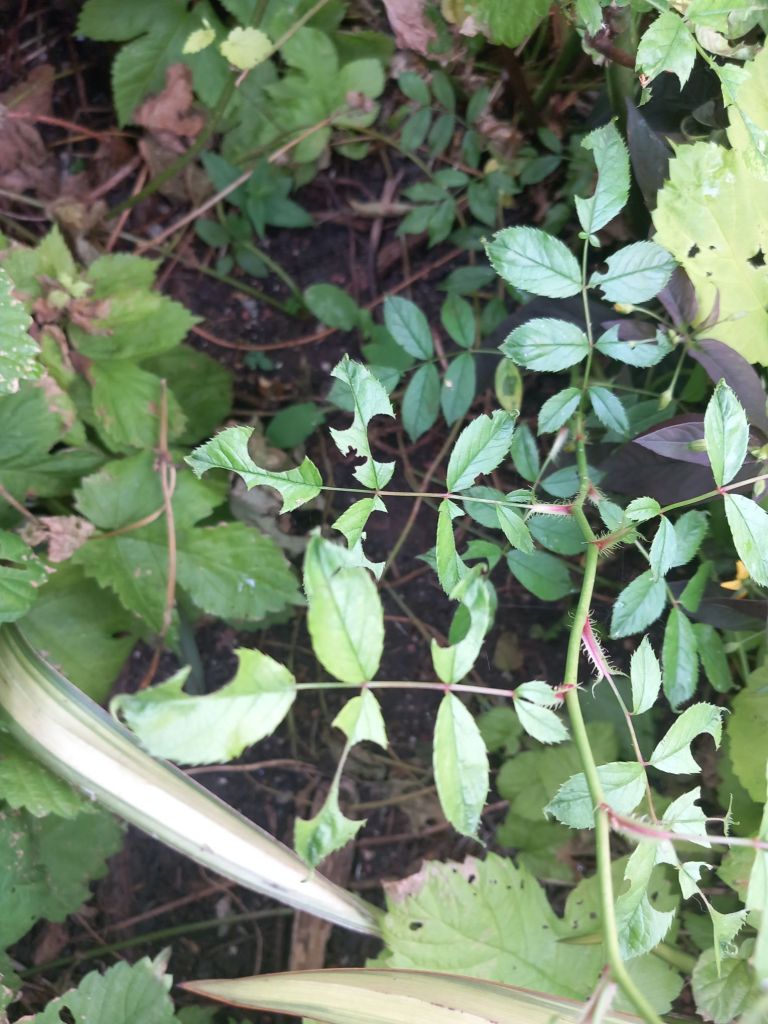
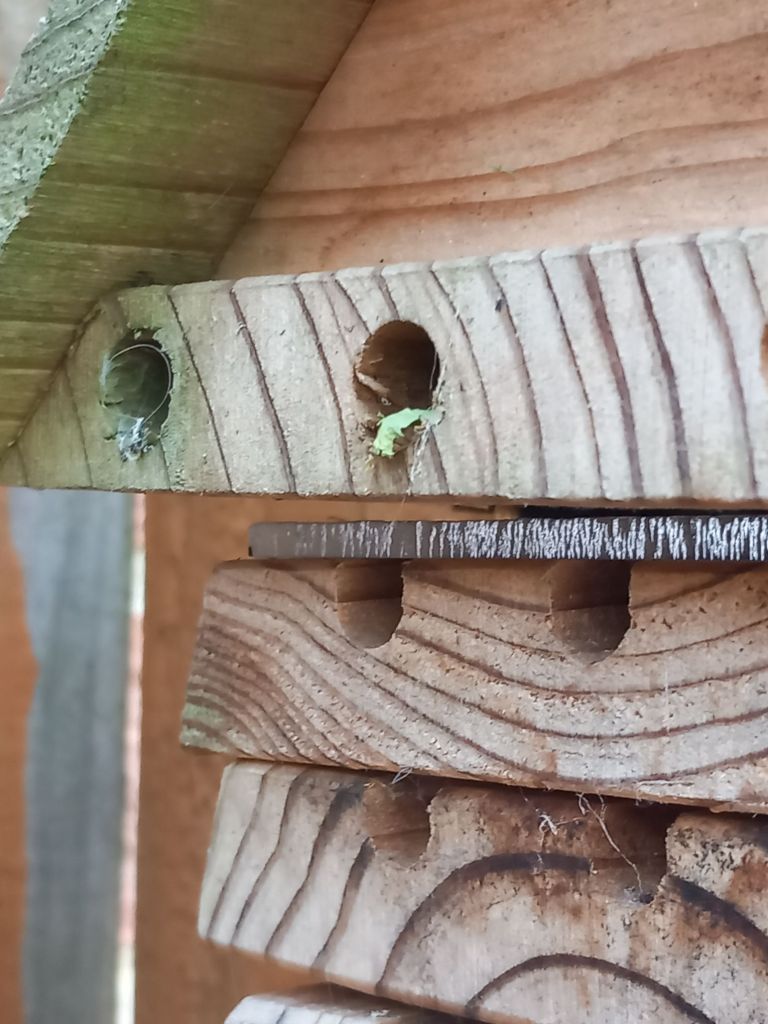
Probably the most exciting event was seeing a leaf cutter bee using the bee hotel. I was, quite honestly, beside myself with excitement. This happened 3 weeks after I’d moved the bee hotel from one side of the fence post to another – crucially, the south-facing side. I saw a bee make several trips across the garden to cut discs from the rose leaves, before taking them to the tubes. Watching this was fascinating. Despite careful observation, I couldn’t tell how many bees were using the hotel, but who cares?! Just wonderful.
Rose leaves showing semi circular holesBee hotel in use
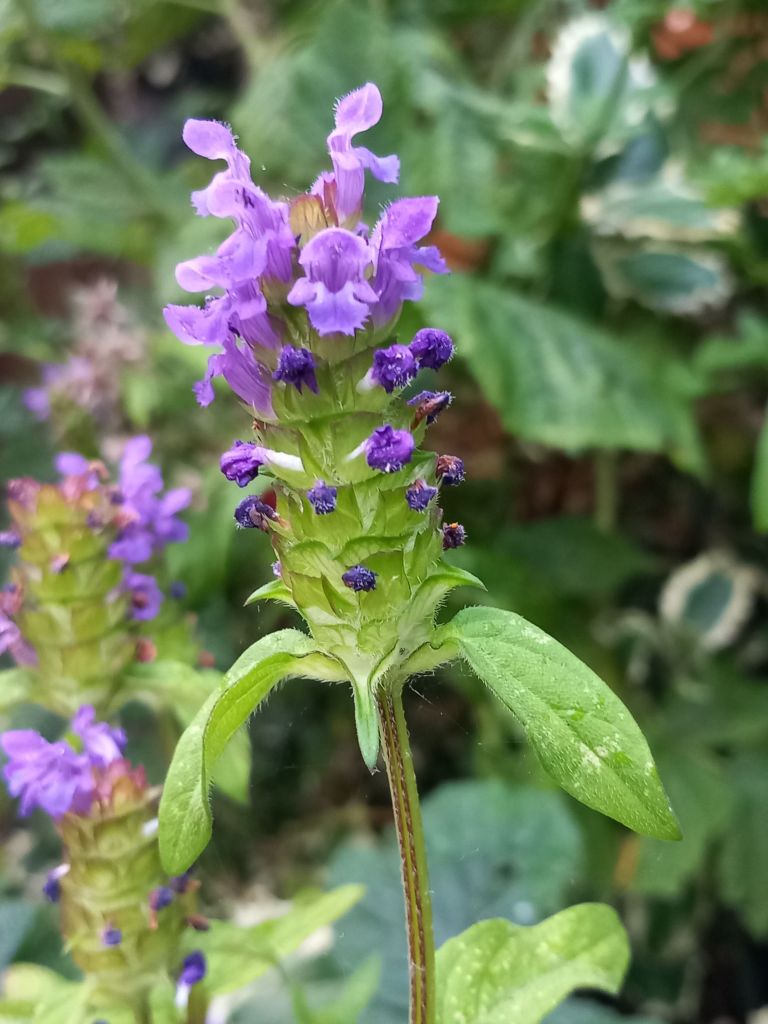
A close second was the proliferation of self-heal, one of my favourite flowers but one that hasn’t done well in the garden before. A plant with panache, don’t you think?
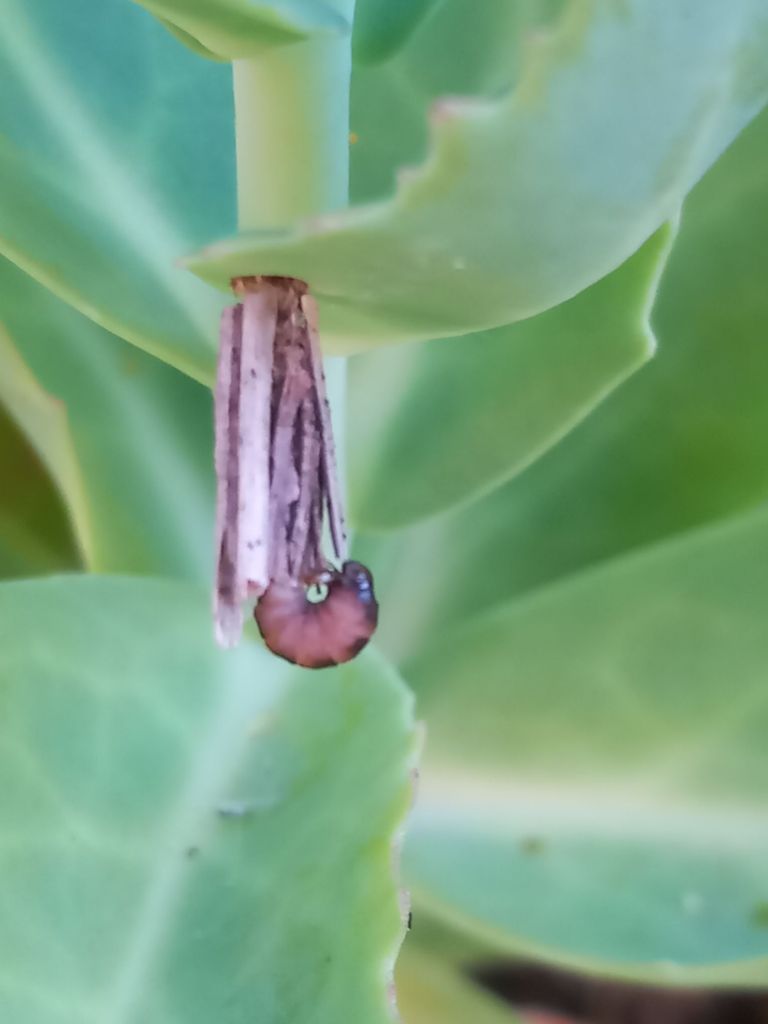
Then there was the bagworm. I’d seen the case of one a week or so before it featured on Springwatch, but had no idea what I was looking at. Once I knew, I went looking for more, and found one at the moment it was emerging!
Bagworm under sedum leaf.
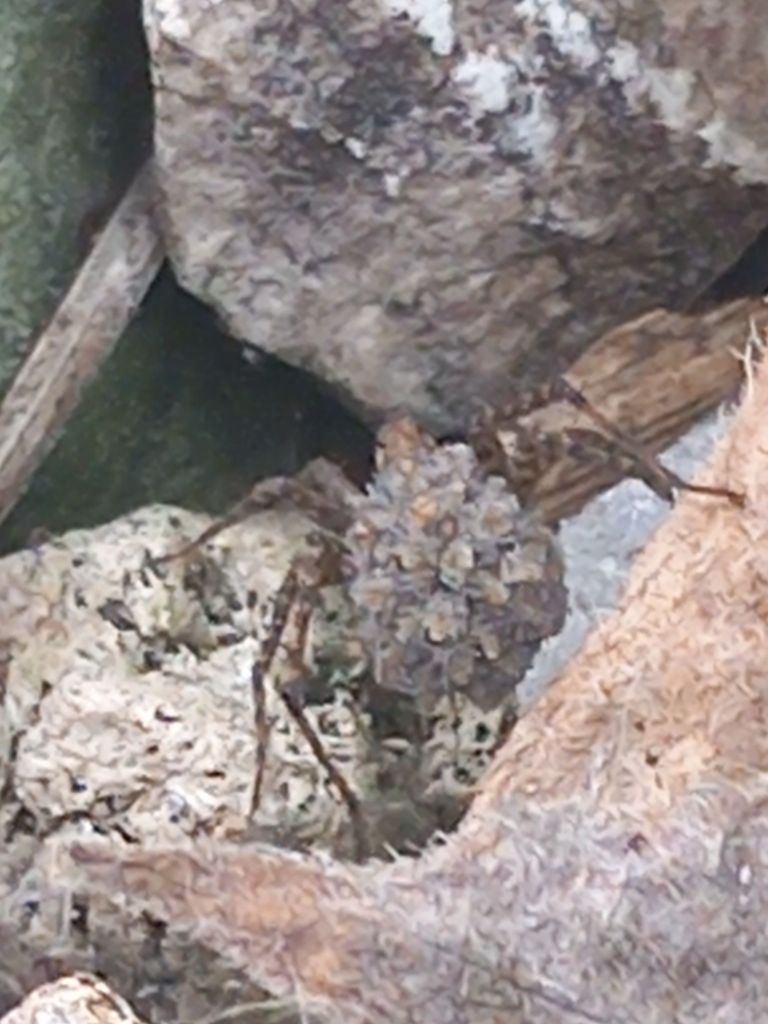
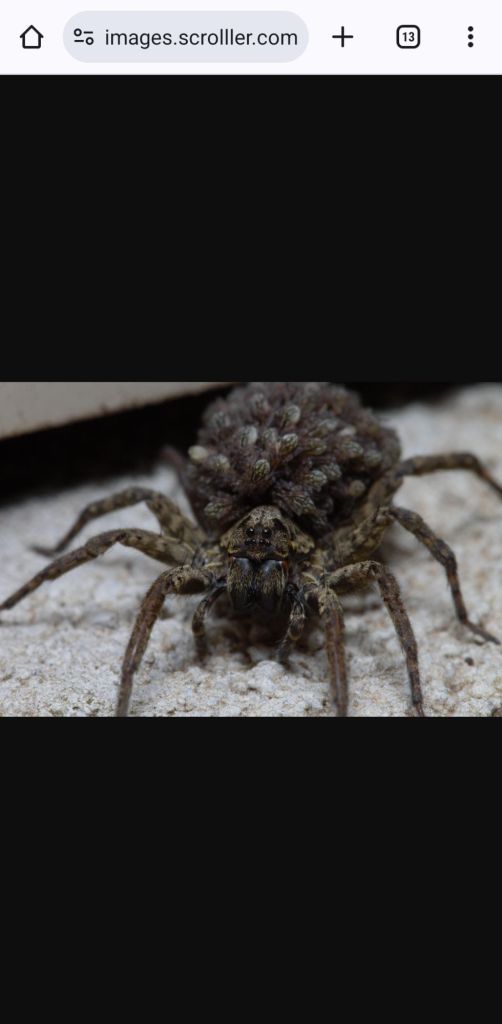
Another thing I saw on Springwatch was a wolf spider carrying her babies on her back. Then hey presto! One scuttled out from the gap in our paving slabs. I have to admit that the look of this makes me shudder for reasons I can’t explain, but it’s a garden wildlife experience I’m glad I had. My photo is blurred, so I’ve added another I found online.
Wolf spider with babies Stock photo
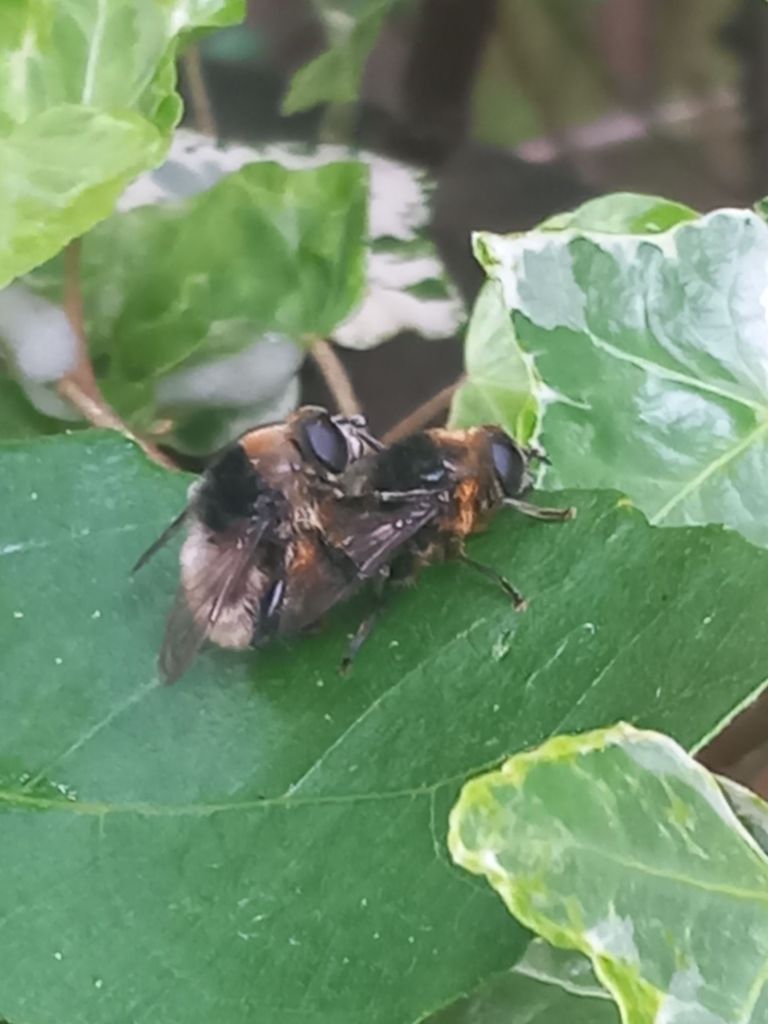
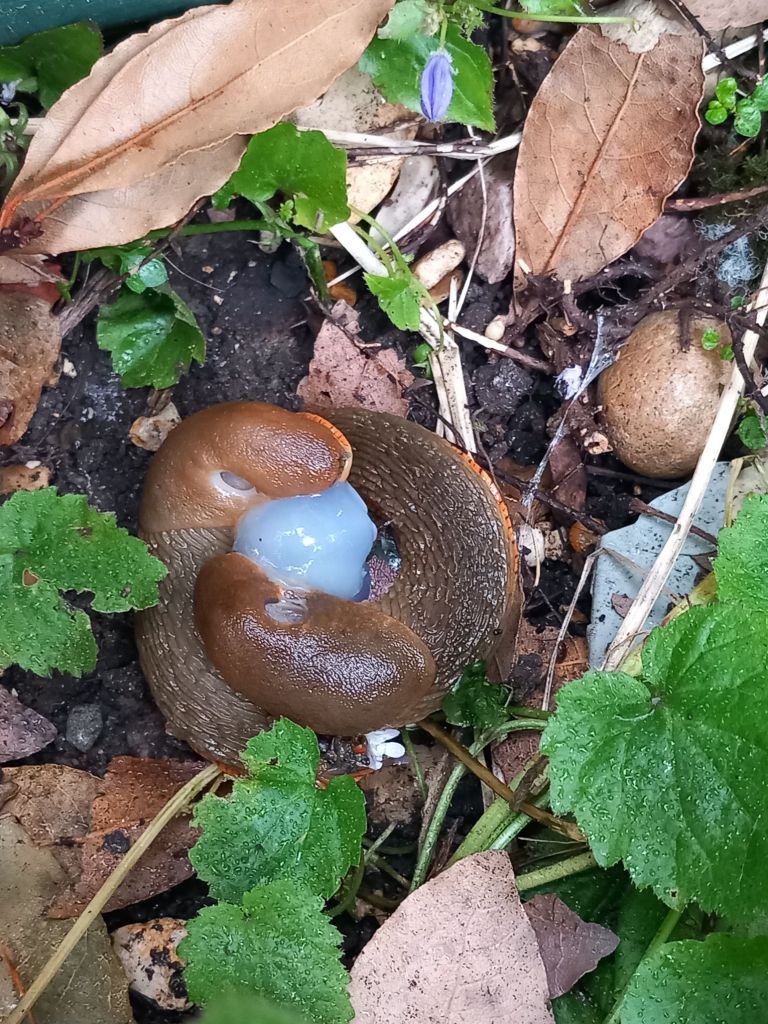
I was also in the right place at the right time to witness some mating activity, like these hoverflies and slugs – though it felt a little intrusive taking photos.
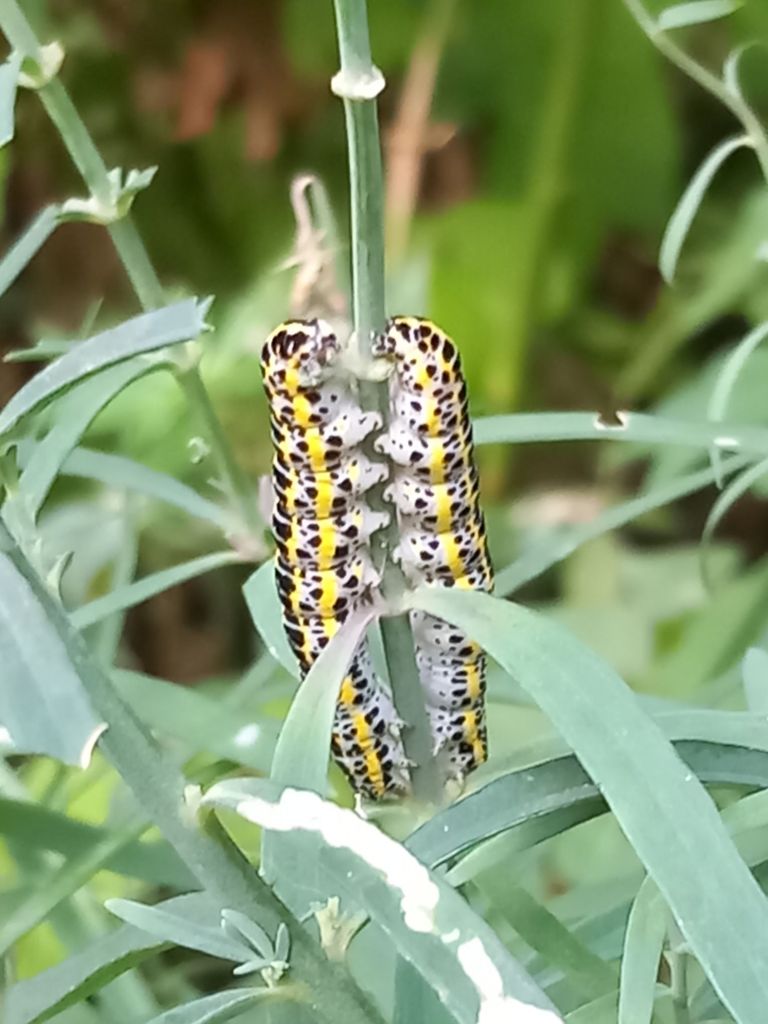
Not sure what was going on with these two brocade moth caterpillars. Maybe a stand-off over who had feeding rights on the purple toadflax?
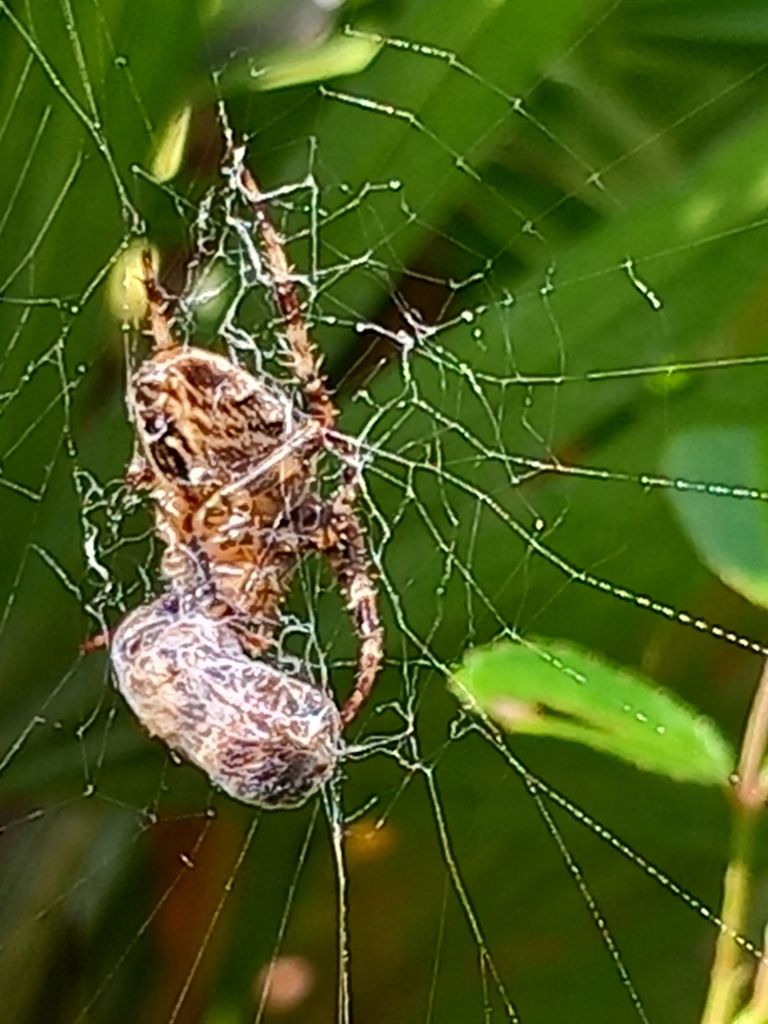
Garden spiders have to eat too…
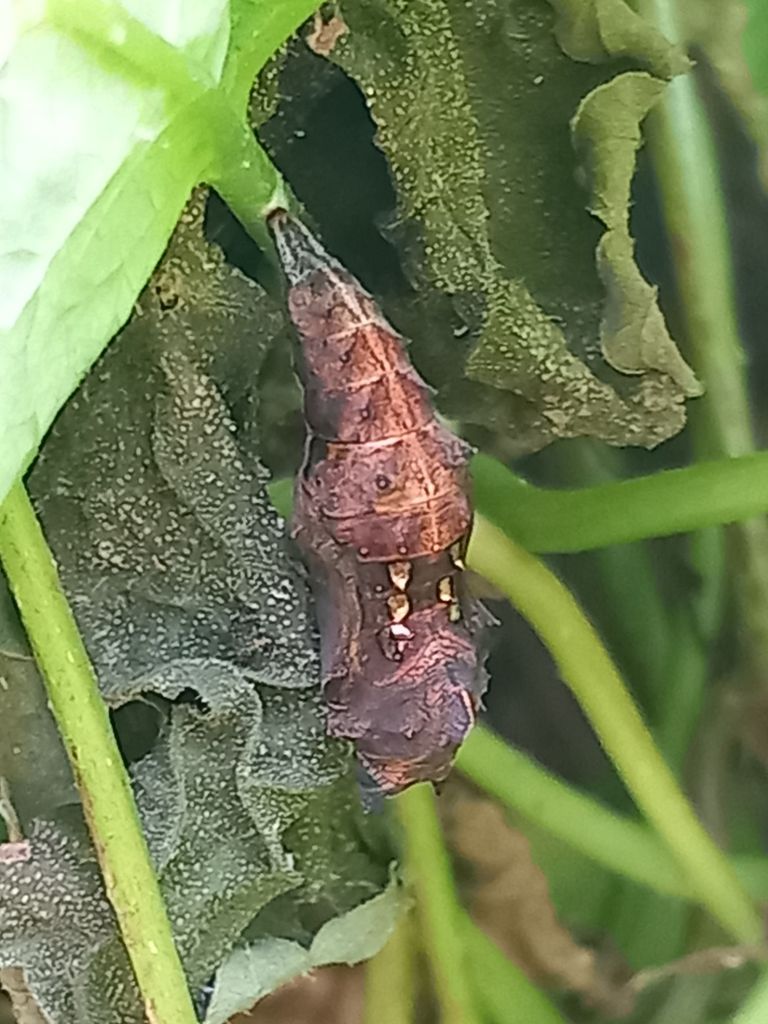
Also in summer, this chrysalis caught my eye. I hoped to see the butterfly emerge, but missed it. Maybe next year?
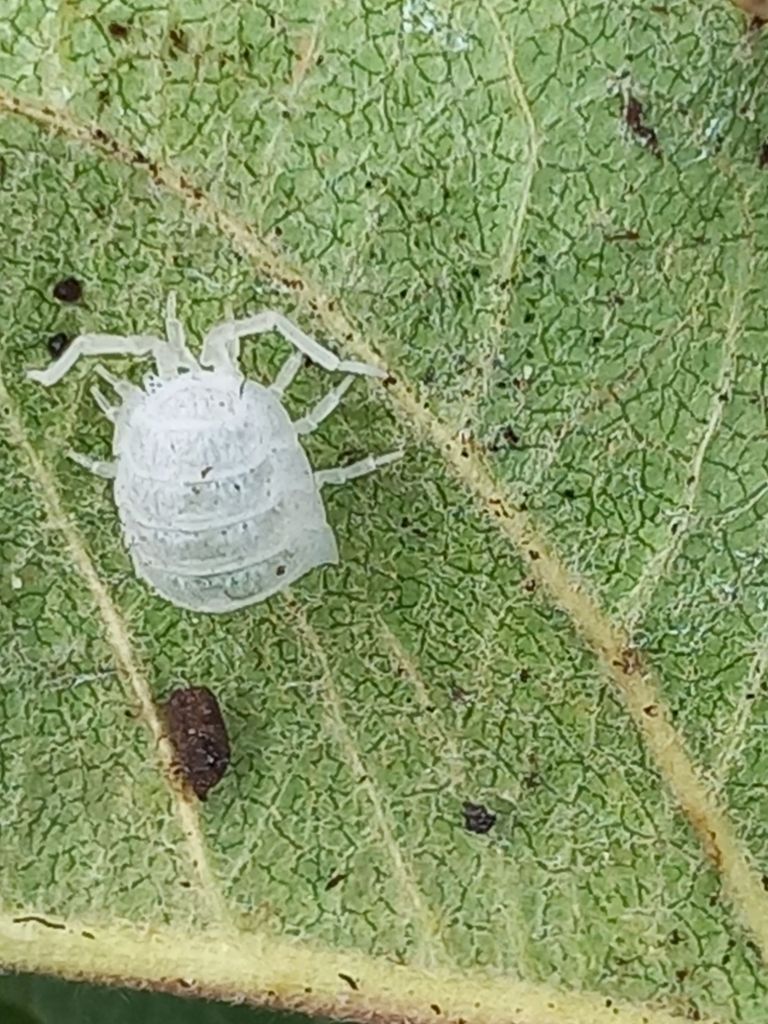
So much activity, and I haven’t even mentioned the birds – the return of Greenfinches after a few months’ absence, Great Tits seen taking wool for their nest, a Starling having a thorough wash after I’d hung the bird bath in a better position. More on birds in my next post, but to end this one, it’s over to one of my favourite critters, the woodlouse. They shed their exoskeleton as they grow, and, for me, finding one is like finding treasure.
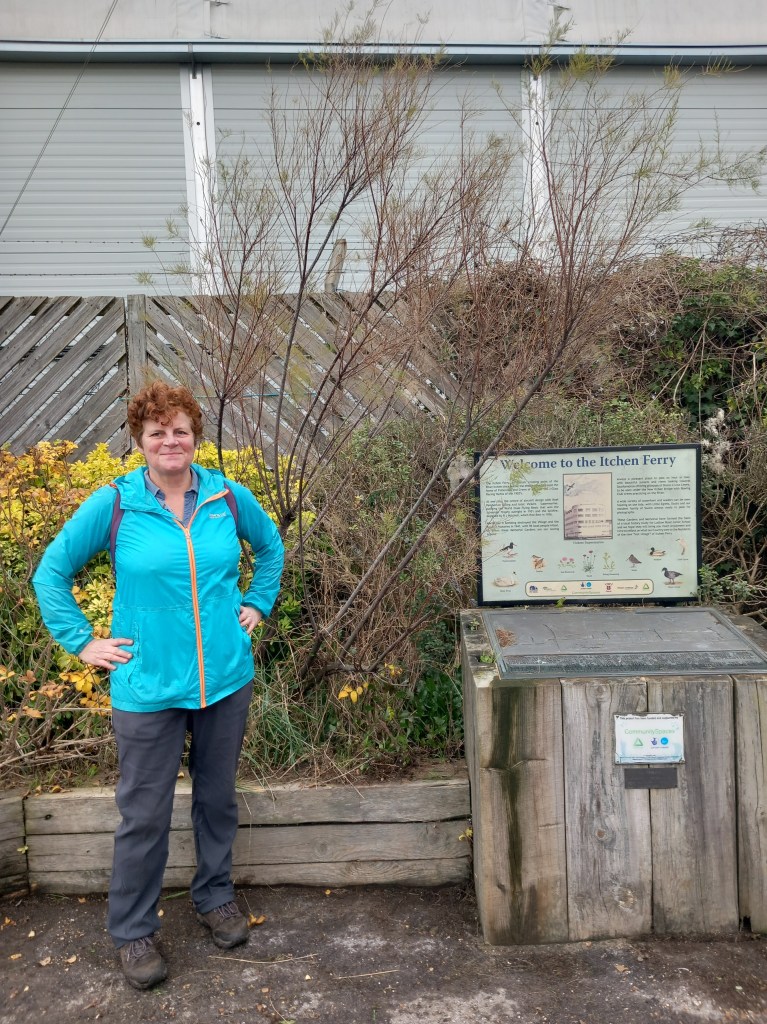
Me next to the Itchen Ferry Memorial Garden after the tidy up.
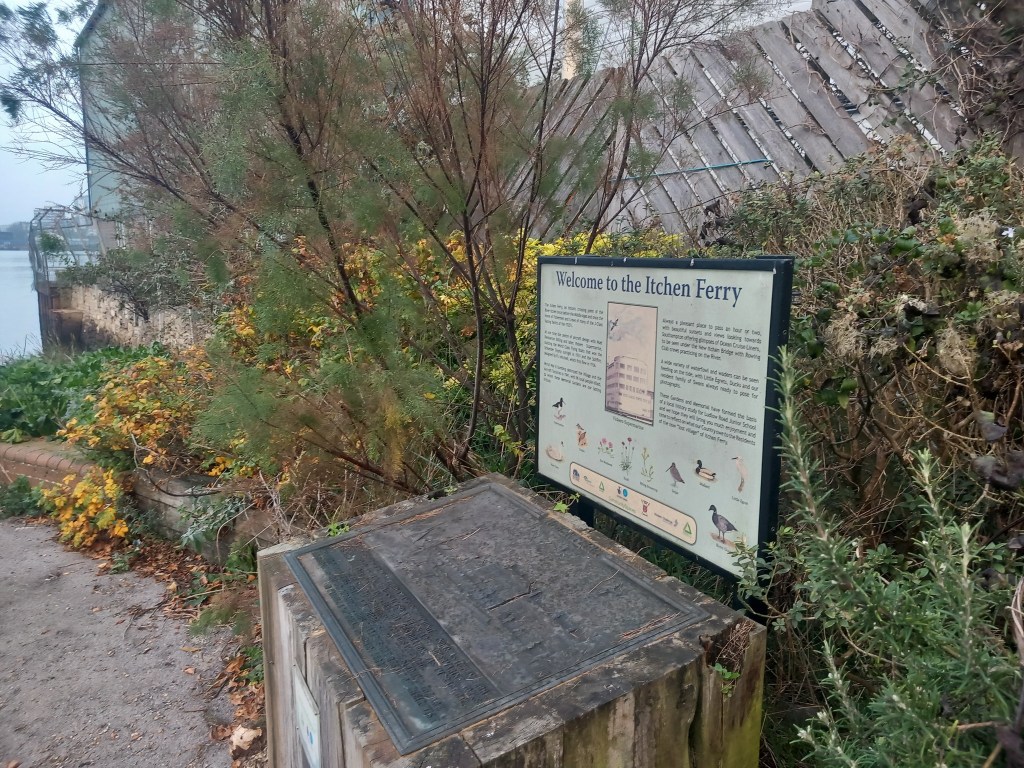
Near where I live, there used to be a village called Itchen Ferry. Most of it was destroyed during World War 2, as it was close to the Supermarine factory where Spitfires were built, and now there’s a memorial with a garden. The memorial plaque states that, in 1985, pupils from class 3B at Ludlow Middle School learned about the area, and wanted there to be a memorial. You can read the full text here.
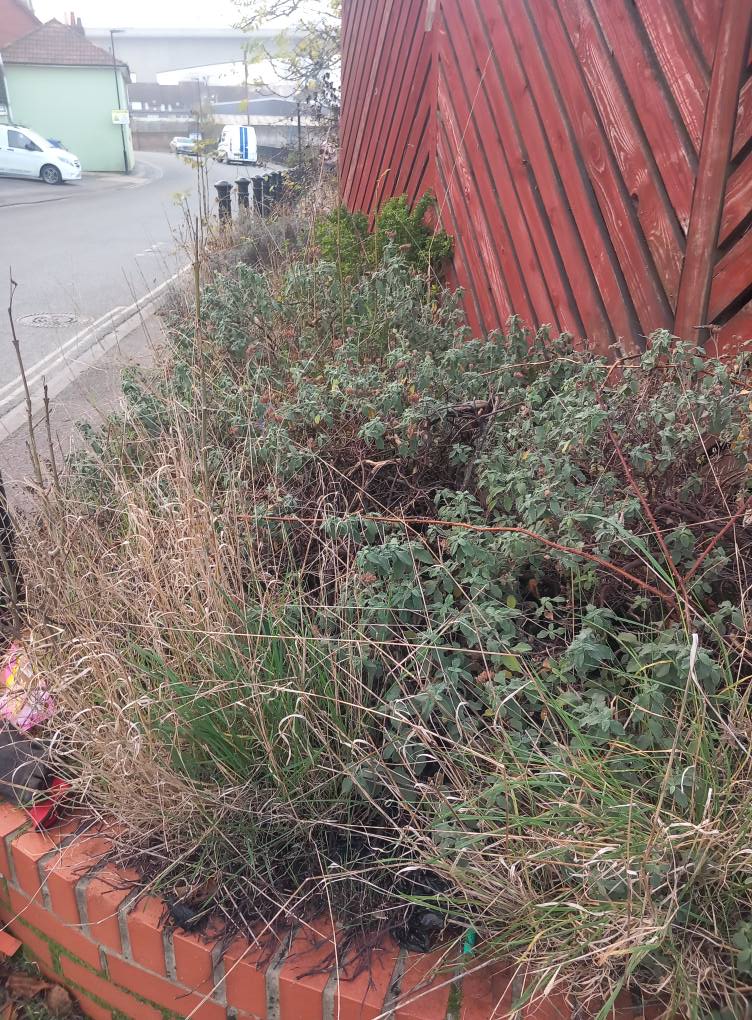
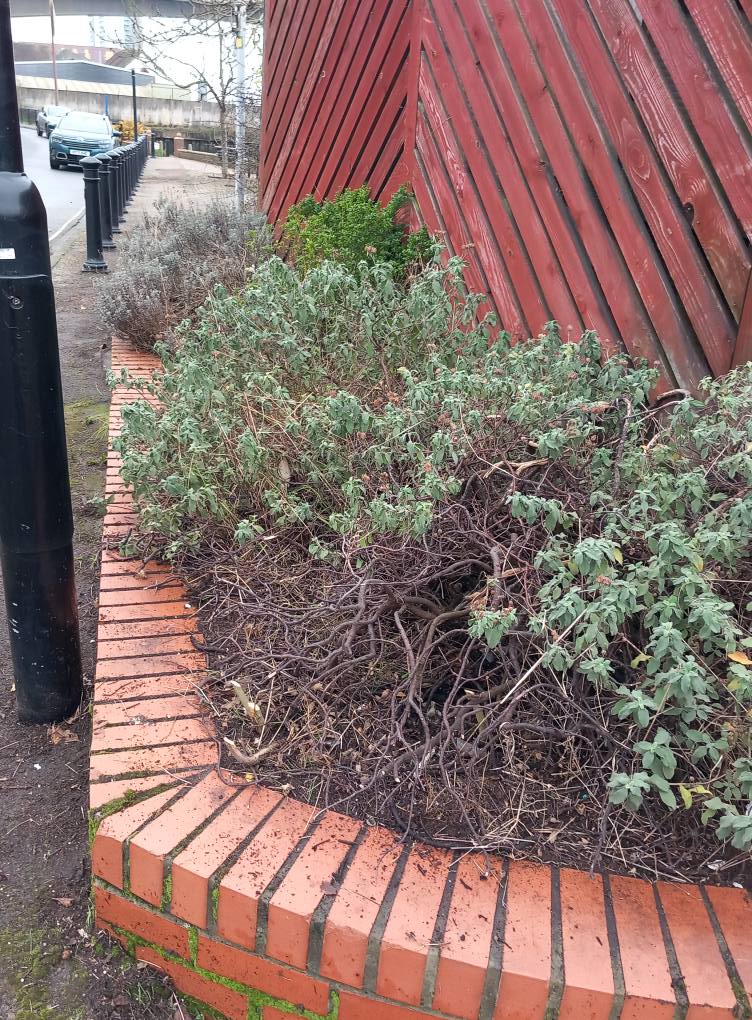
As R.G. King points out in his book Itchen Ferry Village, a 16th century map shows a few houses at a place then called ‘Itchyng’. My aim with this post isn’t to write about the history, though – the book just mentioned is available in the library, and Marie Keats has written an excellent post on the subject, which includes some fascinating photos. My angle is the natural habitat and the space for nature provided by the garden. As I wrote in my blog post from 2021, I’ve done occasional litter picks here with the Woolston Wombles, and regular ones with my partner. I hadn’t paid too much attention to the garden, other than adding a Pollinating Peartree sign. I was told it was looked after by Southampton Amateur Rowing Club, who are based at there, so when I noticed it looked in need of a little attention, I contacted them to organise a shore litter pick and garden tidy up. Below, you can see ‘before and after’ photos.
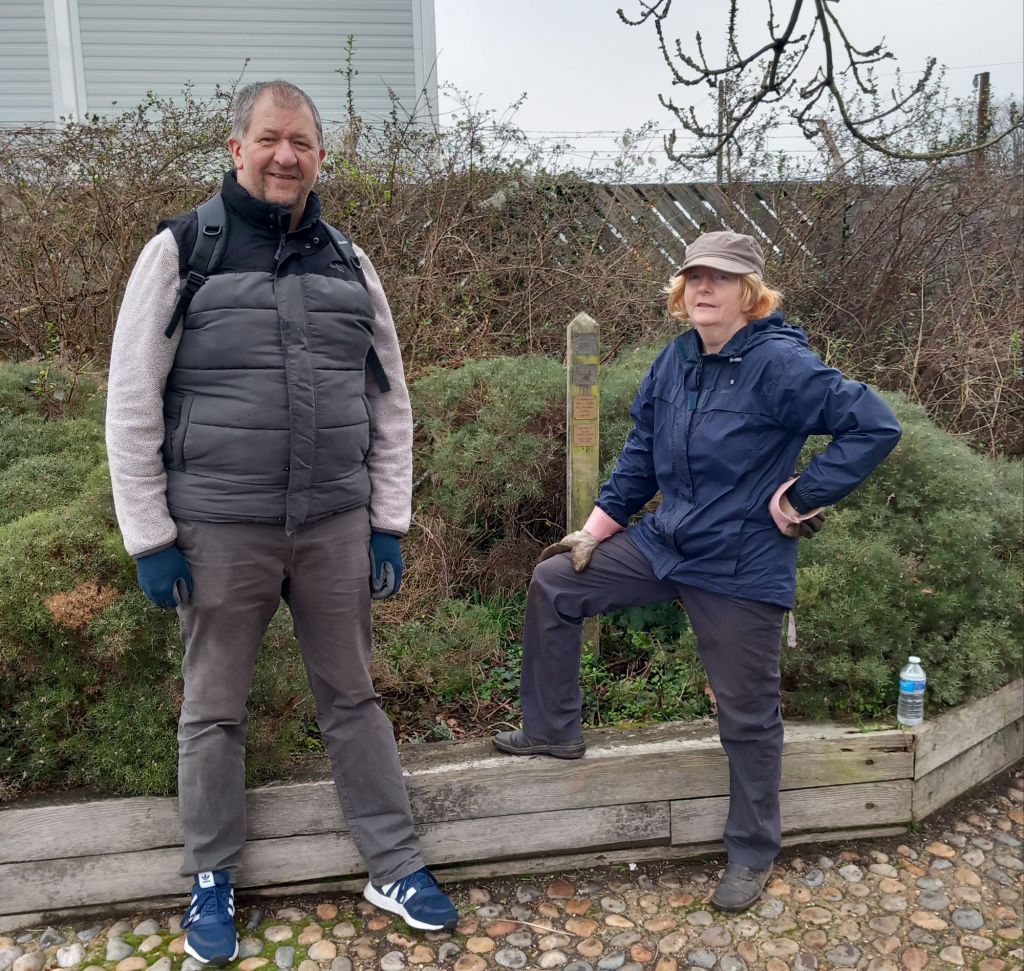
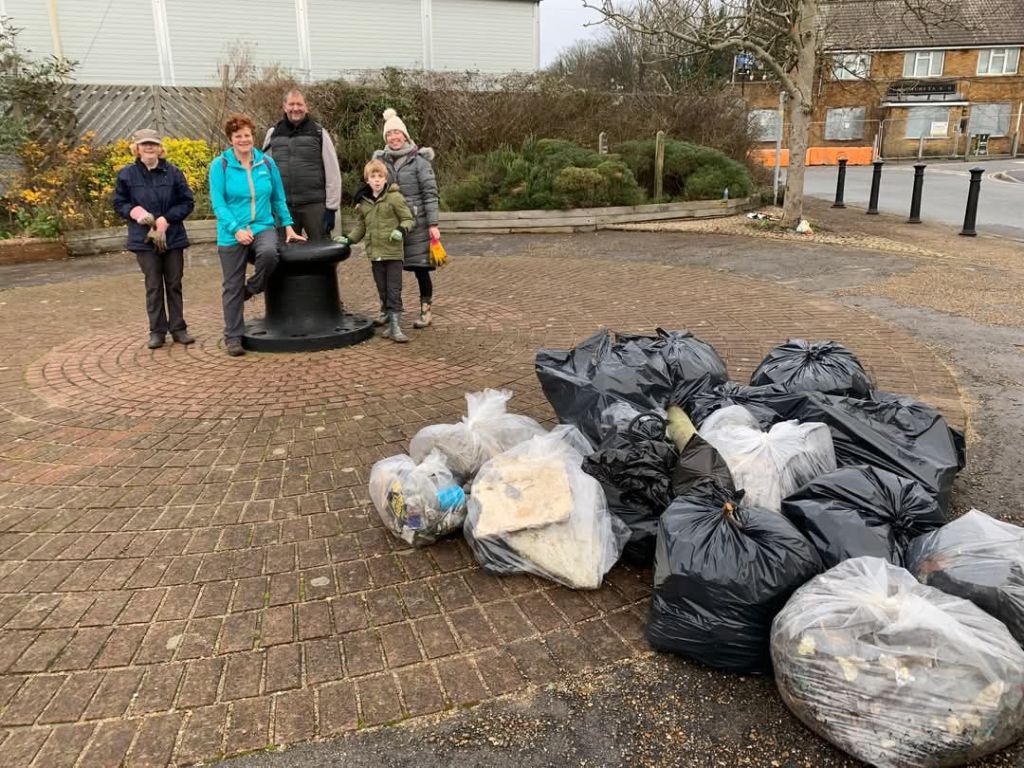
The rowing club do regular litter picks, and John Bailey of the club organised the memorial and raised funds for the garden. But he isn’t sure when it was established – if anyone reading this knows when it was, or has photos, I’d love to hear from you! Ongoing garden maintenance isn’t something the club has taken on. Despite this, around 15 club members were already well underway when I arrived with other volunteers on the day, and had cleared a lot of the scrub that was spilling over the sleeper walls. I was lucky to have my partner Tricia with me, who’s a professional gardener. She was able to guide others about what was growing, how to prune and what to leave. Here she is with Robin, who’d come prepared with tools and long arms, and was a great help at cutting back clematis and pulling out rubbish from the back of the garden, including two footballs, a crowbar and a kit bag.
Below: before and after on one corner, looking towards the Itchen Bridge. You can see some of the dry stems of couch grass, which is well established and may make it hard to establish new plants, though Tricia did put in a few from our garden.
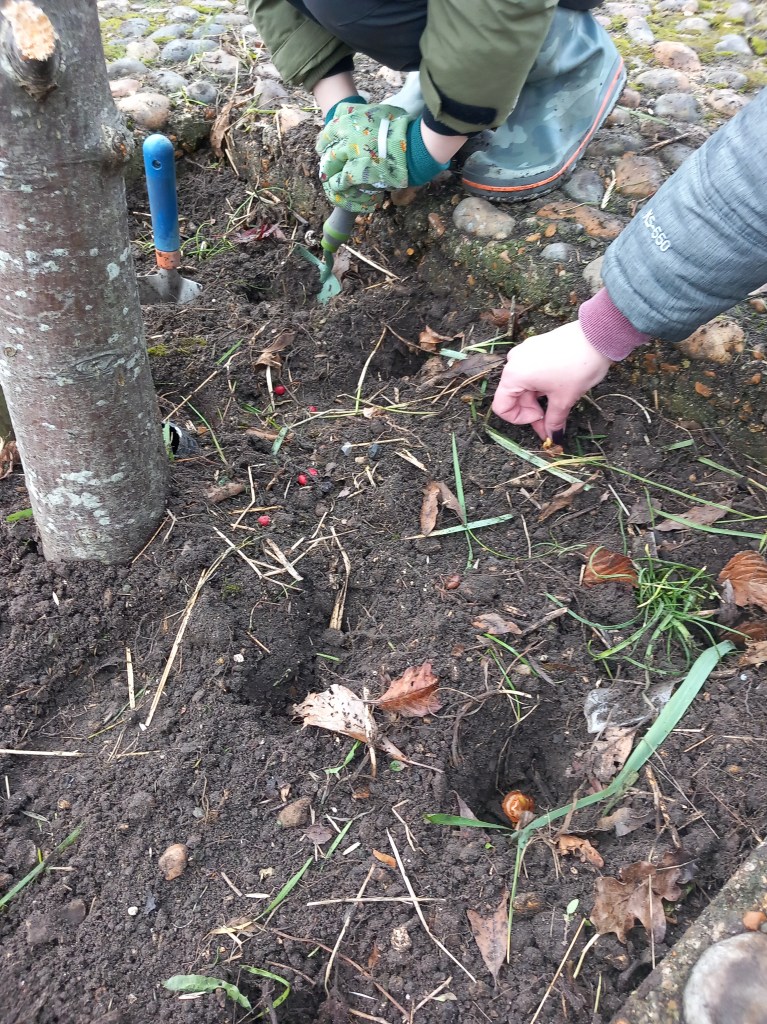
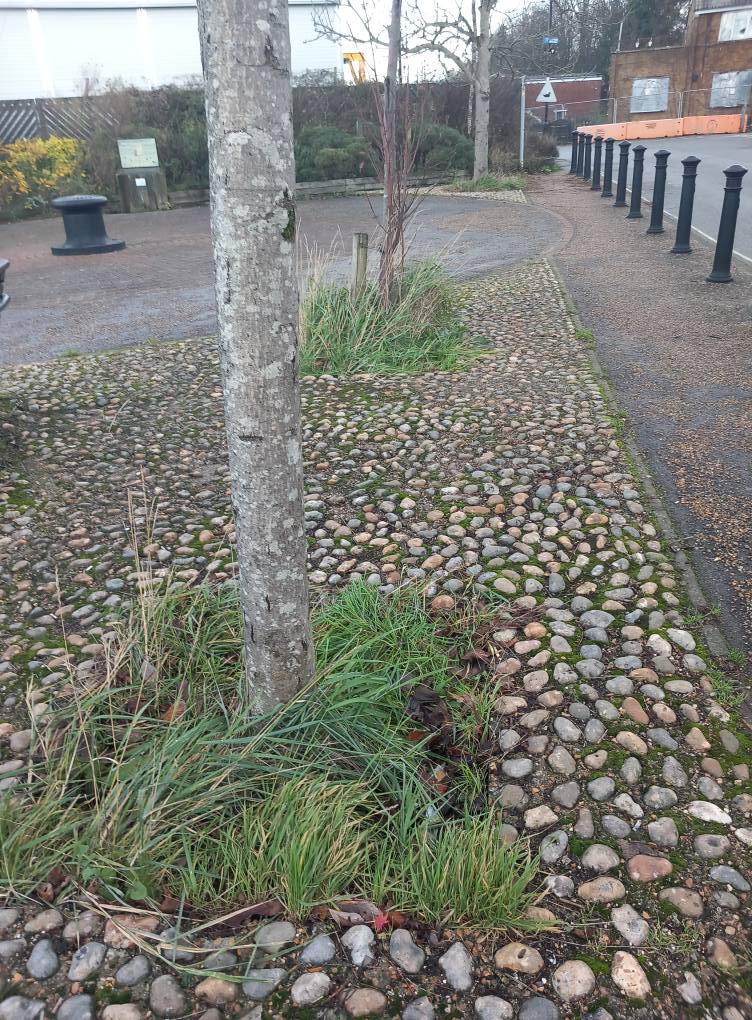
The rowers worked hard to clear the grass from the three tree pits, then Laura and son Toby planted crocus bulbs – some provided by the club, some from Pollinating Peartree.
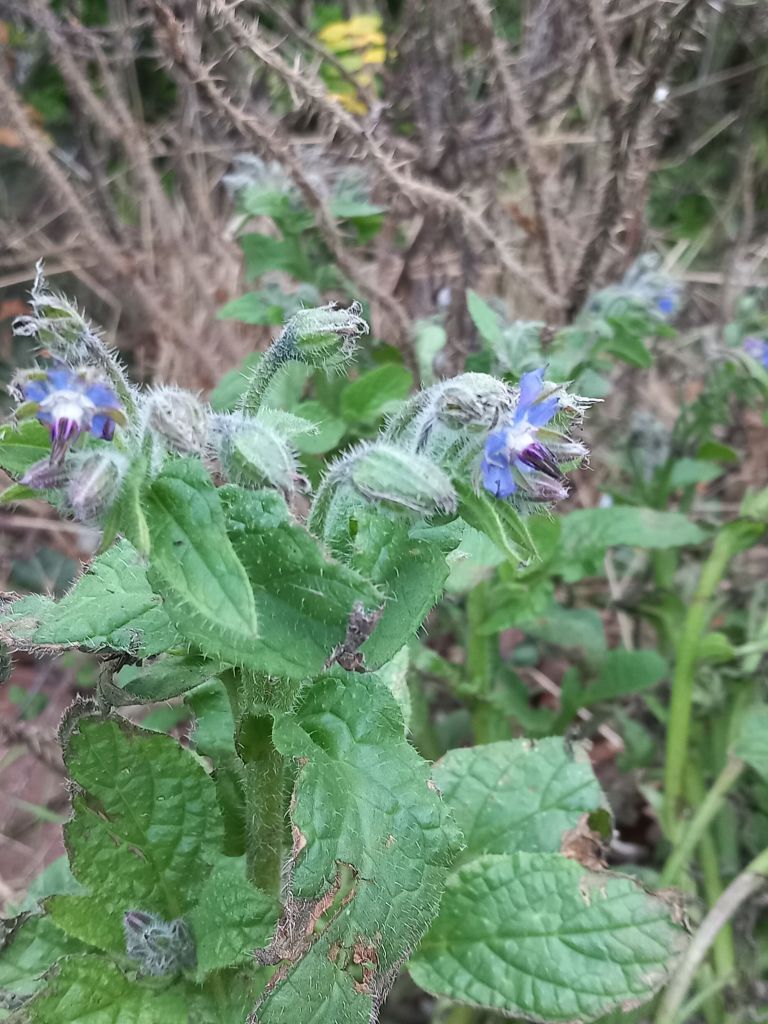
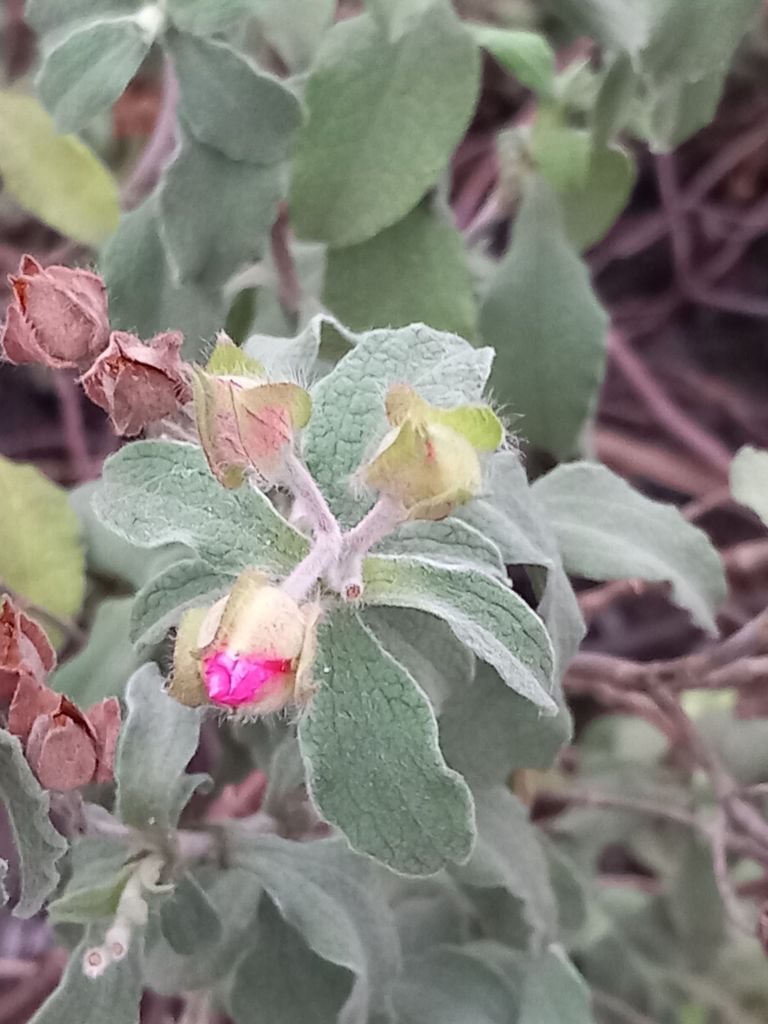
As I write this in early December, there’s some Borage in bloom and a Rock Rose in bud. Come spring, thanks to everyone who helped, pollinators should be able to find food more easily, especially when those crocuses come out!
L: Borage; R: Rock Rose.Tricia, Jill, Robin, Toby and Laura. Nick and Lisa missed the photo, but also helped the rowing club members bag up all that rubbish!
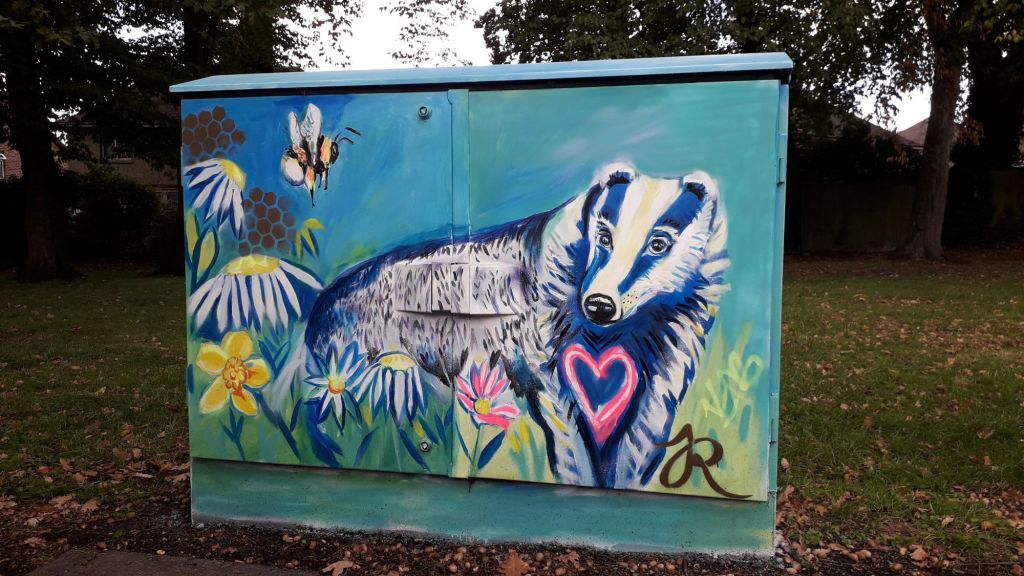
Places like Badger Green seem to be overlooked when people talk of ‘access to nature’ or ‘green spaces’. I’m not sure why this is. Has someone decided a ‘green space’ should be a minimum size, or that it must be designated a ‘park’? Southampton City Council’s website has a category called ‘parks and open spaces‘. ‘Open spaces’ covers greenways and nature reserves, and while some (most?) parks have plenty of ‘nature’, I can think of some that are much less green than Badger Green. But you won’t find Badger Green on this list, or even on a map (yet). It’s a name I’ve invented, inspired by the badger that Joanna Rose Tidey painted on the telecomms box. Places need names for people to connect to them, don’t they? Since I named it, I’ve visited it more often, and am paying more attention to what’s there. It’s become another of my local walks, and that’s largely because of the trees.
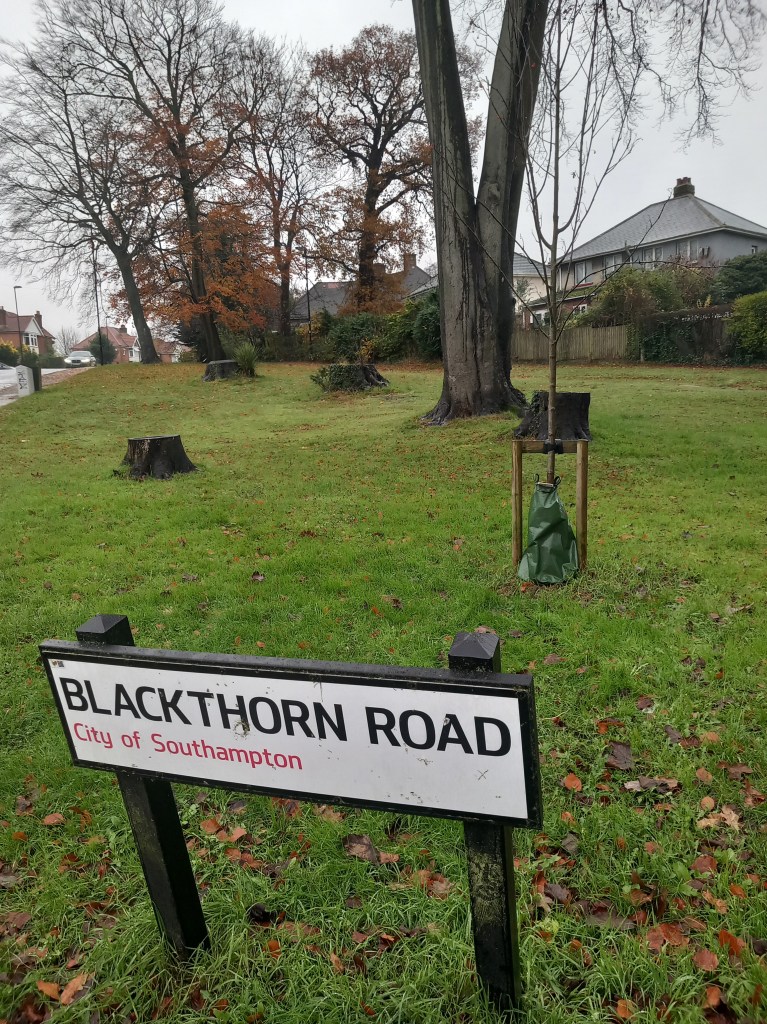
Badger Green is made up of a wide verge of grass and trees that wrap around part of the boundary of the Merryoak Estate, separating back gardens from the road. The Green runs along Merryoak Road from Cypress Avenue to Spring Road, and then along Spring Road as far as Blackthorn Road.
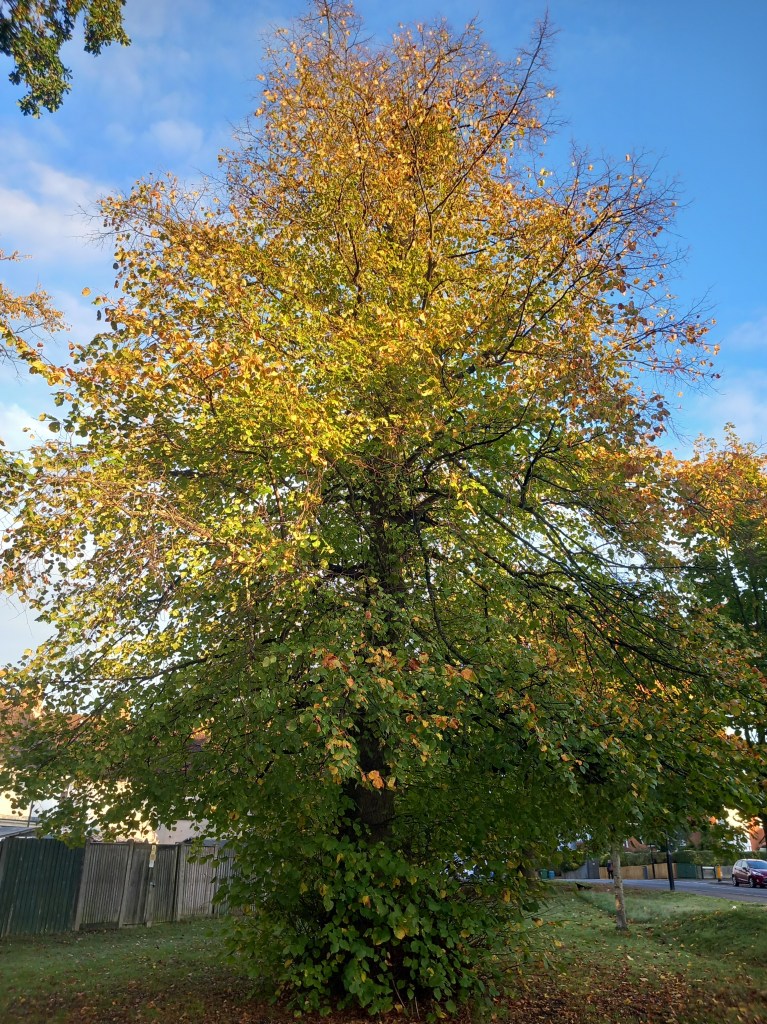
There are around 30 mature trees: beech, oak and lime. These presumably date from the time of the original Merry Oak estate, when there was only the manor house (and the name was still two words). An ordnance survey map of 1841 – 1952 shows a large number of trees in this stretch of land. This lime is one of my favourites.
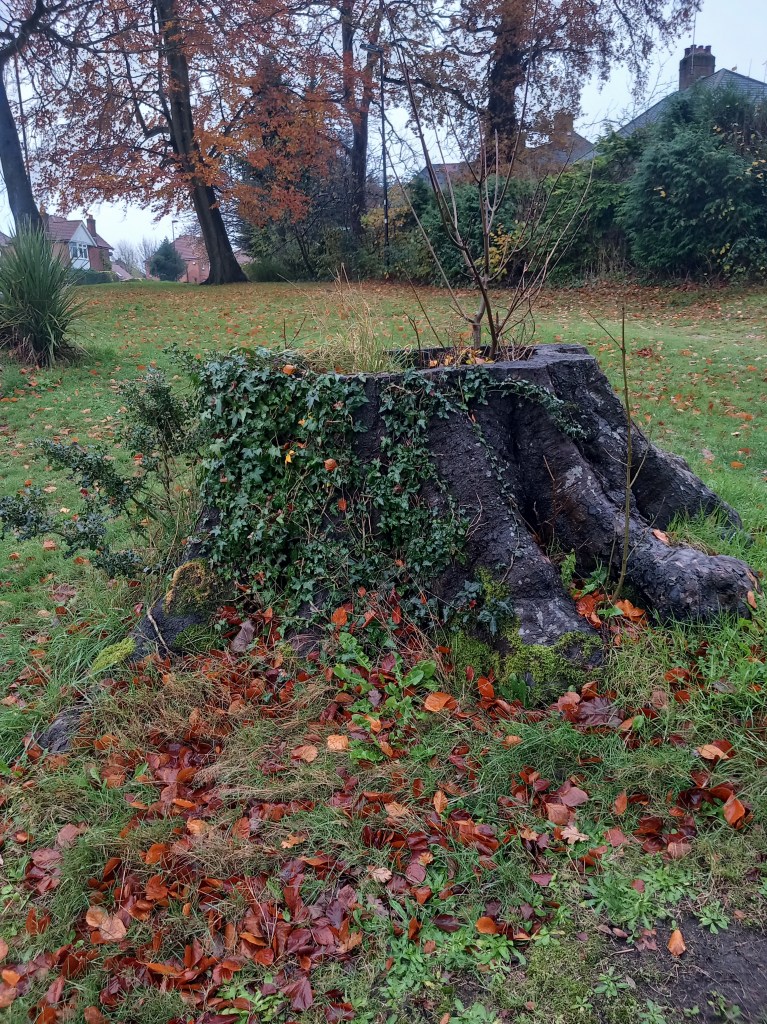
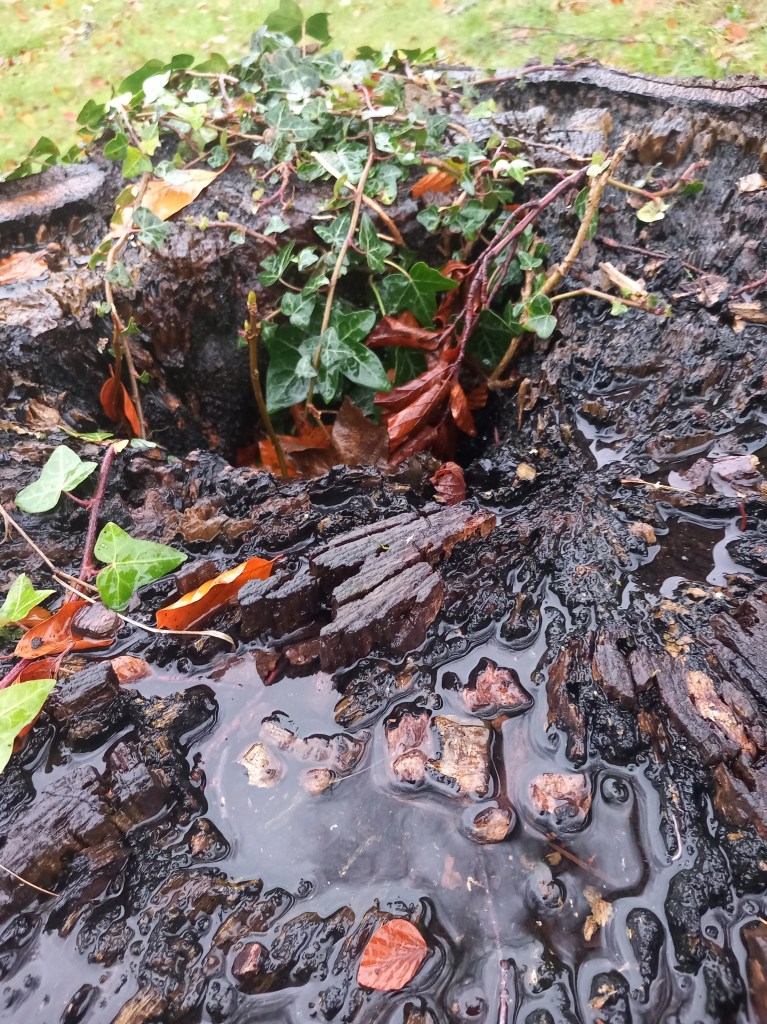
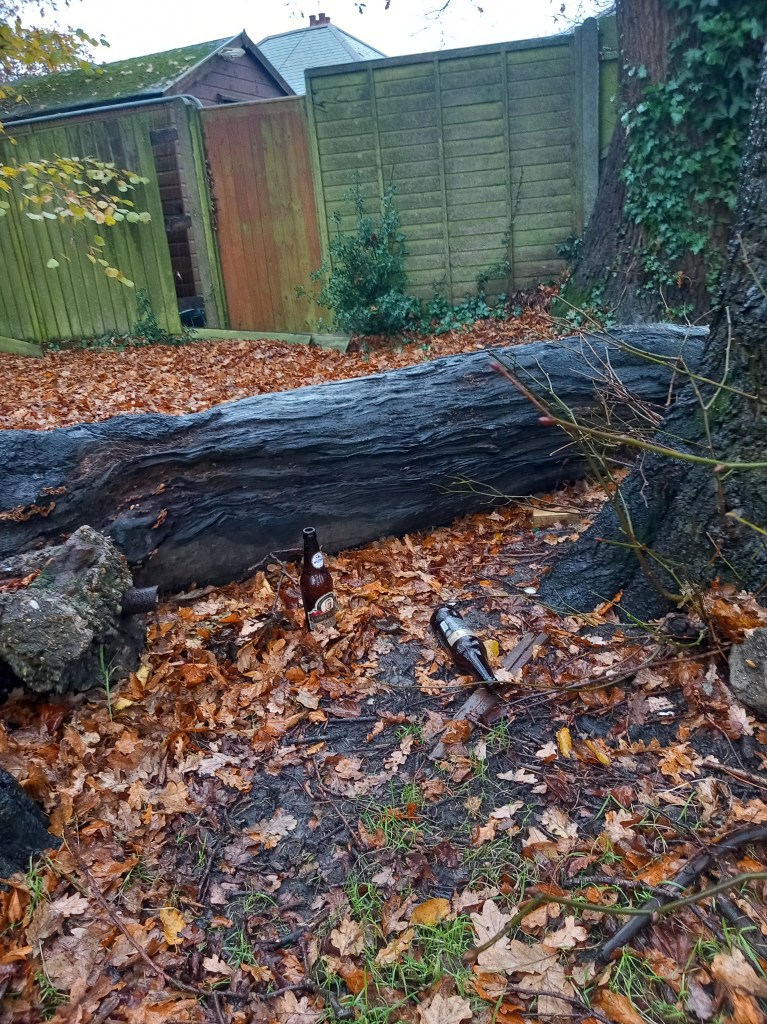
Inevitably some trees have fallen or been felled over the years, but several of the beech stumps – elephant’s feet – are like mini nature reserves as their core has decayed and other organisms have moved in. This one below seems the most established, as well as being the biggest. It took me 12 steps to walk around its perimeter, about 7 metres. There’s holly and ivy, moss and fungi on the outside, plus grasses and a sapling growing in the middle – and that’s just what I could see from a two-minute observation in the rain.
The two beech logs provide seating for drinkers, but wouldn’t it be great if they took their empties with them? The area does attract a lot of litter, as there’s a takeaway and a Tesco Express across the road, and a bus stop (with a bin next to it, mind you). So, I fill a bag or two on each visit.
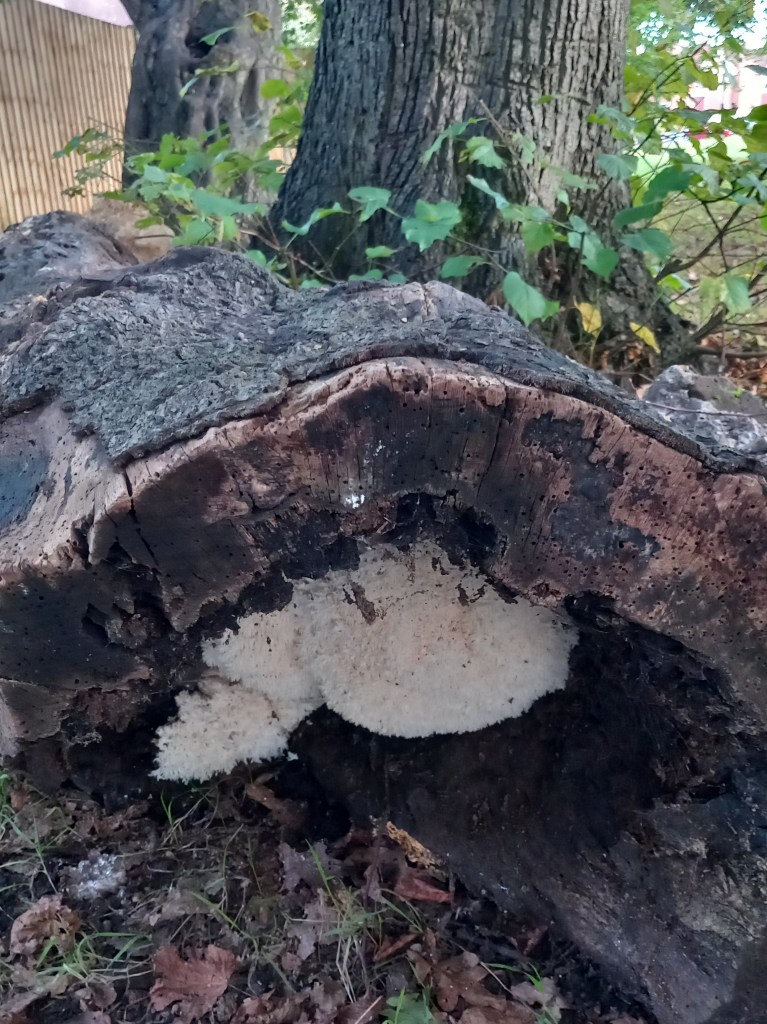
The same log was host to a special fungus in the autumn, the Coral Tooth. It was so striking that I first noticed it as I cycled past.
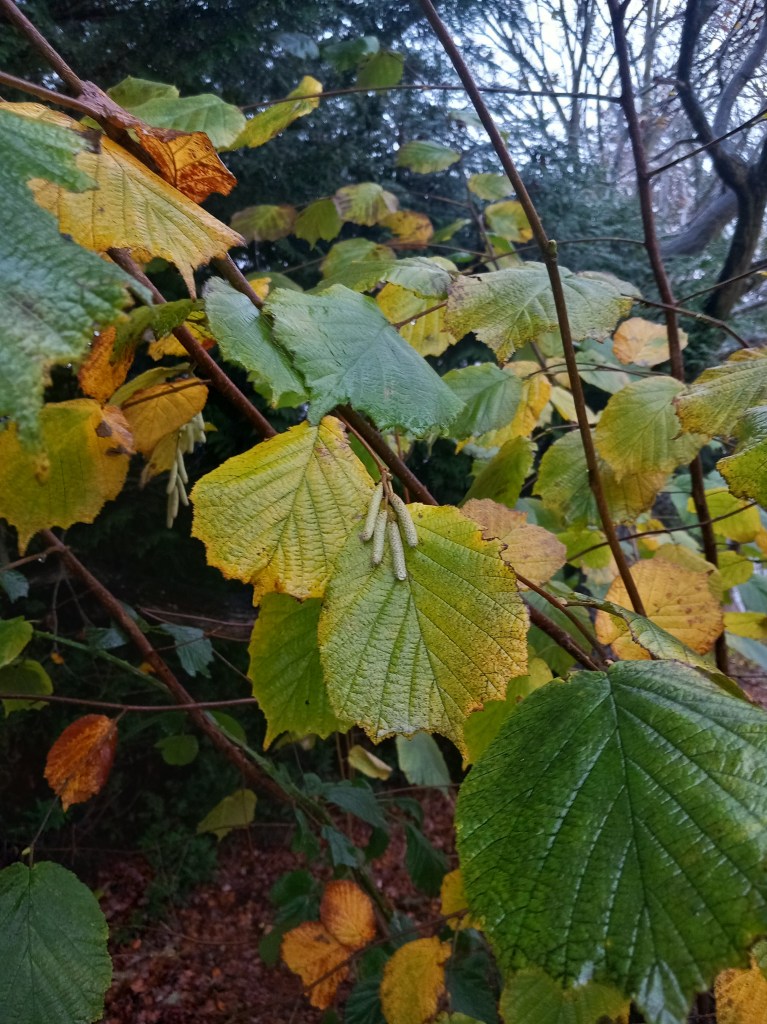
It’s exciting to have found this ‘new’ place only five minutes’ walk from home. On my most recent walk, I noticed this hazel for the first time, and I’m sure there is much more to be discovered as the seasons change.
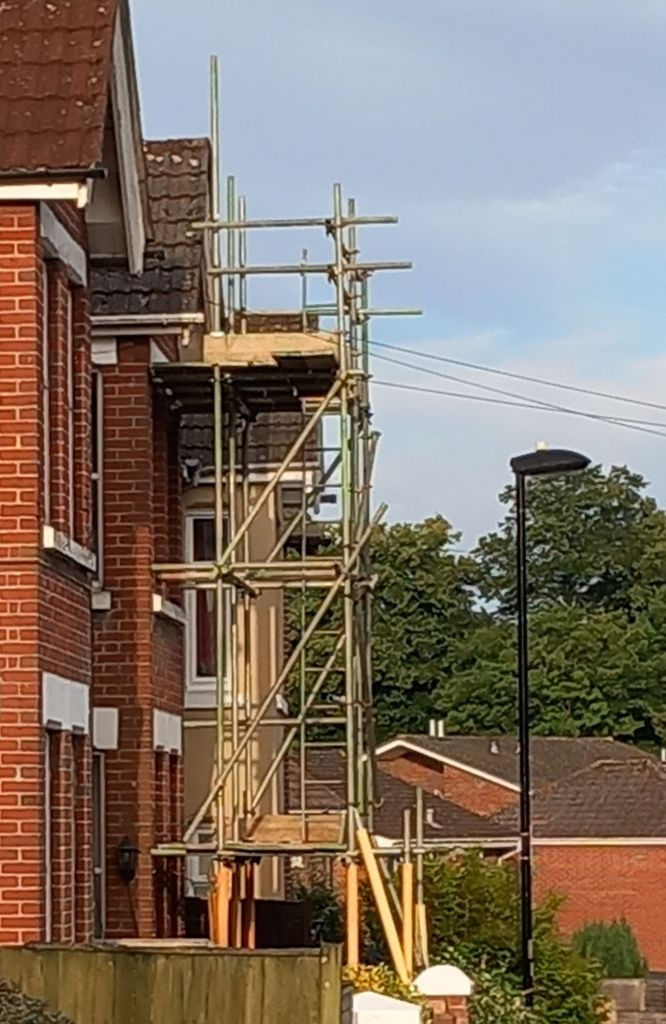
On a Sunday morning at the end of July, I arrived home to see scaffolding going up on a house down the road. This is a house where I’d seen swifts nesting, so I was really concerned. I had to wait half an hour for the scaffolders to finish, which gave me time to think about what to do. Even though I had no idea who lived there, I decided to knock on the door anyway, braced for a negative response. Fortunately, the owner was happy to talk to me and interested in wildlife. They hadn’t known swifts nested there, but reassured me they would make sure the birds could still get in. I hadn’t seen any swifts around the area for a few days, so I felt reasonably confident they’d already left to return to Africa.
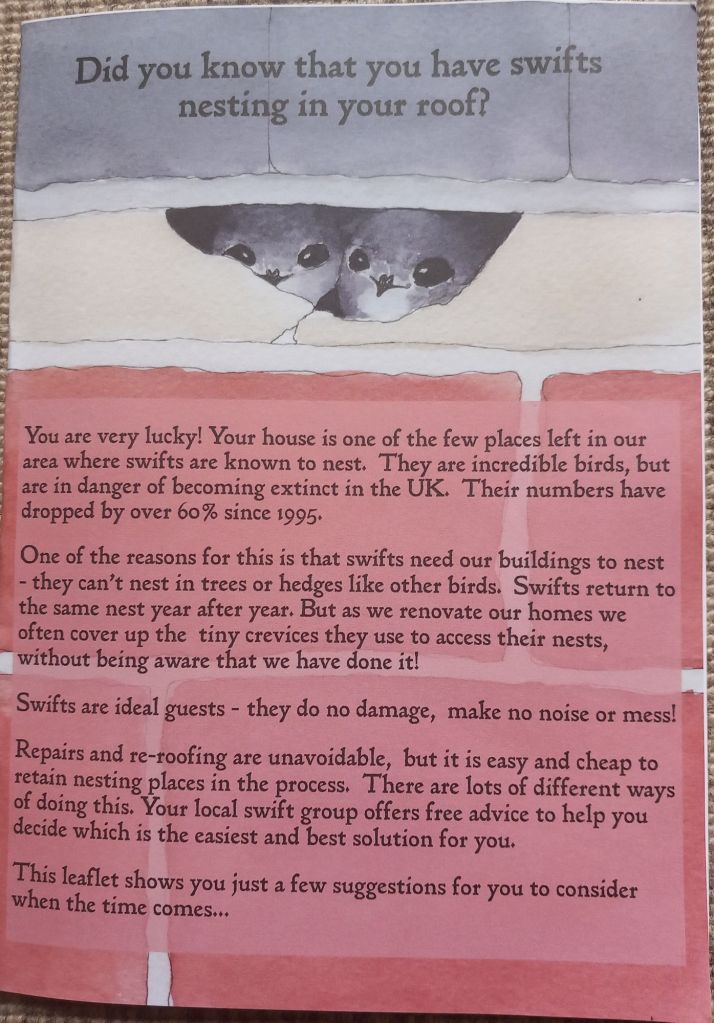
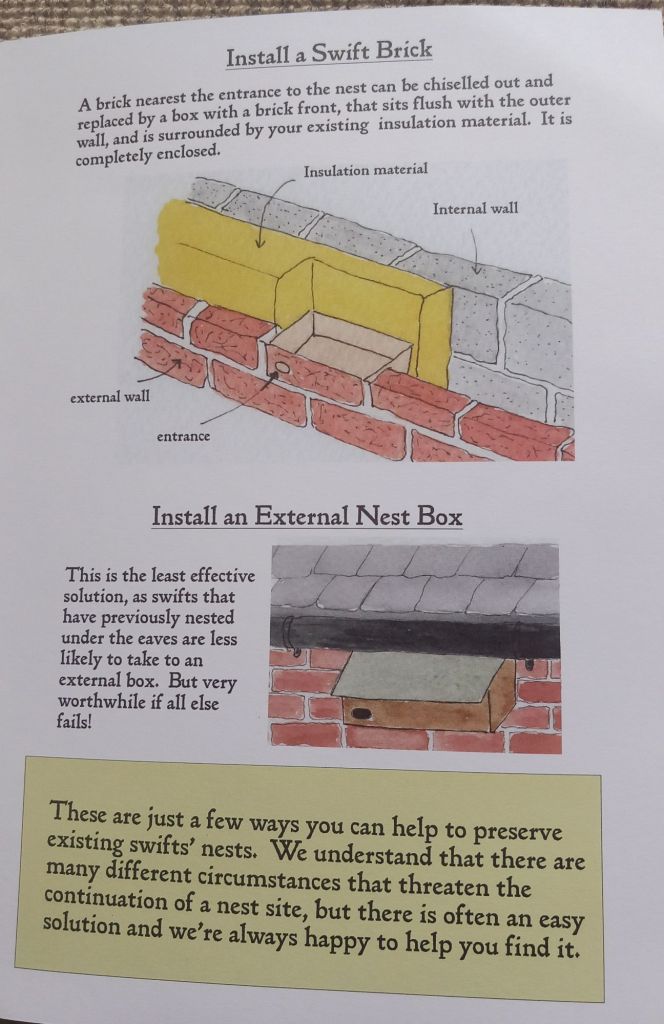
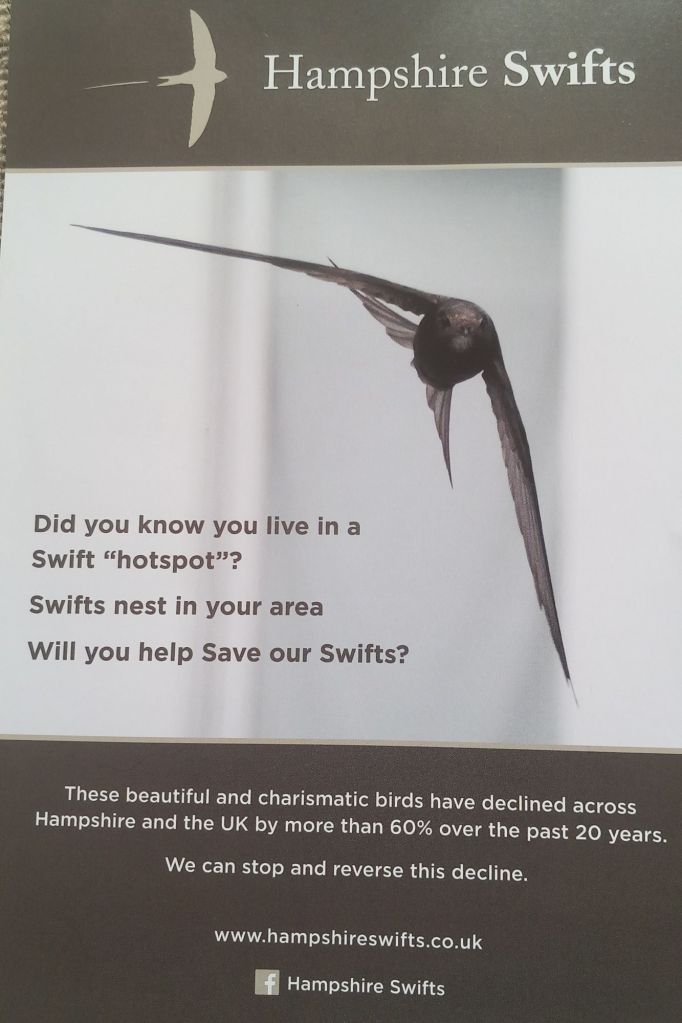
I contacted Hampshire Swifts to ask for advice, and had a chat with Catharine Gale, who sent me some leaflets. I went back to the house with the one about swift-friendly renovations, and again received a warm welcome. I resolved to start knocking on more doors, though it is a gamble. A part of me wonders if it might better not to tell someone, in case they’re not happy and block up the holes.
Leaflets from Hampshire Swifts
Early in August, scaffolding went up on another house, almost opposite the first one, and also a known nesting site (though I couldn’t confirm nesting this year). Before I’d had a chance to call round,work began on the roof. It’s now complete, and from what I can see, the soffit boards on the front of the house haven’t been touched.
It’s been almost a month since the swifts left, but I still miss them. I’ve been thinking about them a lot, planning how to raise awareness of them in the local area. Through social media, I’ve connected with a few other swift followers and found out about other possible nest sites. Swiftmapper shows some of these, but I need to encourage more people to use it and get them all on there. This will help me to plan some swift walks for next year. I hope to do some during Swift Awareness week, which usually takes place in the first week of July.
I’ve written a short article for a local news magazine, hoping to catch the eye of a few more people – especially any that might be thinking of renovating their houses.
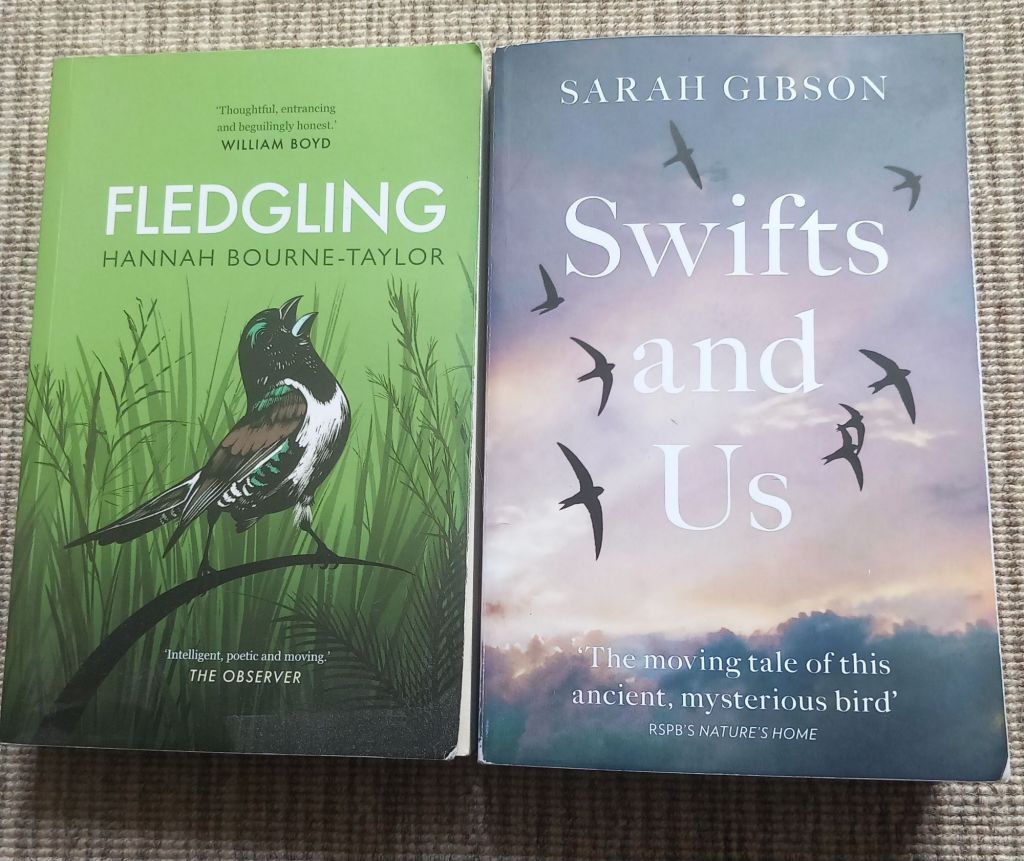
My plan is to use these swiftless months to learn more and do more. I’ve already added my records to both Swiftmapper and the Hampshire Swift Survey . Recently, I’ve also read a couple of inspiring books, one of them by the author of this blog, Sarah Gibson. These, and that scaffolding, have made me want to do more, before it’s too late.
As well as talking to my neighbours and others with nest sites, I’ll organise getting a swift caller installed in my nest box. This should increase the chances of it being used next year. It was installed in 2022 by Hampshire Swifts, but hasn’t been occupied yet – at least, as far as I know. This summer, I didn’t monitor it as much as I could have. Next year, I want to make more effort to check sites that have previously been used, as well as ones where I’ve seen banging this year. That’s when younger birds check out potential sites for future use.
But I won’t spend all my time thinking about swifts. There are starlings to be appreciated – and the possibility of winter murmurations!
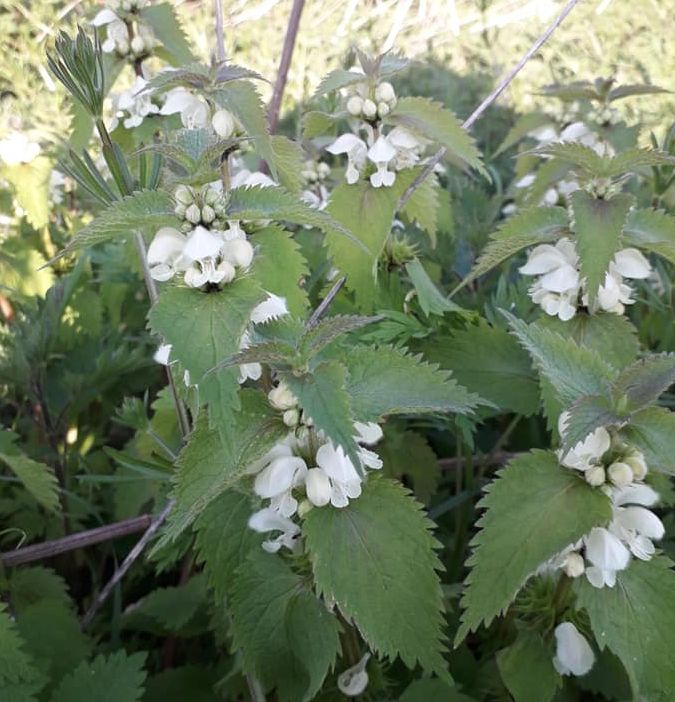
Have you ever picked a flower from a White Deadnettle and sucked the nectar from it? As a child, I did – and I tried it again recently! That’s when I realised not everyone knows you can do this. It’s a countryside thing, as Richard Mabey noted in Flora Britannica. Or at least it was – I don’t know if today’s children do it, but it got me thinking about my own connection to nature, and where it came from.
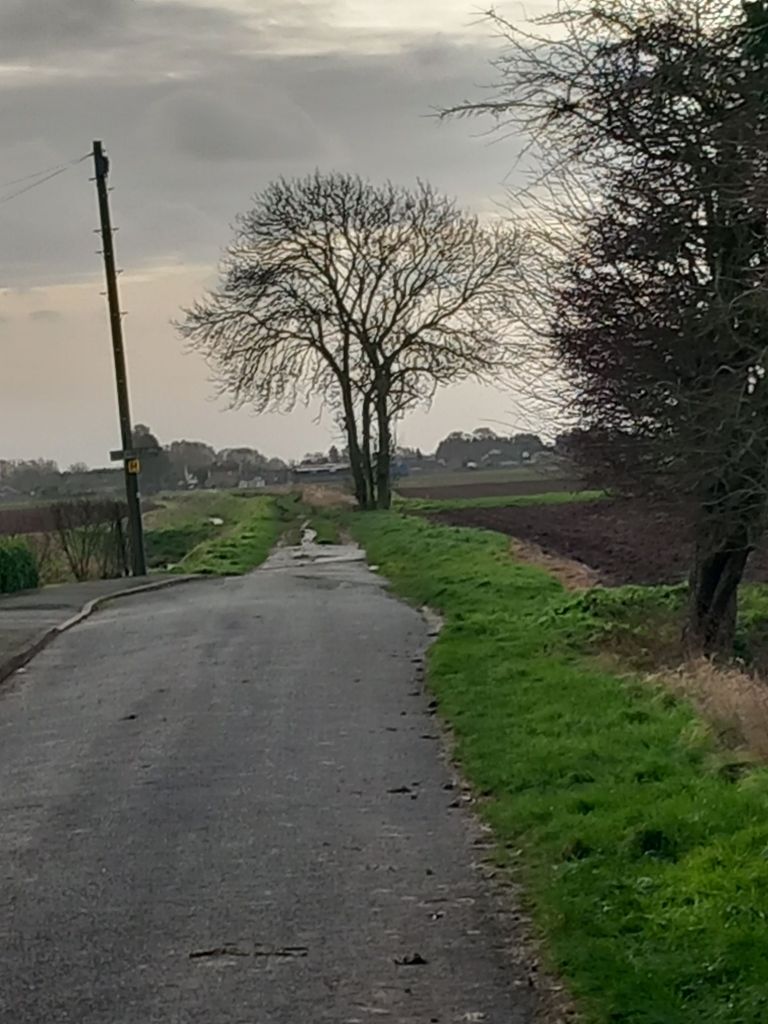
Popes Lane, Leverington
I grew up in the countryside around the town of Wisbech (pronounced wizbeach), the Capital of the Fens, according to road signs welcoming you there. It’s in East Anglia, where Cambridgeshire meets Norfolk. The picture above shows the first place I lived, in the village of Leverington. You can see it’s quite rural, even now (the photo was taken in 2024, 60 years after I was born). On the left, behind the telegraph pole, there’s a ditch, or dyke, as they’re called in the Fens. This is where, when I was about 2 or 3, I cut my finger on a reed so badly that I still have the scar.
My mother grew up in a city, Liverpool. During their summer layoff from Littlewoods Football Pools, she and her friend cycled from Liverpool to a village outside Wisbech called Friday Bridge. There, they spent the summer at an agricultural camp, and this was where she met my father, a local. I think my mum loved the clean air and peace of country life, and was happy to escape the city.
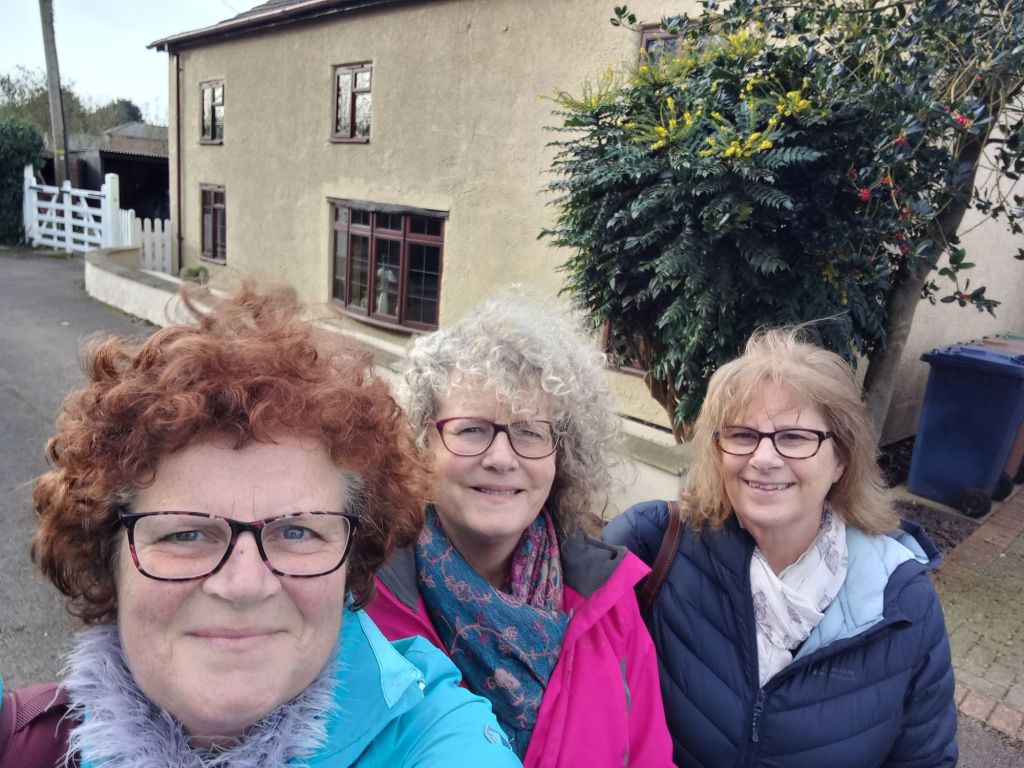
With my sisters Anne (right) and Ruth (centre) outside Brooklands, Feb 2024
When I was 3, we moved to a neighbouring village, Gorefield, and lived in a pebble-dashed house called Brooklands, on a small road named The Barracks. It’s from here I can remember some of our pets – our rabbit, my sister Anne’s cat, Sweep Minou Minx, and our three guinea pigs. Just round the corner from our house was a den that all the local kids played in.
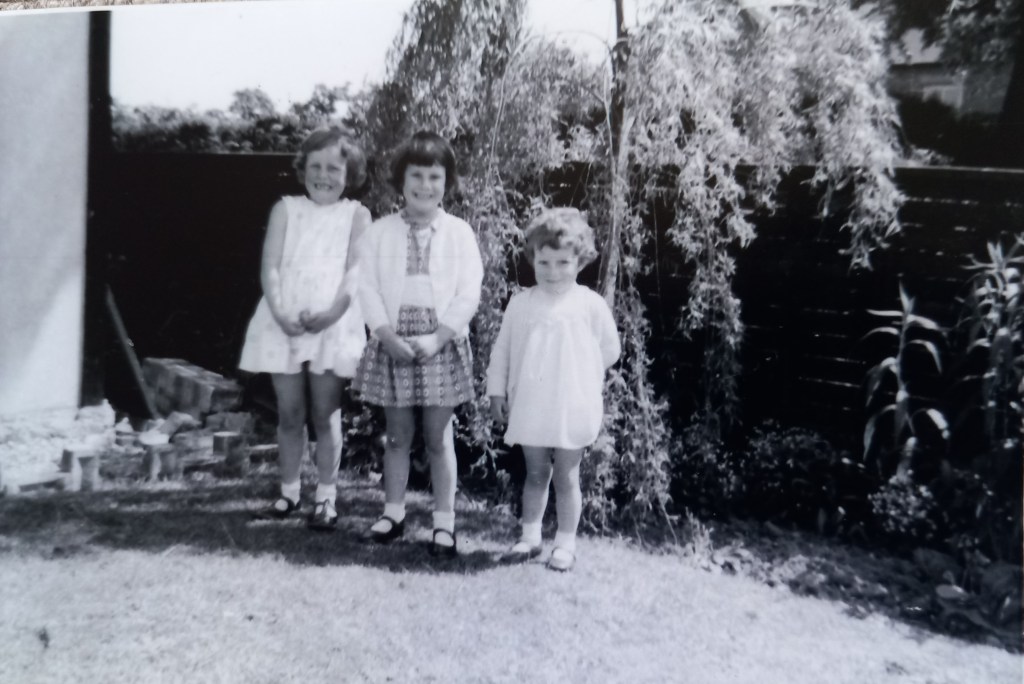
My best friend Michelle lived on a lane further along the High Road, and I recall fishing for tadpoles with jam jars in a dyke there. I also remember the tall, thin poplar trees along the lane. In our garden, we had a weeping willow tree. They were quite a common sight in the area.
L-R Ruth, Anne and me, with the weeping willow behind.
Another tree memory is of ‘seeing’ animal shapes among bare branches from my bedroom window, but I’m not sure which type of tree it was. This is something I still do, look for shapes in trees and clouds. But that’s more or less it for my memories of nature – pets, tadpoles and trees.
By the time I was 9, we’d moved to town, but on the southern edge, close to the horticultural college. I used to earn extra pocket money there, picking gooseberries, just as I’d strawberry-picked in the village when I was younger. At the end of our road, Westmead Avenue, was an orchard. I remember birdwatching there, with my Observers Book of Birds, but I don’t recall why I became interested in this. Maybe it was simply because the orchard was so close, so I went to explore what was a ‘safe’ place for me to go to alone. I probably started off collecting plums, then noticed the birds! We had a big garden with a pond, though it contained goldfish rather than newts and toads. We also had a pet tortoise. I didn’t pay much attention to the wild creatures in the garden – though I think I remember house martins nesting under the eaves of the house.
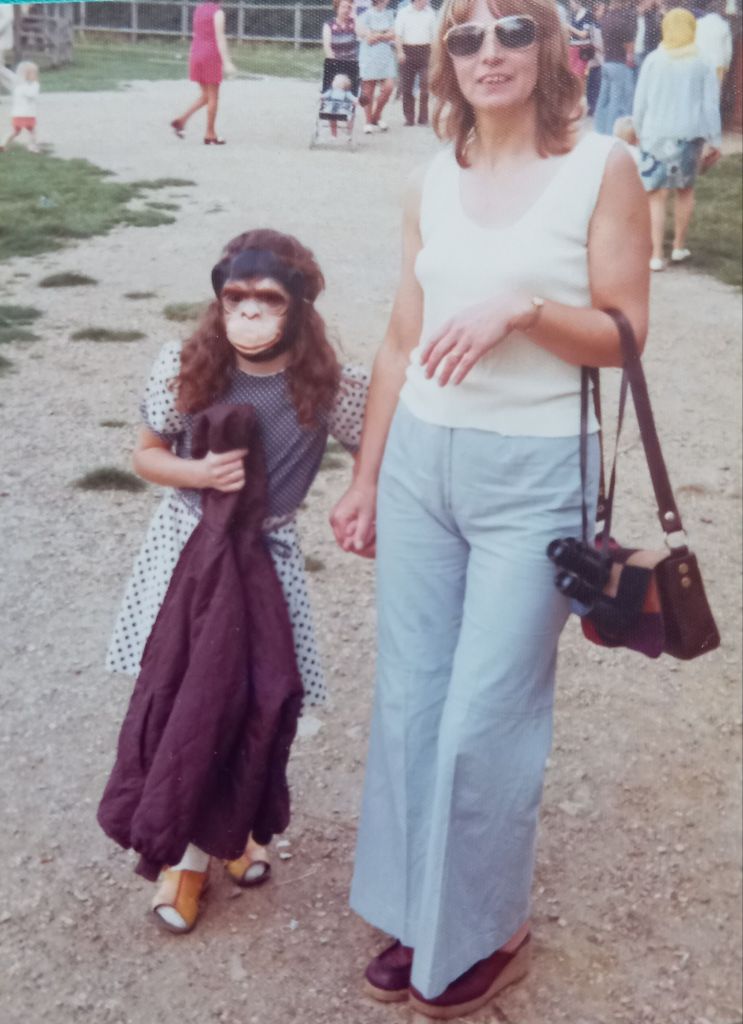
At some point I became interested in exotic animals, as I suppose many children do. My sisters went on a school trip to London Zoo, and brought me back a postcard of the Giant Panda Chi-chi. I must have watched Tarzan on TV, because I got a toy chimpanzee and named it Cheetah after the one in the programme. And here I am with my chimp mask on 😁
With my mum on a day trip.
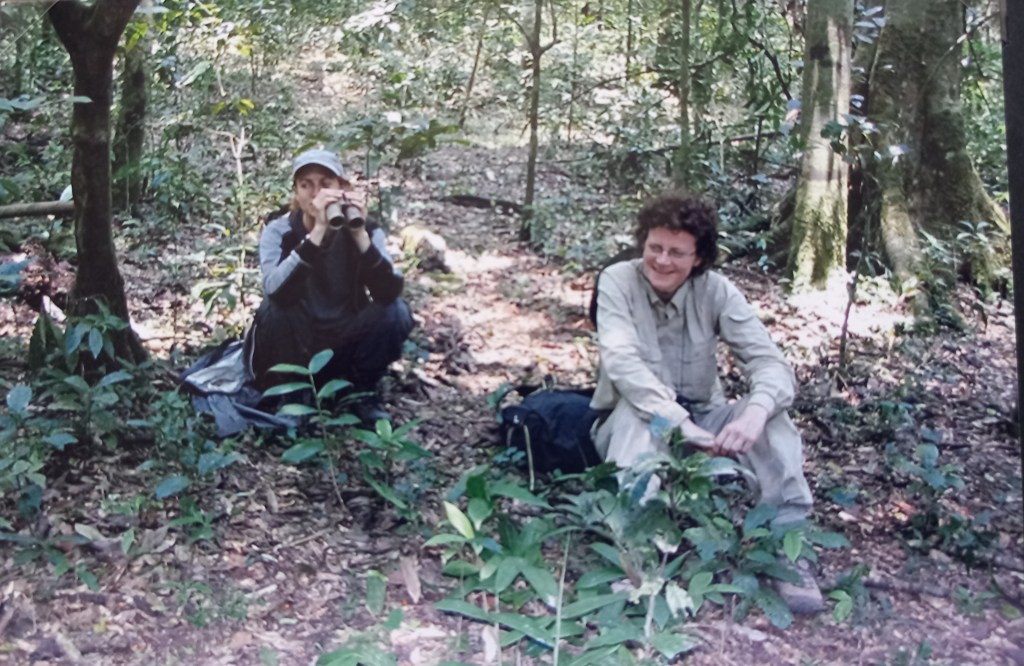
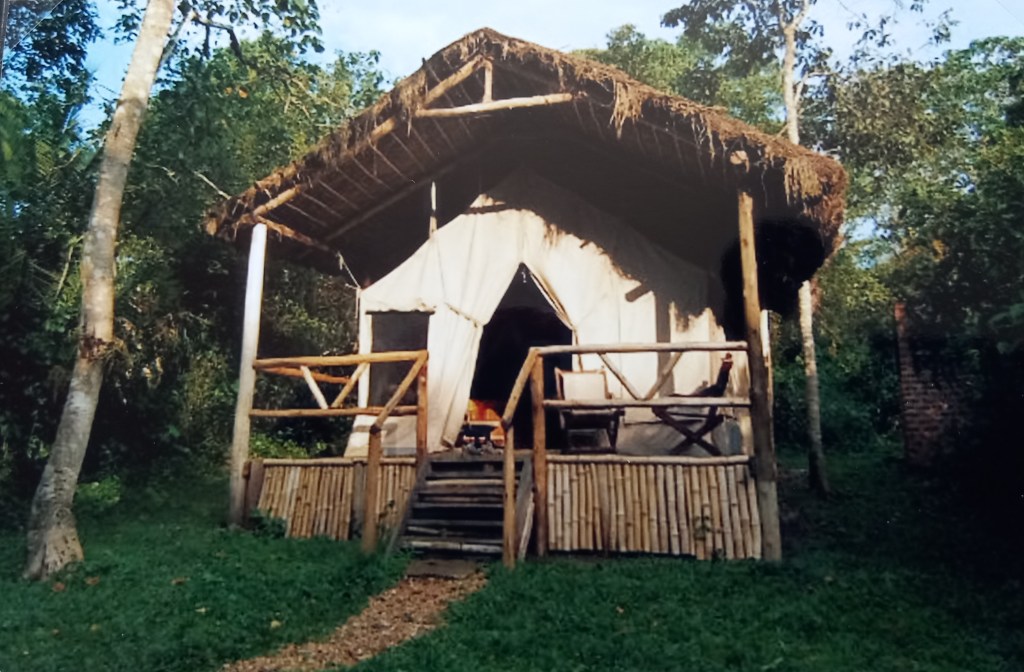
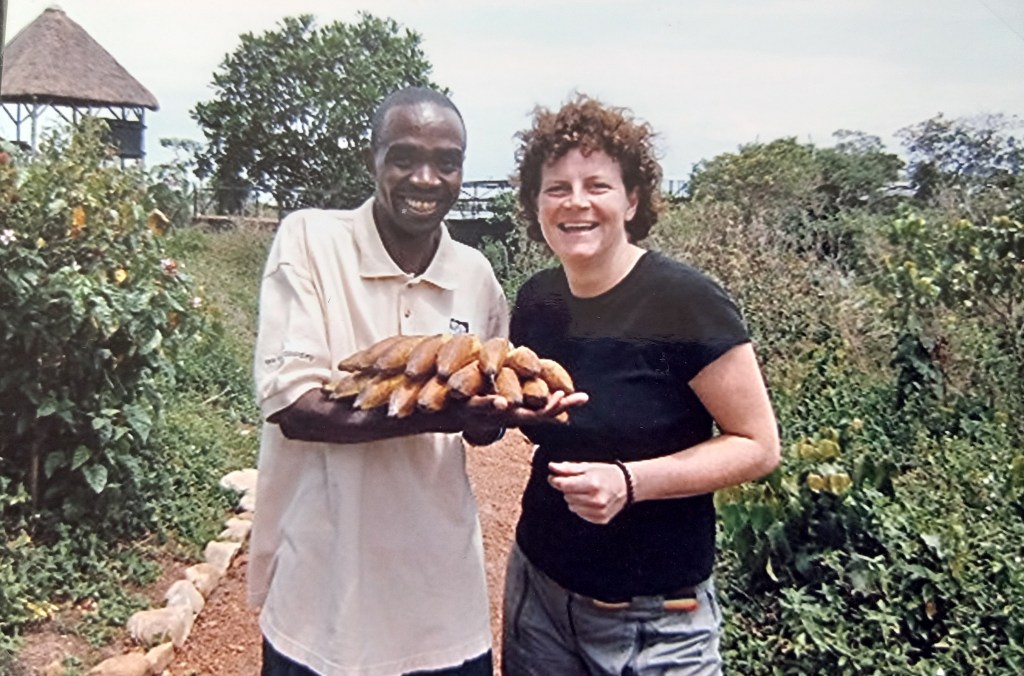
Years later, I developed a real fascination with chimps. I’m not sure when, but I think it was sometime after I’d moved to Nottingham (when I was 22 – small town life wasn’t for me). I happened to see Dr Jane Goodall interviewed on breakfast TV, bought her book Through a Window, and was hooked. I guess this was around 1990, when it was published. I became quite obsessed. I read all her books, joined the Jane Goodall Institute, and for years I adopted chimps for my young nephews’ birthday presents (to encourage them to care about the natural world). When I moved to Southampton in 2002, I regularly visited the ape rescue centre Monkey World in Dorset and spent hours watching the chimps. Then in 2008, I achieved my ambition of spending time with chimps in the wild, in Uganda. I tracked a semi-habituated group that were being studied in Kibale National Forest, and spent the night there. Waking up in the forest to the sound of chimps calling to each other was thrilling. At the end of my trip, I spent a few days on Ngamba Island on Lake Victoria, a sanctuary for orphaned and rescued chimps. Having had the required vaccinations to make sure I didn’t pass on any diseases, I was able to do a forest walk with the younger, calmer members of the group. Giving one a piggy back was one of the highlights of my life.
In Kibale National Forest with Julia, the researcherMy accommodation in Kibale NFWith Dr Fred Nizeyimama on Ngamba Island
I also read a lot of studies about chimp language and behaviour, and, as a teaching fellow at the University of Southampton, for several years I delivered a ‘guest lecture’ on chimps to international pre-sessional students. These lectures were designed to give students a chance to experience general lectures before their Masters programmes. For me, it was an opportunity to share my enthusiasm, and perhaps change the way chimps were viewed by some students, most of whom were from countries with poor animal welfare standards, and in some cases, places where chimps were kept as pets.
My guest lecture, with a photo of chimps at Ngamba Island.
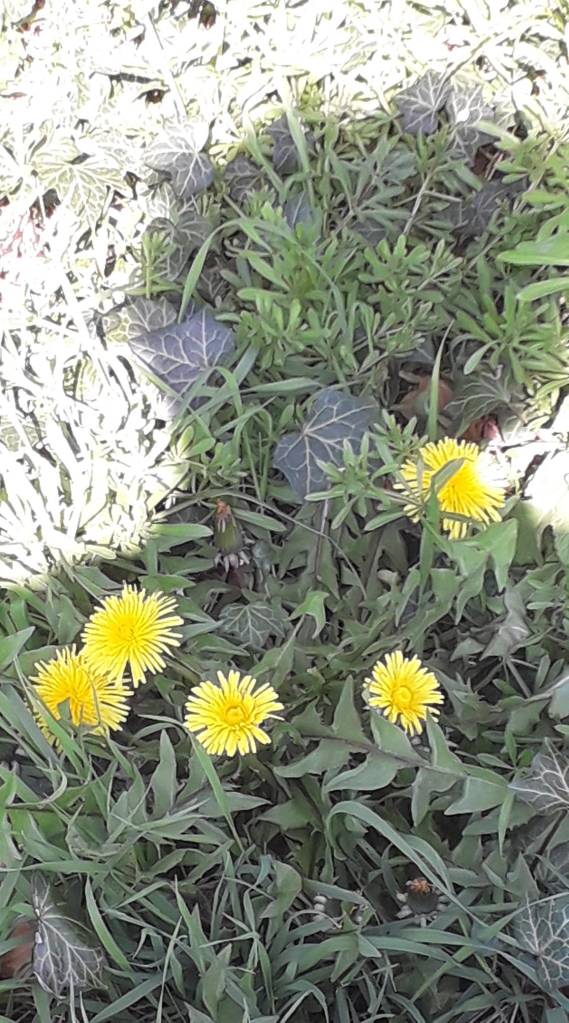
So how did I get from being obsessed with one species native to Africa to becoming interested in urban wildlife? These two seem a long way apart, but on reflection, they’re not really. As I learned more about chimps, and their close relatives bonobos, I shifted from focussing on how like humans they are, to how important they are in their own right. I also learned about the importance of habitat conservation and, through Jane Goodall’s example, about how to work with local people, to listen to their experiences, and find ways for them to share the land with chimps. When I moved to the Peartree area of Southampton in 2014, and discovered Peartree Green, I started to shift my focus to wildlife near me. It’s a special site, a local nature reserve with over 1400 species recorded so far, and it’s so close that I can walk there in three minutes and visit it daily. I started identifying the wild flowers there, realising how few I recognised. I was interested in the common ones, not just the rarities. There’s a local birder who counts all the pyramidal orchids each year, so one April I decided to count all the dandelions in bloom. There were 874.
Head and shoulders shadow with dandelions
I joined the Friends group because I wanted to help protect the reserve, and to do that, we needed to engage with people effectively. When school groups visited, I helped out, and found it so much fun that I started volunteering at forest school with the Hampshire and Isle of Wight Wildlife Trust, now my employer.
Wilder Southampton is all about encouraging and enabling people to enhance areas for wildlife. As part of this, I’ve done a number of engagement activities, including some with local school children. At one session, I realised that some children – and some adults – couldn’t recognise a blackbird. There could be many reasons for this, among them the lack of an adult to inspire interest, the local environment, adult fears about safety, etc. I can’t remember an adult inspiring me when I was young, but my environment was rural, and safe. I grew up in the 60s and 70s in villages and then a small town, with nature around me that I could access in relative safety – there was much less traffic, for example. I can also remember playing in farmers’ fields of wheat or barley with my best friend, no-one else around. Back then, this wasn’t thought of as risky – and nor was sucking deadnettle flowers! Deadnettles don’t sting.
The school I visited is in an area with not many green places, and few trees – but, as David Lindo the Urban Birder has said, if you think there’s no nature in a city, look up! That’s true, but birds aren’t always the easiest wildlife to get to know – they’re too far away, or they move too quickly, or you can hear them but not see them. If you want to know what they are, you need someone to help you, or an app such as Merlin. Flowers though, are much easier. They don’t move, for one thing. That’s why I started with them on Peartree Green.
And as I continued with that session in Sholing and got chatting to three young people in particular, I discovered they knew quite a bit about flowers. They giggled as they said “it makes you wet the bed, doesn’t it?” of dandelion; they talked about holding a buttercup under their chin to test if they like butter; they’ve made daisy chains. All the things I knew about as a child. Maybe this knowledge has been passed on because the flowers are common, even in urban areas. I wish I’d asked how they knew these things. I will next time, and I’ll also find some white deadnettles – perhaps they’ll surprise me by telling me they drink them!
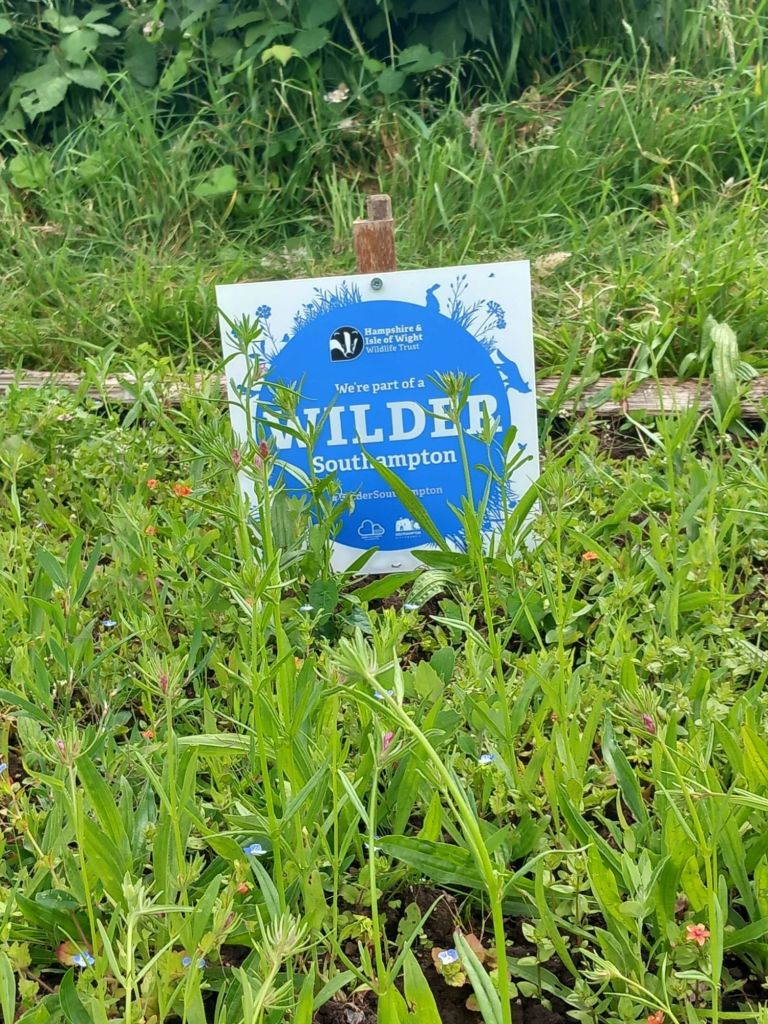
Marigolds in the flower and fruit bed, with the Wilder sign just visible and the bramble patch behind
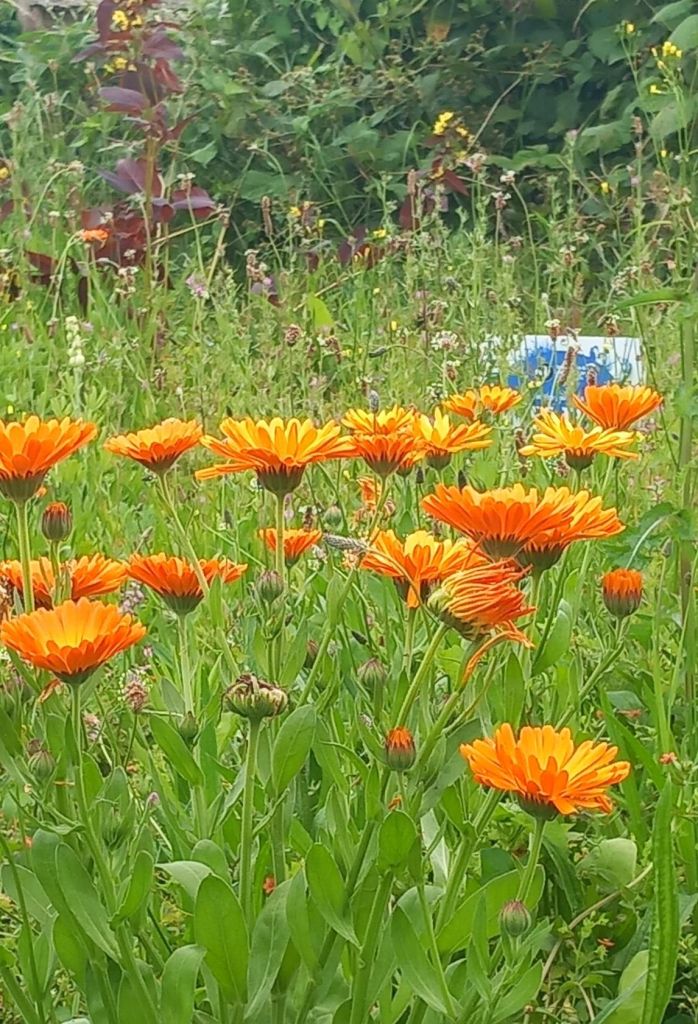
Today, 14 July 2024, the marigolds are looking stunning. It’s only three months since we took on this allotment share, helping out friends who found the whole plot a bit too big to maintain. There are rules about how much space can be left untended, or given over to flowers. We knew we’d want to make it as attractive to wildlife as possible, so we came up with a rough plan.
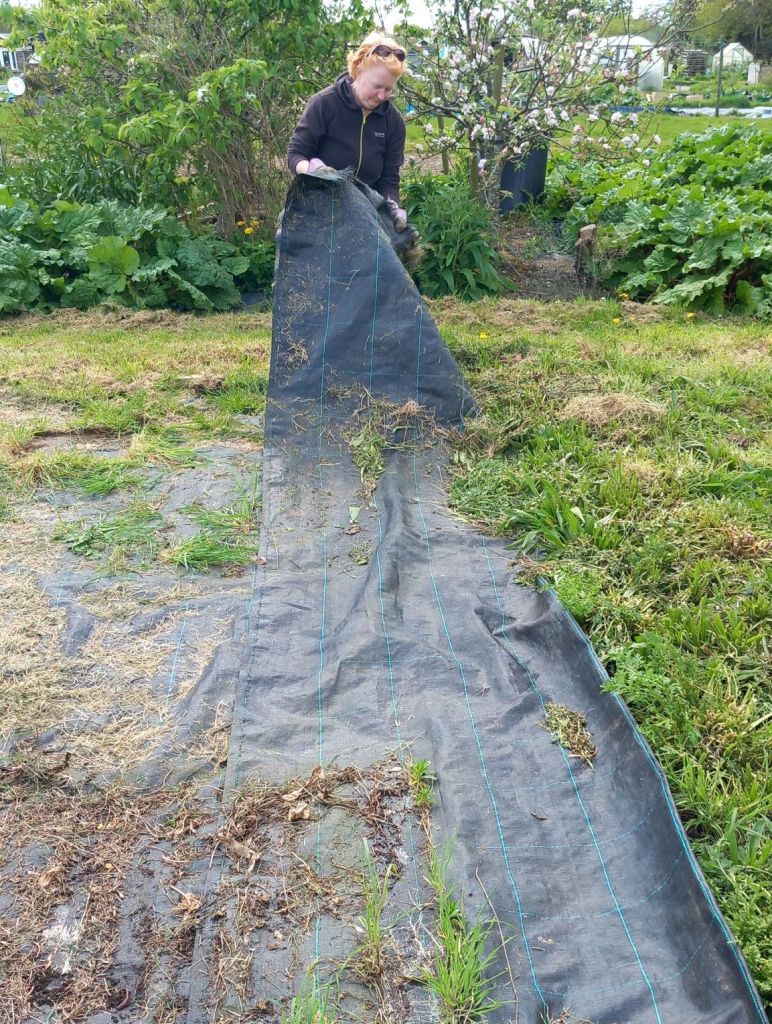
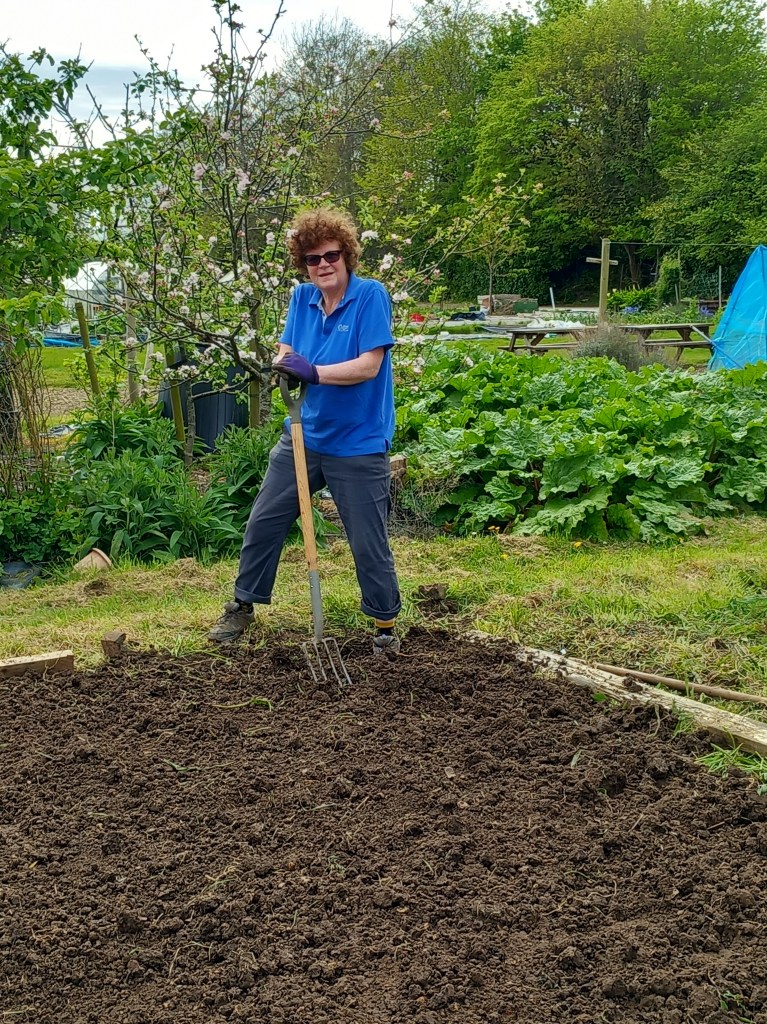
Tricia revealing the first bed in mid April.Forking out the bindweed – there’s a lot!
This is our half, extending from the shed to the bramble patch (behind the camera). In the foreground is the flower and fruit bed, a week or two after sowing. At the end of April, we planted an apple and a cherry tree, and three fruit bushes: gooseberry, blackcurrant and tayberry. We added strawberry plants, scattered wildflower seeds and put in some plants from our garden – lungwort and lavender.
Soon after that, we added some veg to the other two beds – potatoes, onions, runner beans, courgettes, and sweetcorn. We haven’t netted anything as we’re happy to share with the wildlife. Our crop so far has been three strawberries and two courgettes. We have a few apples coming, and the birds had the cherries.
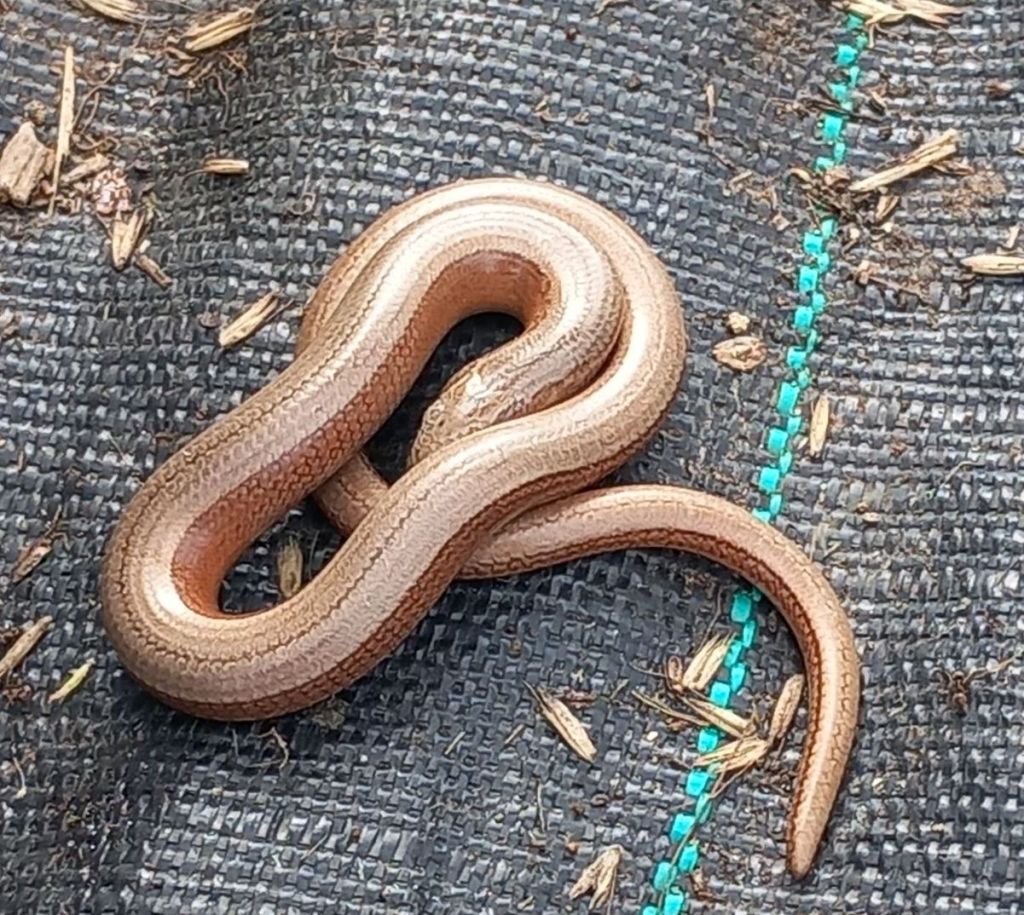
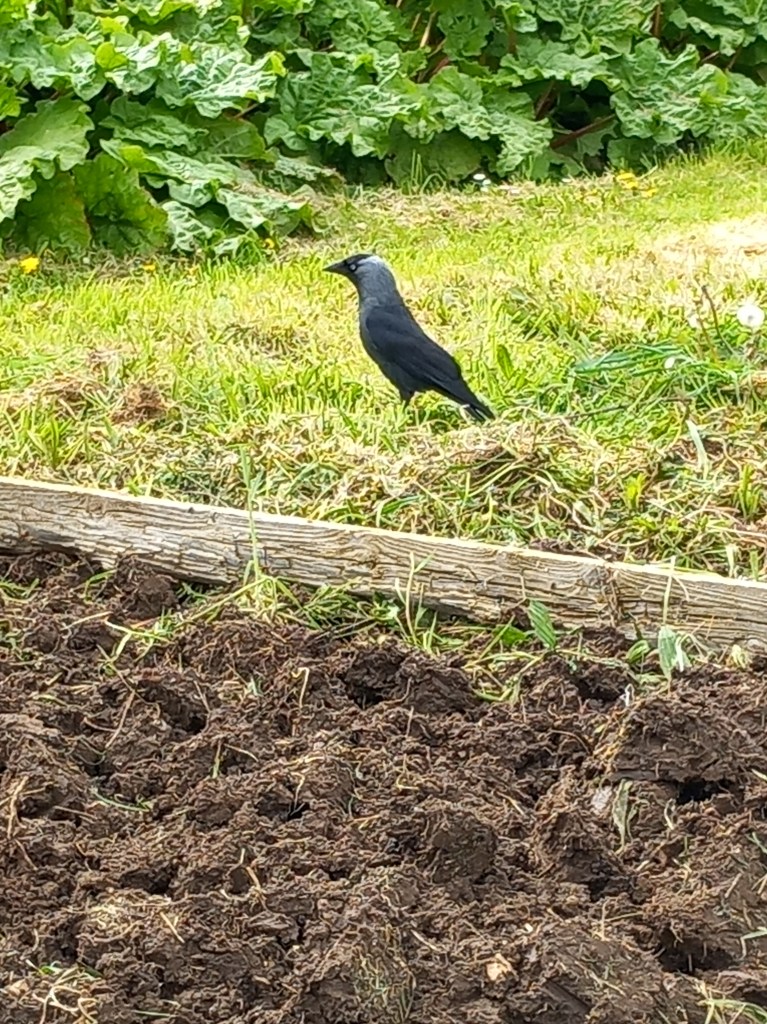
Slow wormA loveliness of ladybirdsJackdaw
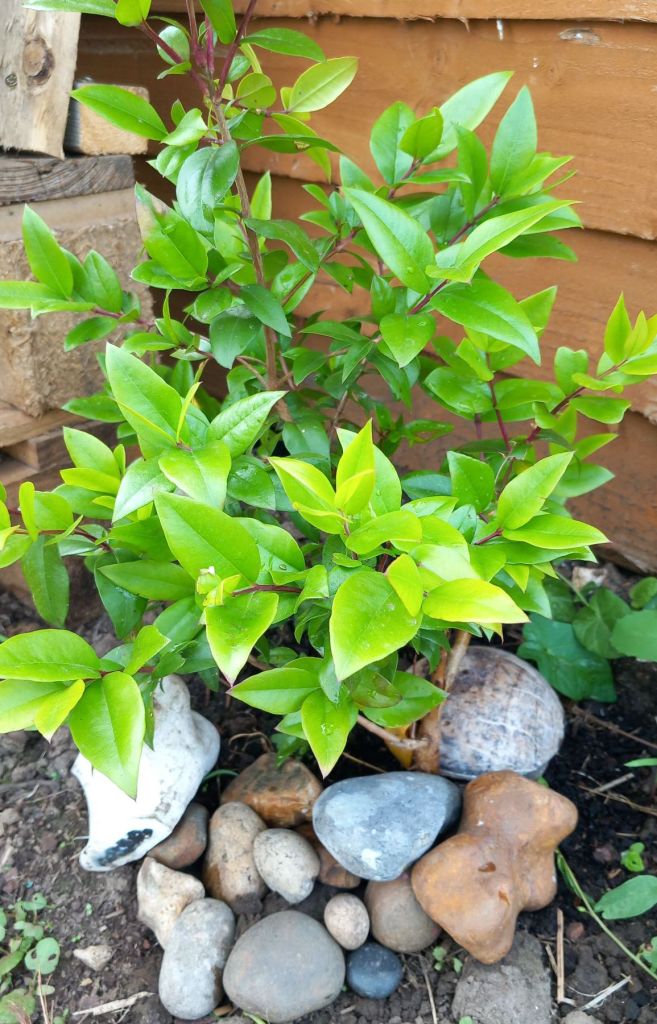
The place was already great for wildlife. There were jackdaws, slow worms, and, thanks to the pond, frogs and newts. The bramble patch is brilliant for bees, hoverflies, and ladybirds – so far we’ve seen 2-spots, 7-spots, 11-spots and harlequins. Now we’re into July, we’re getting more butterflies. To help wildlife more, we’ve been adding more habitat, like this pebble pile under the myrtle bush.
Myrtle, with stone pile as a habitat for invertebrates
We have a log pile under the bramble, a bee hotel, and a shallow dish with stones in, so that butterflies and bees can keep their ‘feet’ dry when having a drink! Last time I looked under it, I found a pill woodlouse, one of my favourite creatures. We’ve spotted several beetles around the plot, including the Strawberry Seed beetle, a False Blister beetle, and a Ground beetle. So far I’ve also seen two types of grasshoppers in the flower beds.
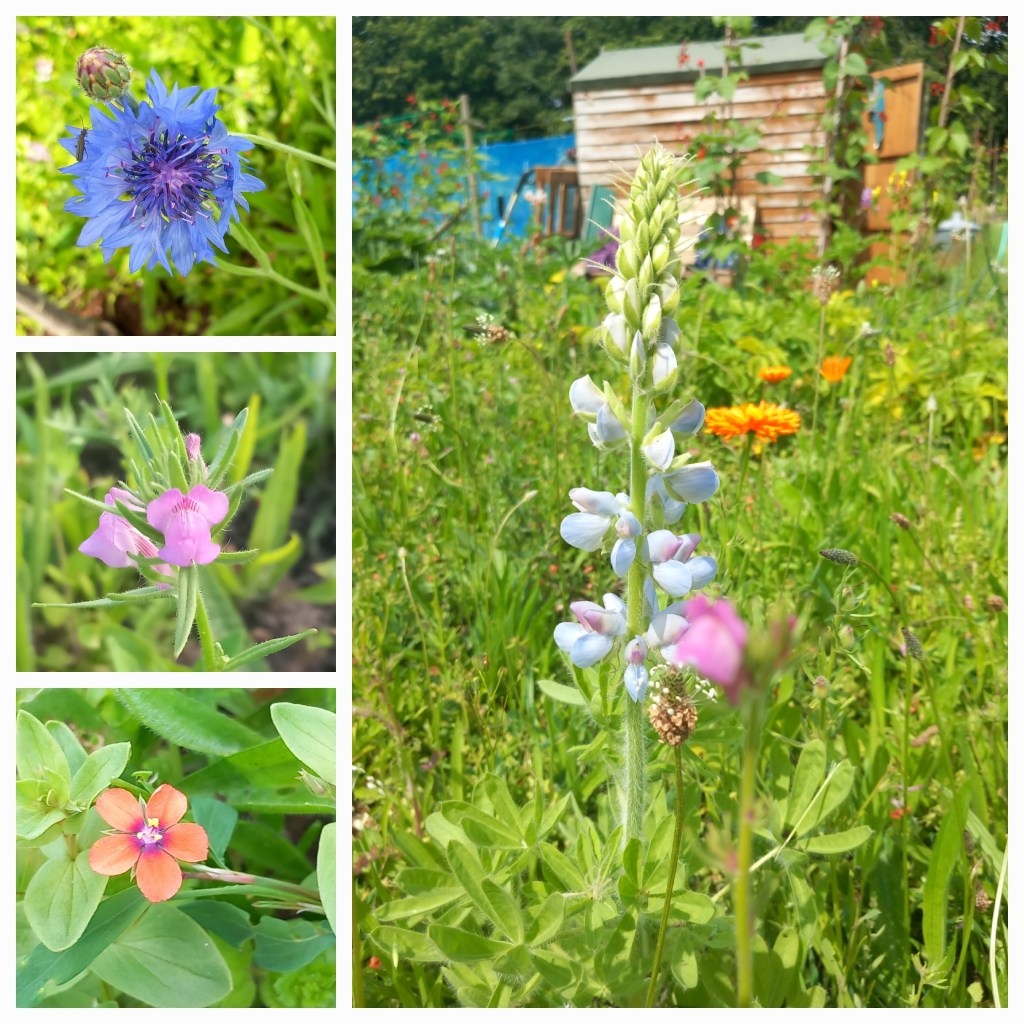
The seed mix has done quite well, with a range of flowers coming up including Scarlet Pimpernel, Vetch, Snapdragons, Cornflowers and, just coming out now, Lupins – a plant that takes me back to my childhood.
Left, from top: Cornflower, Vetch, Scarlet Pimpernel. Main: Lupin
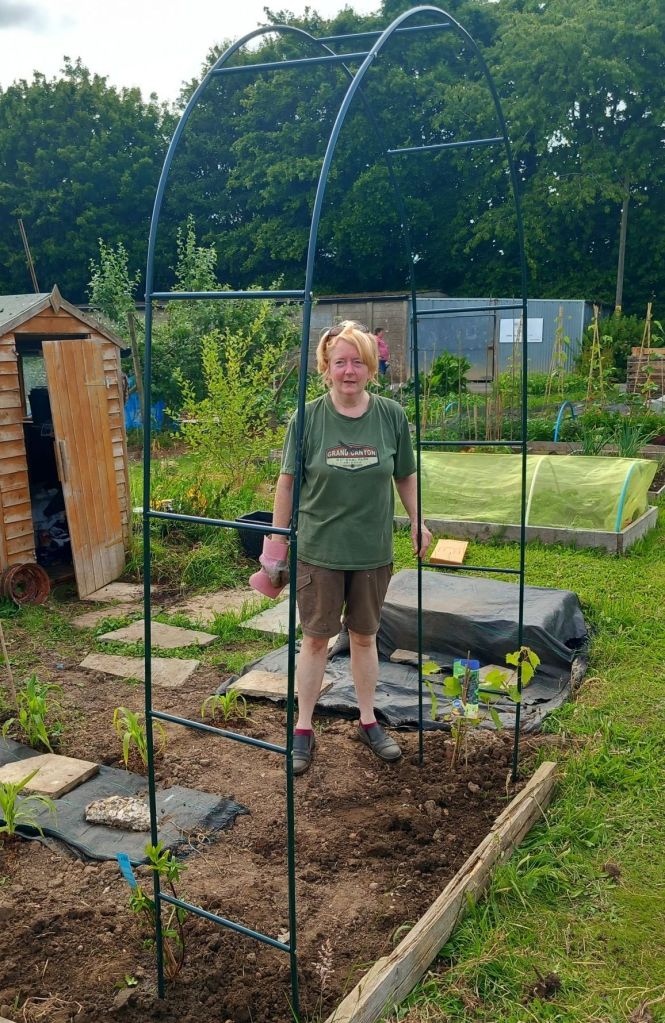
The plot lacks shade, apart from close to the bramble, so we’ve recently added an arch, and put in some climbers at the bottom: a vine and a honeysuckle. A bit late for this summer, but in future it will look amazing and provide more food for wildlife. We might even get some grapes!
An arch for climbers, to provide some shade
We’re really happy with how it’s going so far. The location is quite peaceful, so it’s a lovely place to spend an hour or two. We’re making it more comfortable for humans, but more on that next time.
We put in a Wilder Southampton sign to tell the neighbours these are not ‘weeds’!
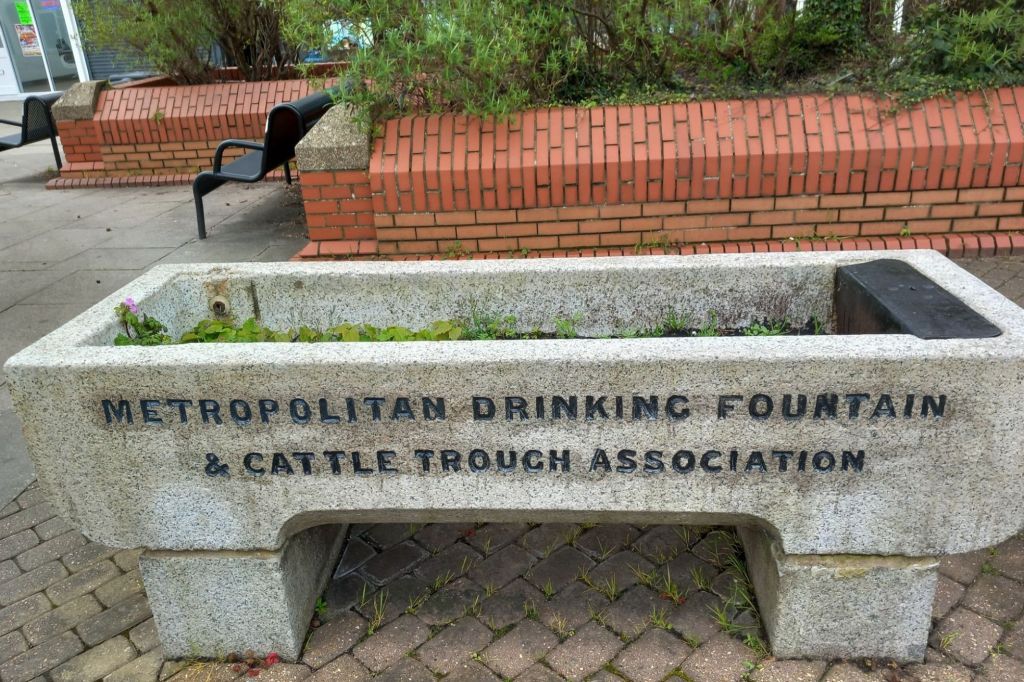
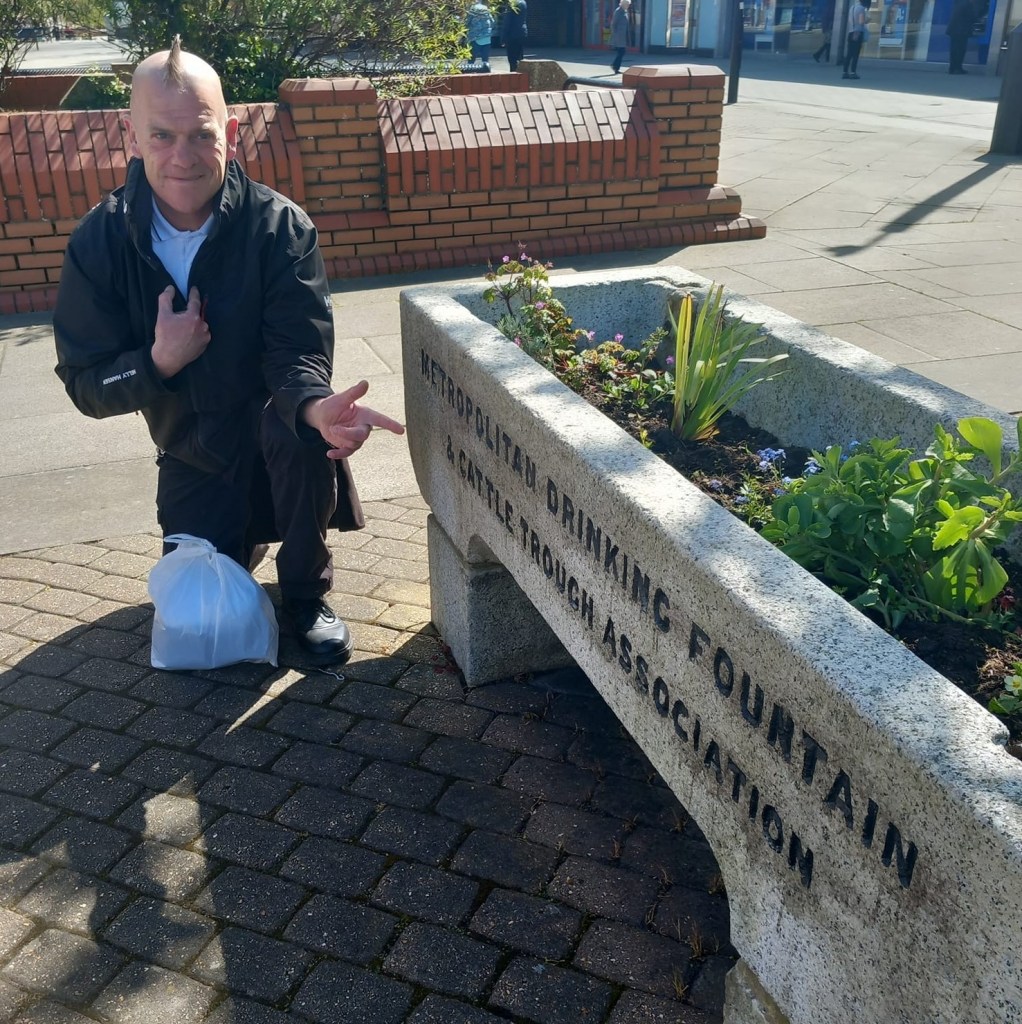
Bitterne shopping precinct is, to be blunt, pretty lifeless. There are a few trees and shrubs at either end, but under the shrubs (seen in the background in the first photo), the ground is pretty compacted, and nothing grows. In March, I was getting increasingly concerned about the lack of flowers for pollinators, so I decided to take action. The horse trough seemed the only feasible place to do something that wouldn’t take much looking after, particularly as I’d recently started going to Bitterne every week to go swimming. Why am I telling you this? Because it’s something I’ve learned over the years doing my Pollinating Peartree project, which involves maintaining a few patches in the Peartree ward. I do this as a volunteer, largely on my own, and since I’ve been working on the Wilder Southampton project I’ve used the experience to offer advice to others who are thinking of doing something similar. One crucial thing, I think, is how convenient it is to check on your patch, especially in summer when watering is needed.
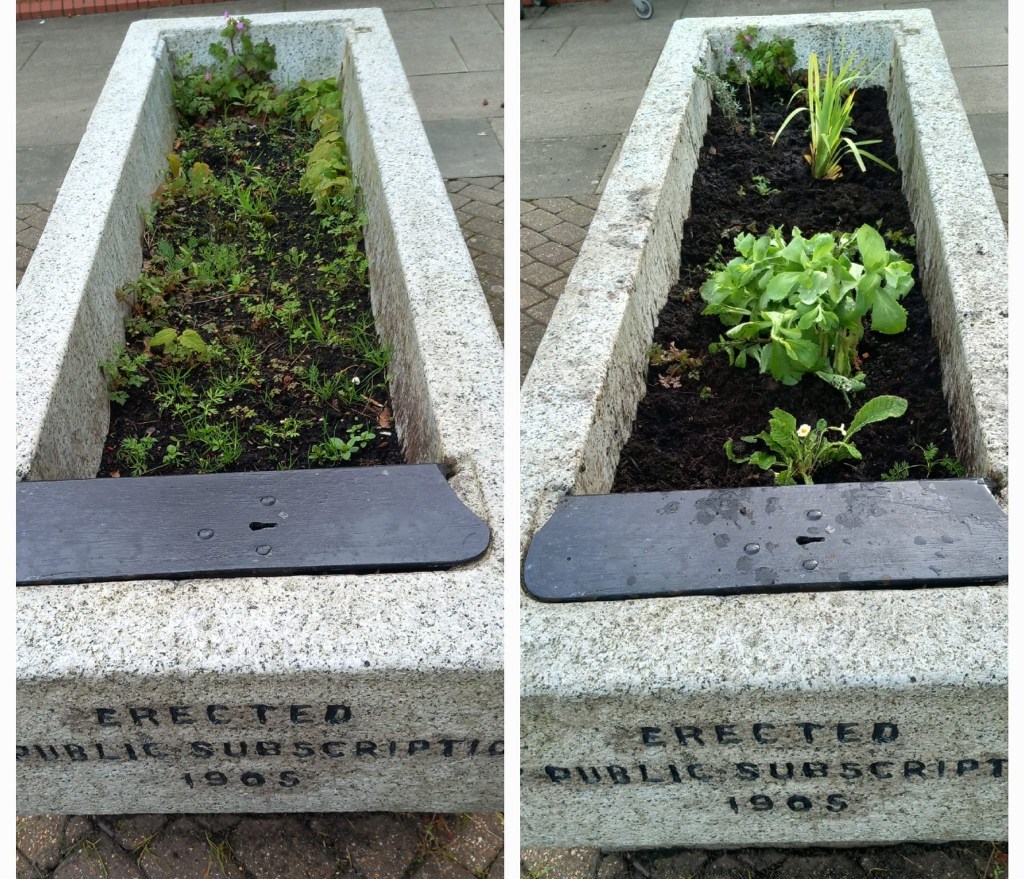
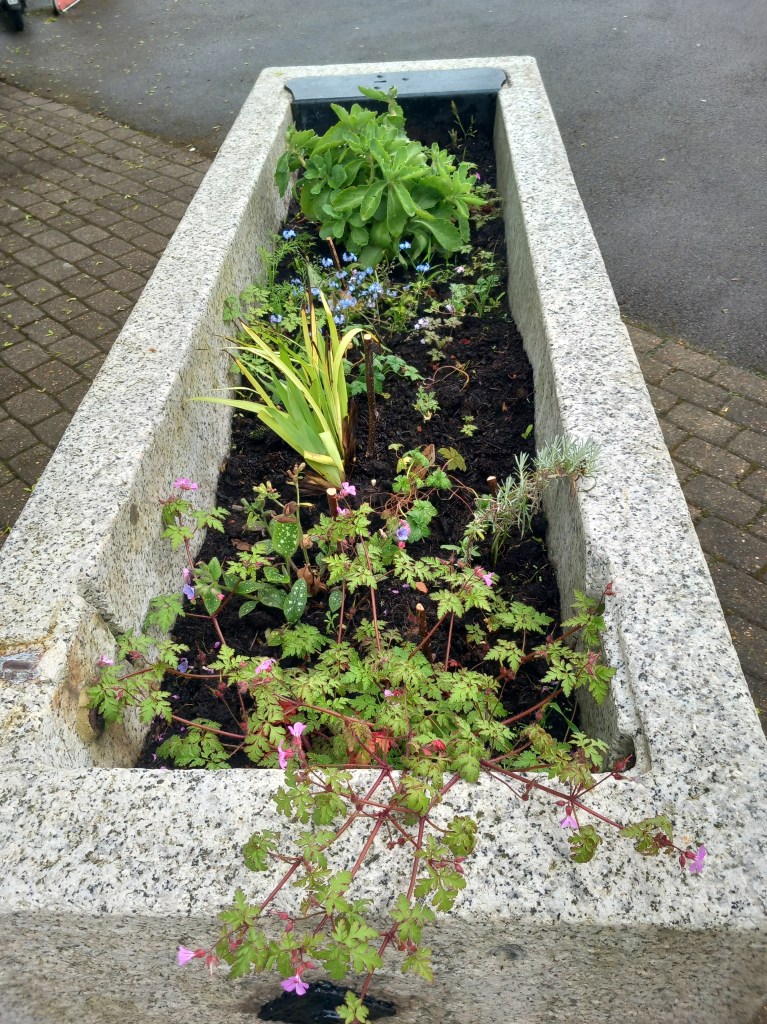
I checked with my councillor if it would be ok to plant the trough, and he thought it was a great idea, particularly as a local man had recently cleaned the outside and refreshed the lettering. On Saturday 6 April I cleared some of the ‘weeds’, including the sycamore saplings, but kept the Herb Robert, and added some pollinator plants from my garden (so it hadn’t cost me anything if they failed or were pulled out). I chose a Saturday so I’d be able to go back on the Sunday to check on it. Before and after pictures are below.
You can see from the pictures that the trough dates back to 1905, so it’s part of the history of the area. This is why the local man, Paul, decided to clean it up. I didn’t know him when I planted it, but when I was adding some plant labels two weeks later, on 18 April, he approached me and introduced himself. We got chatting and I took a photo of him to post on social media, with his permission.
I put the photo on the SO19 Community Group on Facebook. I’ve posted on there before about my own planting or the Victoria Road beds that were started as my first Wilder Southampton project and are now maintained by the Victoria Road Gardeners. I usually get up to a hundred ‘likes’ and some positive comments, but this post was different. At the last count, it had attracted 1,400 likes, 103 comments and 21 shares. I was stunned. I think it must be down to the combination of two strangers independently acting to improve something historic. From the comments, it became clear that Paul is well-known and well-liked, so I’m sure that helped. In my case, the improvement wasn’t for humans, though I didn’t make that clear in my post. Maybe if I had done, the reaction would have been different. I think later in the year, when there are more flowers, I might post again and spell out why I put the plants in. It’ll be interesting to see how people respond to that!
Another group I posted in was Southampton Heritage photos. This was to find out more about the history of the trough. I love this group as there is always someone who knows the answer, plus it often starts conversations about memories. It wasn’t long before someone mentioned other troughs around the city, followed by another person recommending a book by AGK Leonard with the wonderful title “Southampton Memorials of Care for Man and Beast“. Fortunately for me this was available from the Bitterne Local History Society shop just along the road from the trough, at the bargain price of £1! It’s been fascinating to read more about its origins. Bitterne Precinct its third location – it was first positioned at the top of Lance’s Hill for the benefit of horses that had made the slow and difficult climb. What I really love though are the personal stories, such as one comment on my Facebook post that said “When my dad was a kid, he dived into it to escape hornets.” I wonder what his dad would think of it being enhanced for bees!
2 May, a month after planting. Herb Robert, Lungwort and Forget-me-Nots in flower, sedum doing well, and marigold seeds germinating.
Photo taken at Bevois Town Primary School, home of hedgehogs and hedgehog champions!
A few days ago, on a dark February morning around 6 a.m., I opened my front door to see a hedgehog snuffling around the mat in the porch. He or she dashed into the shrubs at the side, but those few seconds were enough to make my day. In fact, it’s made my month! That was the first time I’d seen a hog in my garden since October last year. Four months without them, and the garden had felt kind of empty. After several years of them visiting, I’d almost started to take them for granted. If I think back to when they started coming, I was so excited – a proper wild animal in the garden. What a privilege! I got a hedgehog hole put in the fence, bought hog biscuits, and made a shelter in a quiet spot. I even bought a wildlife camera. Then one day, they stopped coming. So what happened?
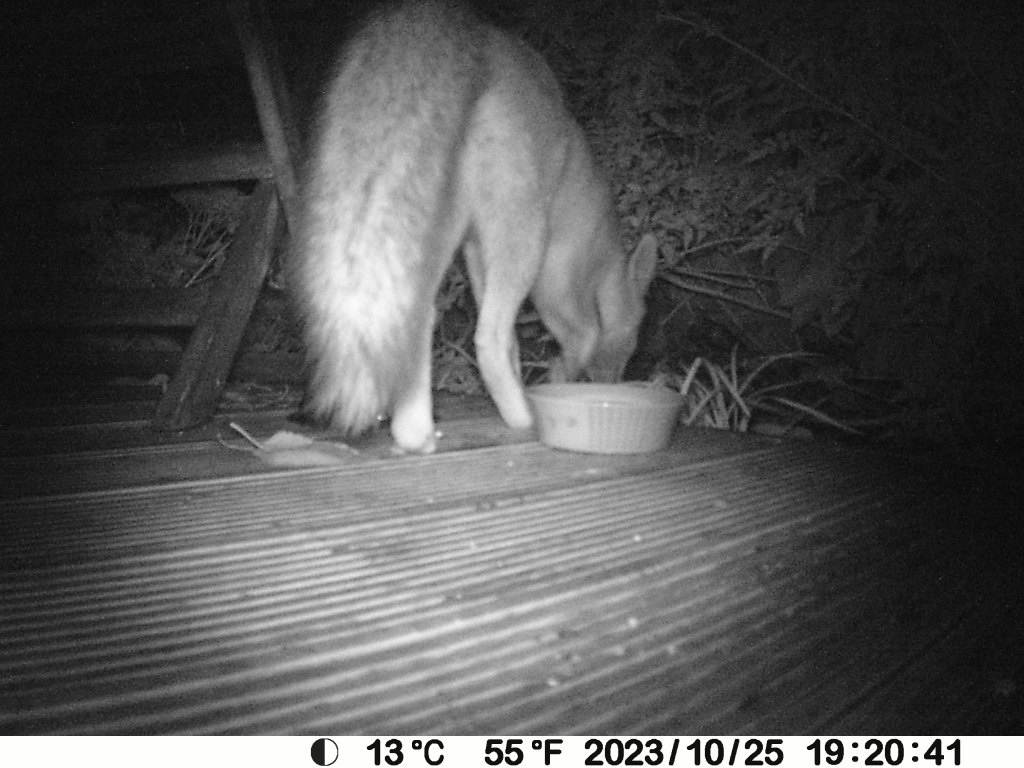
The fox happened. Previously, I’d only seen them in the front garden, but in mid October a neighbour sent me a photo of one on the shed roof at about 9 pm. I put my camera out and discovered they were eating the hedgehog biscuits. The first time, a hog came later, but after that, no more hogs, but the fox kept coming. I didn’t really want foxes in the back garden, so it seemed the only thing to do was to stop providng food. I felt bad about this because the local hedgehogs had already suffered disruption and lost habitat.
For years, there had been a very wild garden across the back alley. I’d been told hogs lived there, then the humans moved, and for about two years it was left to nature (apart from the car parked in it, but that’s another story!). In August 2023, the owner had the garden completely cleared. Not long after that, our wildlife-friendly nextdoor neighbours moved out, and their garden was similarly tidied.
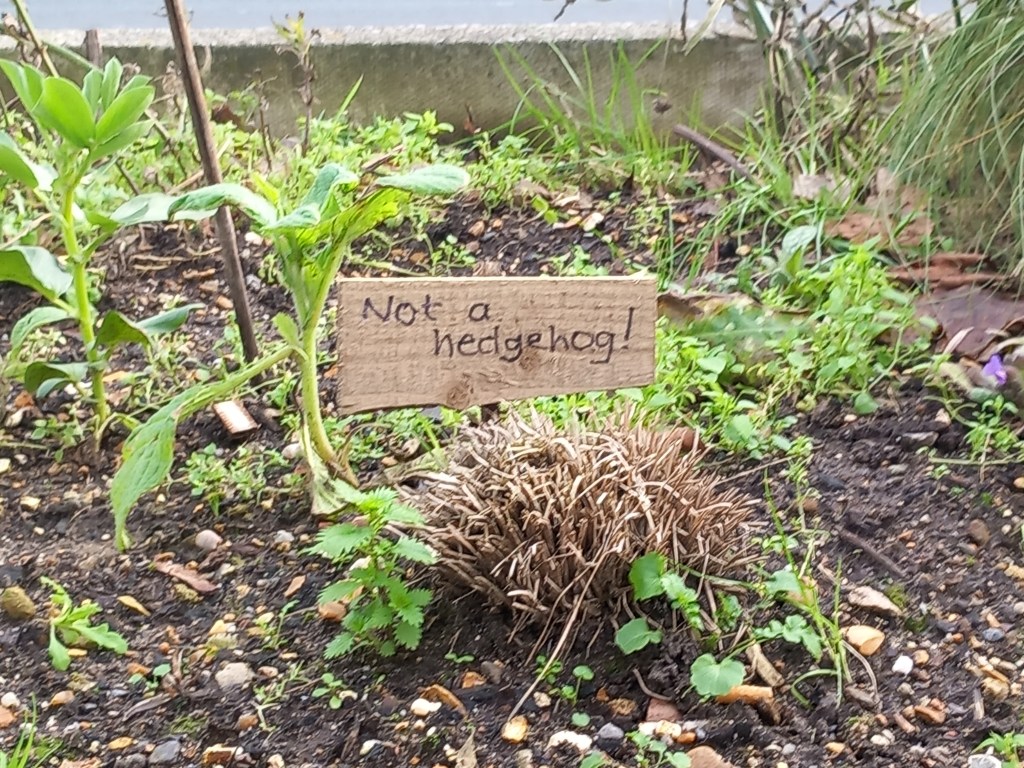
For two months, this clump of grass in a local flower bed was the closest I got to seeing a hedgehog! Then in early January, I spotted a small hog running along the pavement. Wisely, it went into a garden three doors up, where another wildlife-friendly family lives. That decided it. I resolved to make a fox-proof feeding station.
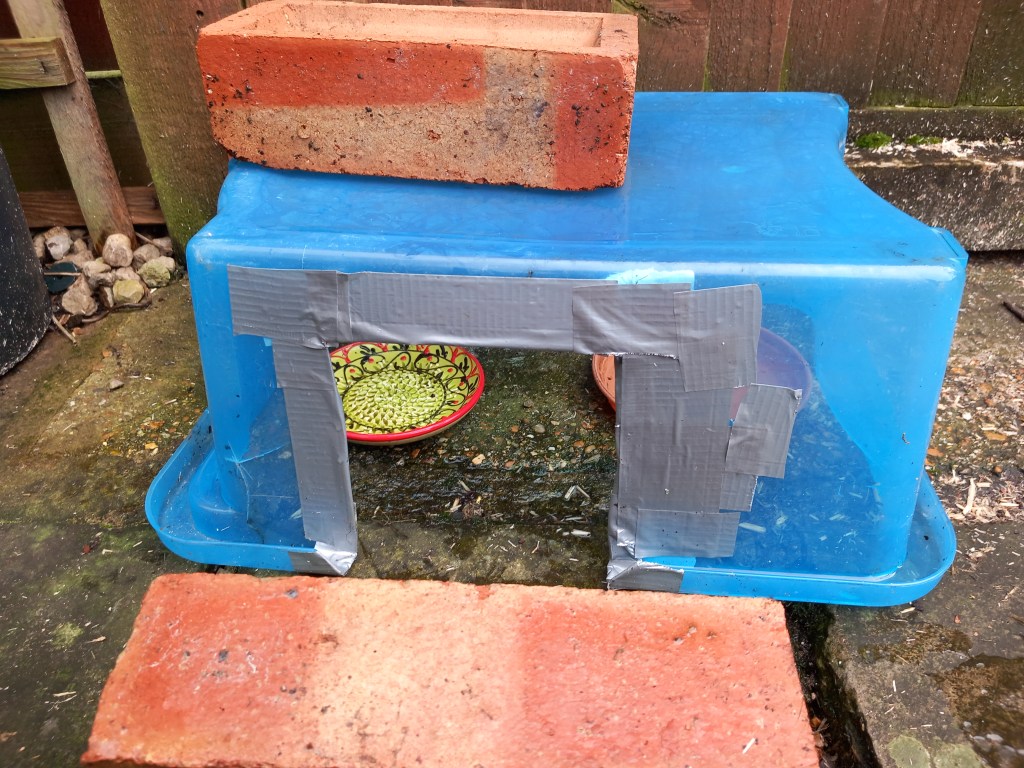
I found a video from Warwickshire Wildlife Trust and collected a plastic box I’d seen dumped in an alley, plus some bricks flytipped in a verge.
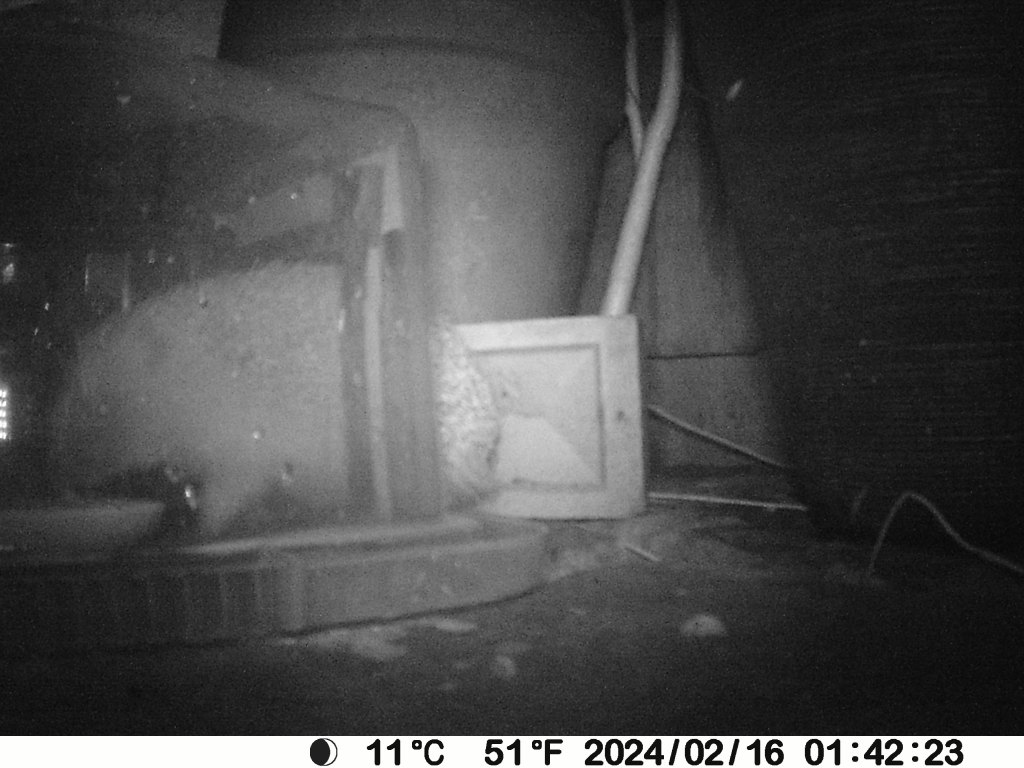
One brick is placed in front of the doorway, leaving a corridor for a hog but not enough space for a fox or a cat. Another brick on top means it’s not easy to knock the box out of the way. The first few nights I put food in, nothing happened. Then one morning the biscuits were gone, but who’d eaten them was a mystery (my money was on a rat). Next night, the camera was set up, revealing a cat having a sniff around but not getting in.
Then, two days after my morning visitor – success! Three separate hog visits in the early hours, and two of those were definitely different hogs. How do I know? Because one had a distinctive scar on its back.
Honestly, I’m overjoyed to have the spiky ones back. I just wish everyone could experience this – too many children I’ve asked have never seen a hedgehog. I’m pretty sure they’d be as enchanted as I am.
Read more about Hedgehog Champions Bevois Town Primary School and visit the Southampton National Park City website, where you’ll find advice on how you can help hedgehogs to thrive.
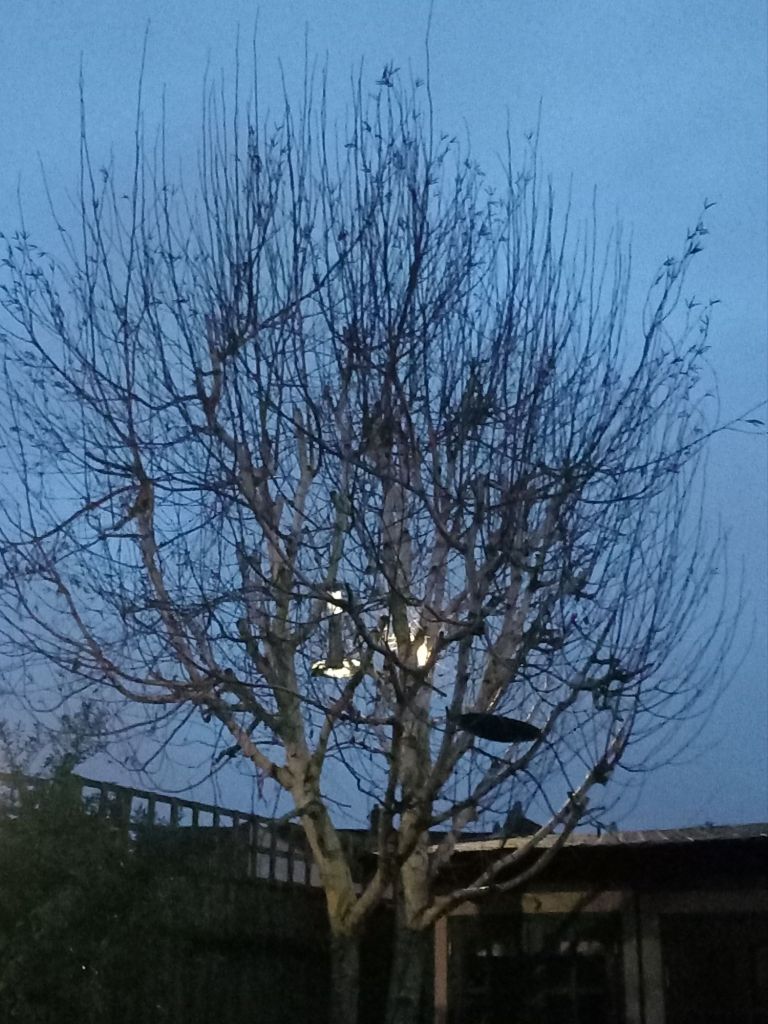
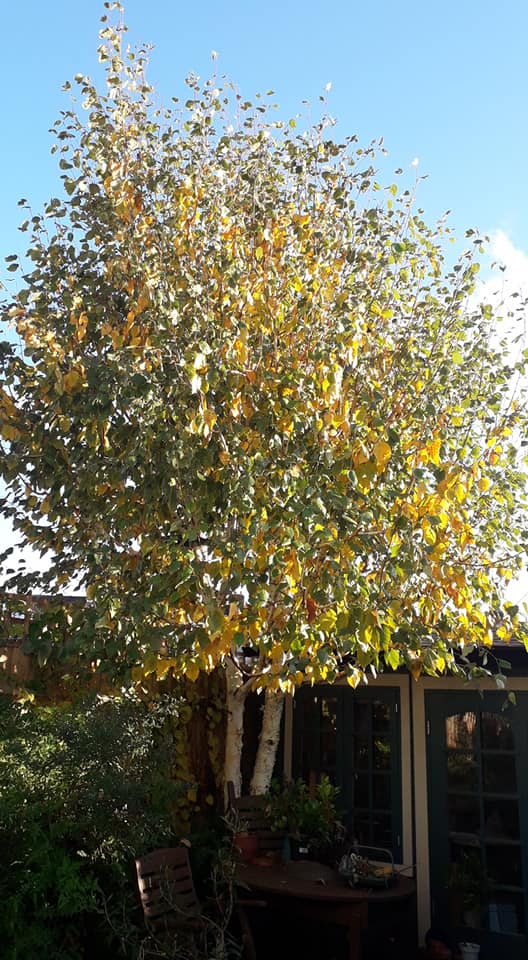
Christmas Day 2023: Day One of 12 Days Wild, the Wildlife Trusts winter challenge to do something wild each day. I started by sitting in the garden in the dark at 7 am with a hot chocolate, taking advantage of the quiet to listen to the birds waking up. On a normal Monday there would be much more traffic noise – and for that matter, on a normal Monday, I wouldn’t be drinking hot chocolate at that time! As I listened, I looked at our silver birch, thinking about how significant it is to me. The tree has many stories to tell and in this post, I’ll share some of them. (And if you wonder about that mysterious light shining through the sunflower seed feeder – that’s the streetlight in the alley beyond the fence!)
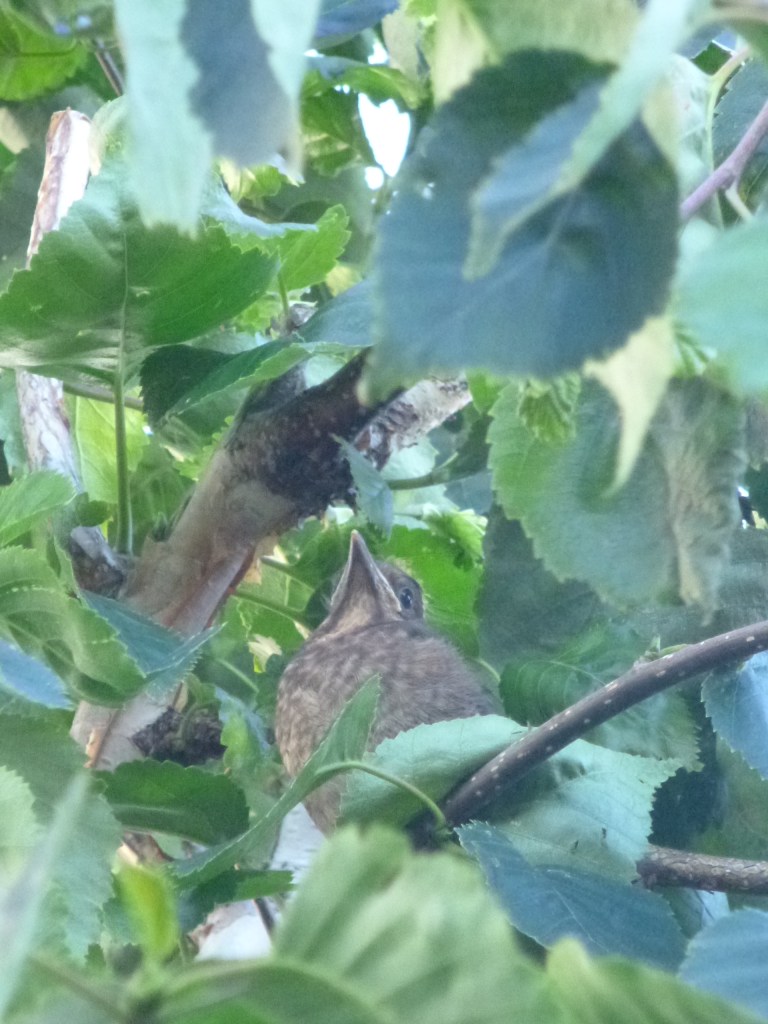
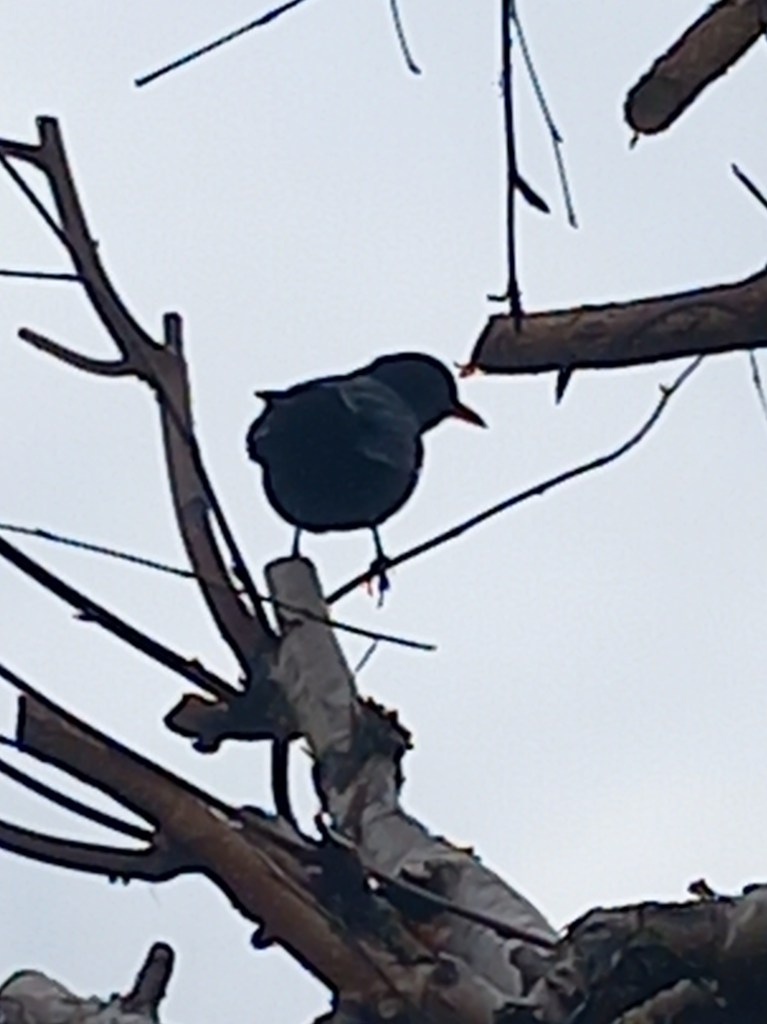
The tree is a place of shelter for some, like this very young blackbird one spring. It seemed to me that it had not long fledged, probably from the nest in the ivy on my neighbour’s shed roof. Most years, we get a young bird or two coming into the garden, and they don’t always make it straight to the safety of the tree. I remember the year we found one perched on the kitchen window sill – we stayed in the house so as not to scare it, holding our breath until one of its parents spotted it and called it to safety. Another time, I opened the garden room door one morning to discover a bird inside. He or she had got shut in accidentally, and spent the night there. Poor thing! Nestled among the leaves of the silver birch seems a better place to be.
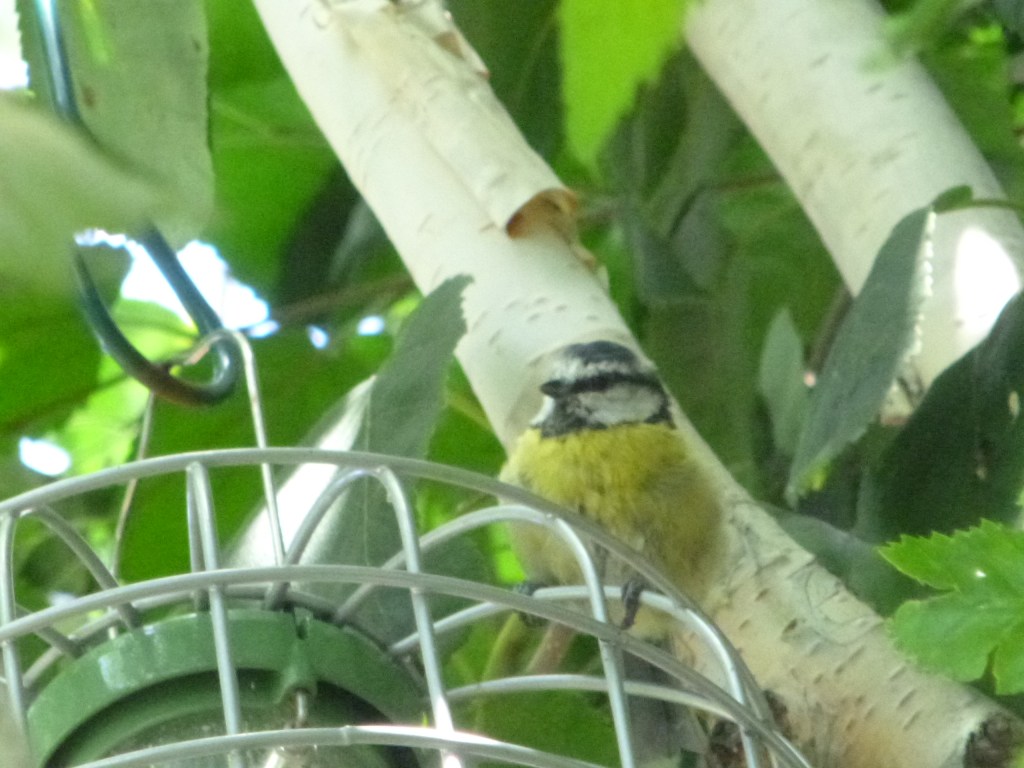
As well as blackbirds, the tree – or rather the sunflower seeds I put out in the feeder! – attracts blue tits and goldfinches, and, less often, great tits and greenfinches. I’ve learned over the years to recognise the different species from their calls, as I don’t often see them clearly, especially when the tree is in full leaf. Sometimes I identify them by their habits – the blue tits take one seed and go to a branch to eat it, while the goldfinches eat at the feeder. Both of them ‘peel’ the seeds, even though I’m providing them with sunflower hearts, which have no shells!
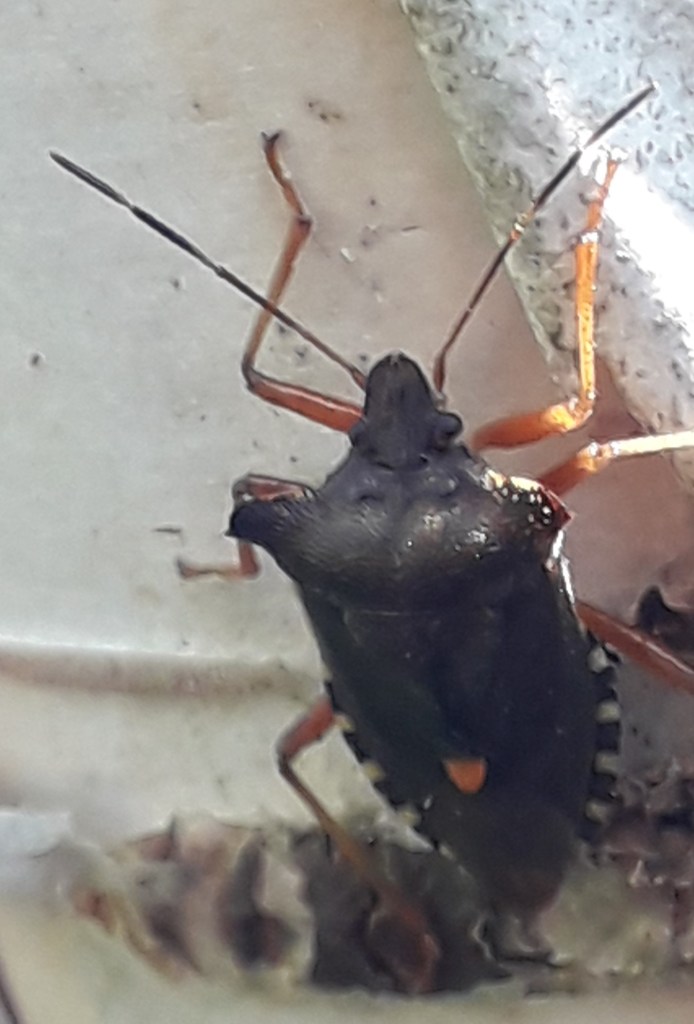
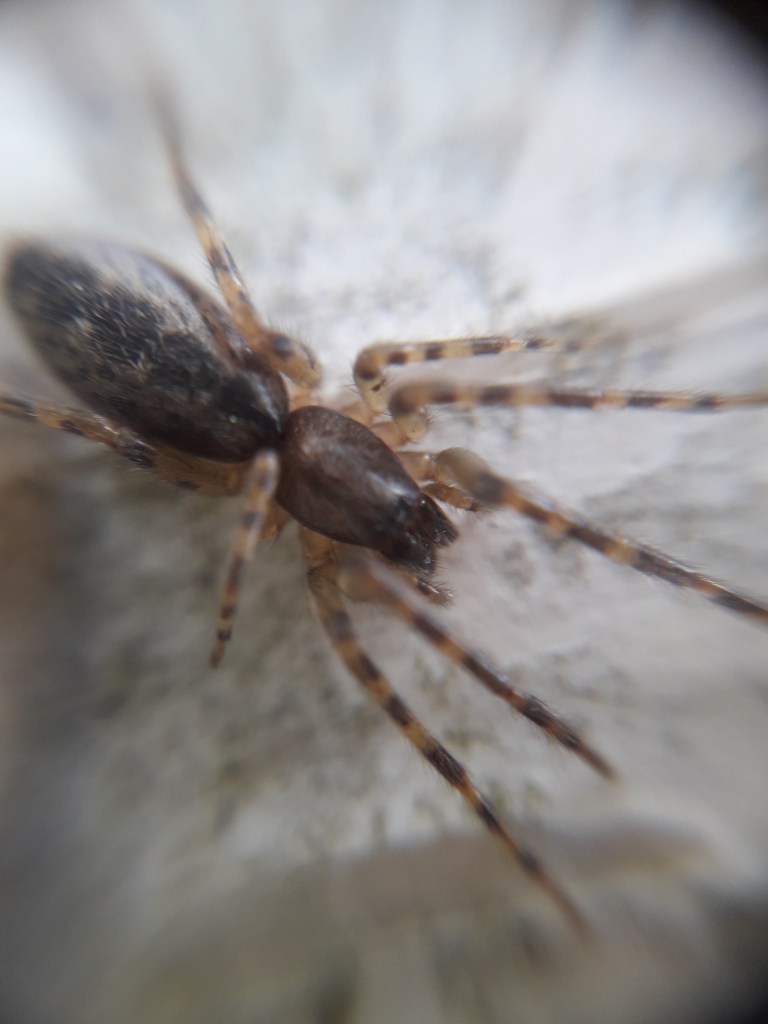
Two of the smaller tree inhabitants: a forest shield bug and a tube web spider
The birch attracts other, smaller, wildlife too, like the bug and spider above. The first year I lived here, there was a host of sawfly caterpillars that were eating their way through the leaves. They stripped quite a few branches. But since I started attracting birds to the garden, I don’t see many at all, and the tree keeps her leaves. I assume the blue tits pick off the caterpillars before they do too much damage.
Other, unseen creatures make the tree their home too, leaving beautiful patterns in the algae on the bark. Slugs or snails perhaps, eating their way up and down in the dead of night.
The bark is papery, naturally peeling away, so sometimes I’ve collected it for lighting fires at forest school. Birch wood seasons quickly and burns well, so when we prune the tree each winter, I save twigs to use as kindling the following year.
Blackbird supervising the annual prune 😄
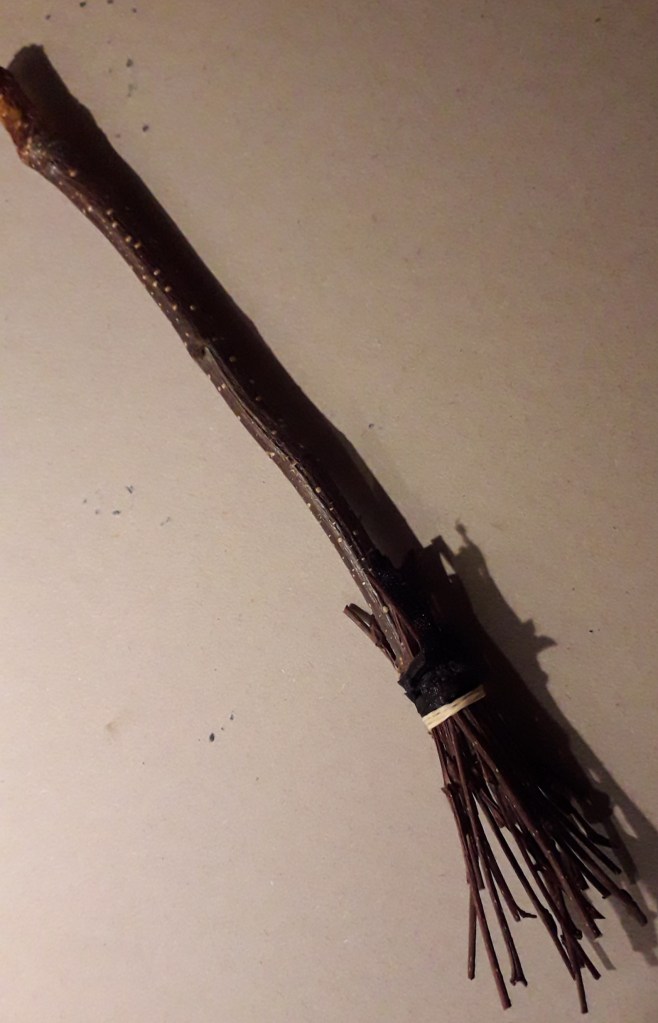
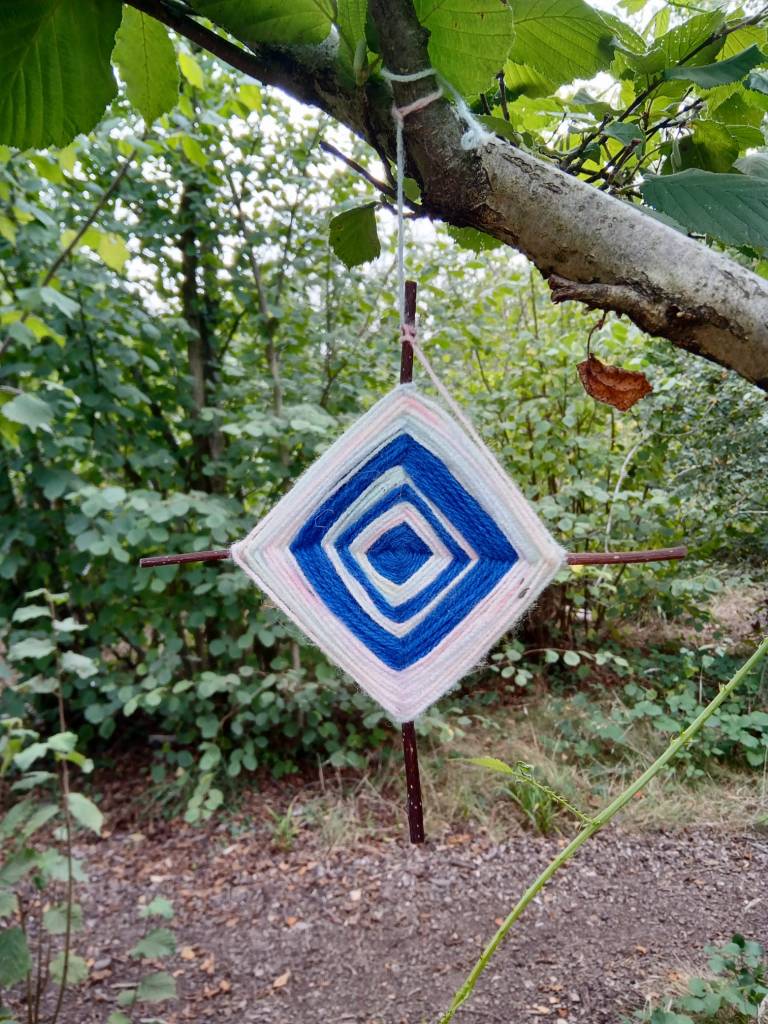
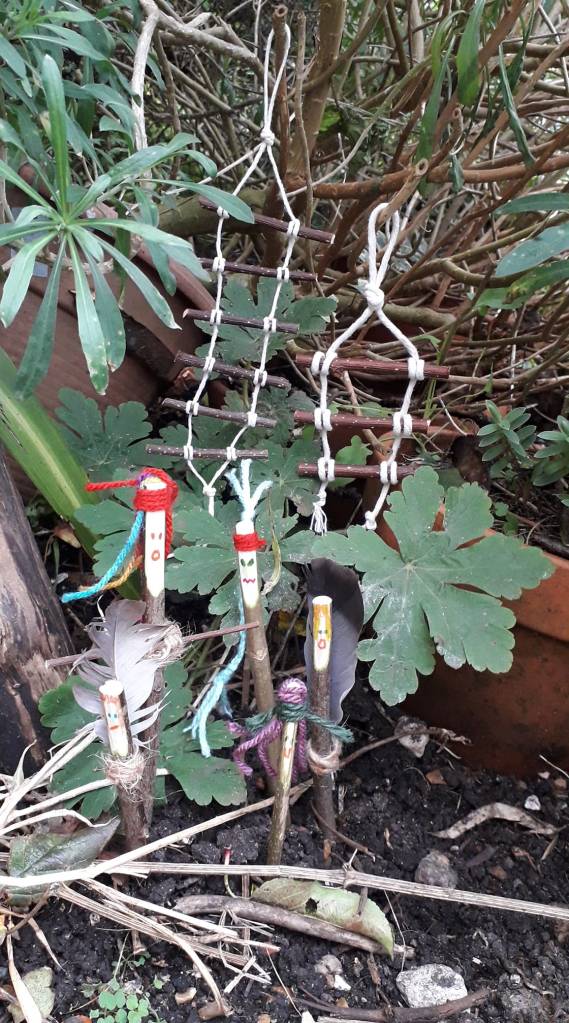
There are many ways to give the birch twigs a second life, so much better than just putting them in the garden waste. I pile them up under shrubs to make habitat for insects, which in turn gives birds and hedgehogs a source of food. Then there are crafts: the sticks make wands, the cross on which to wrap a Godseye, flower stalks, and rungs of ladders for forest folk. They can also be turned into tiny broomsticks, reflecting a traditional use for birch.
A mini broomstick GodseyeForest folk with their rope ladders
Our garden is a real sun trap, so in high summer the shade provided by the tree is very welcome. She also gives us one anchor point for our “shade sheet”, which helps reduce the amount of watering needed for our plants. And for us, the strong trunk holds one end of our hammock 😆
As I write this, we’ve recently finished the annual prune, and it’s been quite drastic this year. It had to be, because our garden is small, and the tree is getting big! She’s about 12 years old now. We’re confident she’ll look gorgeously leafy in spring, and can’t wait for those leaves to appear. My book of tree wisdom tells me that silver birch is “womanly, constant and friendly, a tree of enchantment”, and I’d say our birch is all of those. My home office overlooks the garden, so I often find my eyes and ears drawn to the tree. Long may she be a part of my life.
When I wrote the previous post in early September, I’d intended this part 2 to follow quite soon. It’s taken two months for the handwritten notes to become a blog, but in some ways not much has changed. The photos here were taken in September, but as autumn has so far been quite mild, the Subway Strip doesn’t look too different. There are now a lot of leaves, fallen from the sycamore, and fewer flowers, but otherwise it’s more or less the same.
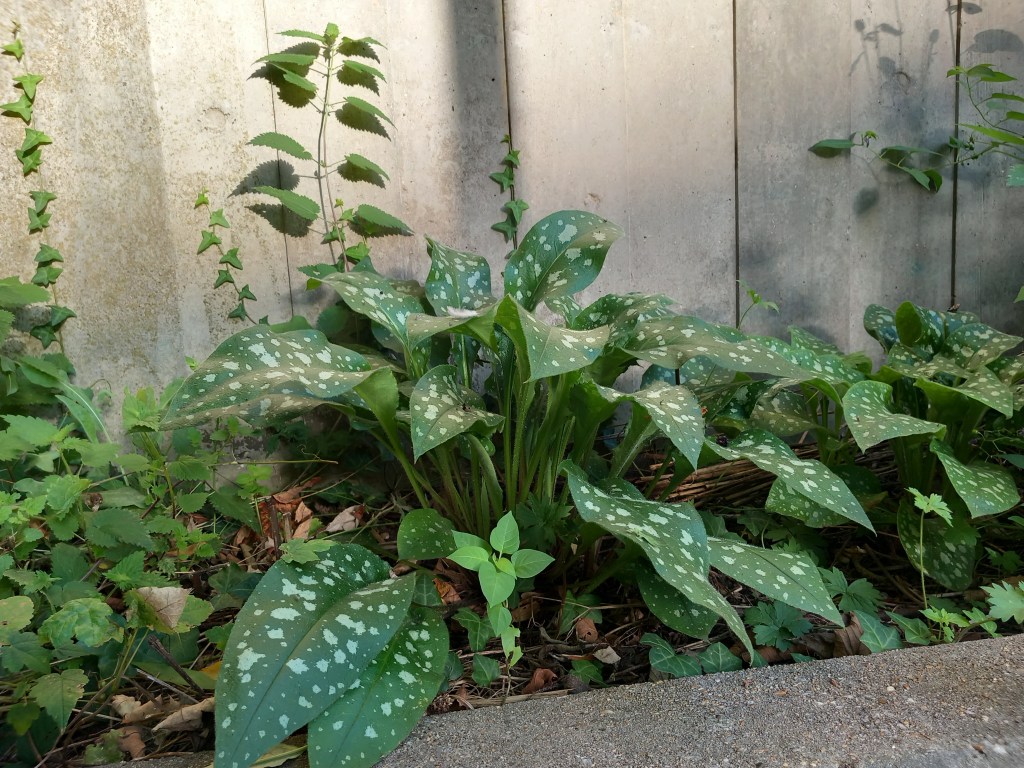
The first photo shows Lungwort, which has thrived in this plot. It provides great ground cover, helping the soil to stay moist and cool in hot, dry periods, as well as giving insects somewhere to shelter. In spring it flowers early, and is popular with bees.
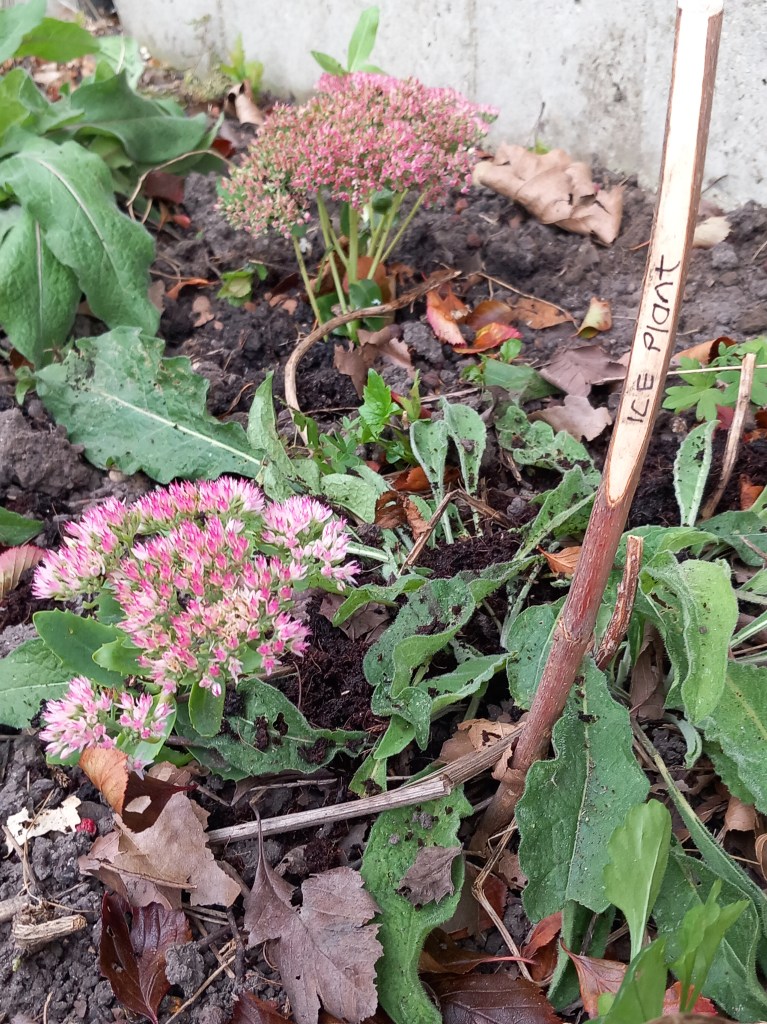
Another plant that spreads well and is popular with bees, but in late summer, is Ice Plant (Sedum). The label is there not only to inform passersby what it is, but also to show the area is looked after.
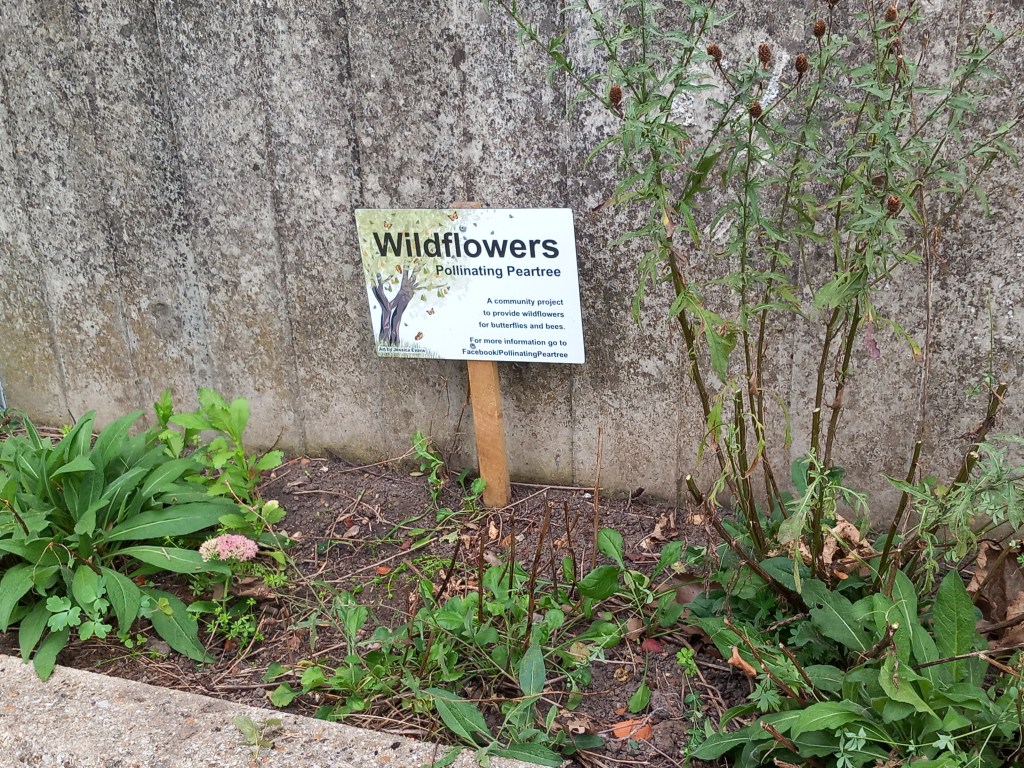
I’ve thought about adding more detailed labels, but am not sure how long they’d remain in place. For now, I hope the Pollinating Peartree sign is enough. It directs people to Facebook, where they can find a link to this blog.
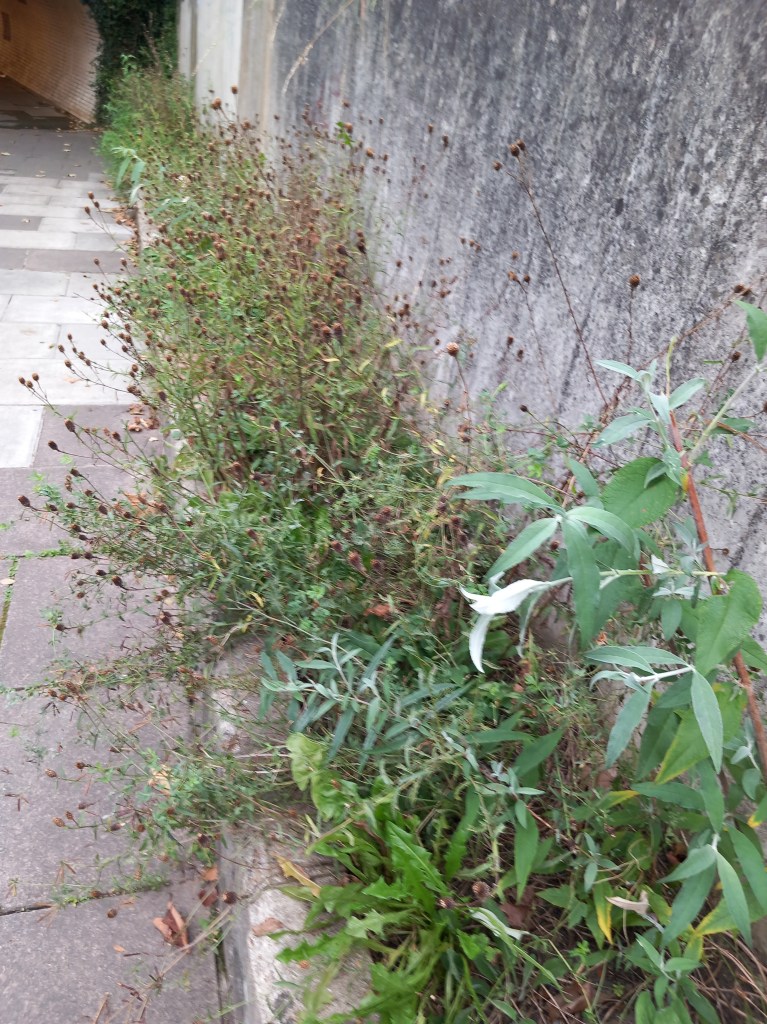
The photo above shows about half of the Subway Strip, with the subway under the railway bridge just visible top left. In September, there were still a lot of Knapweed seedheads, left for the birds. I thinned them out to keep that balance between ‘tidy’ and wild. They’ve since been cut back, with some stems left upright and others laid under leaves, providing hibernation and shelter areas for small creatues such as beetles, spiders and woodlice.
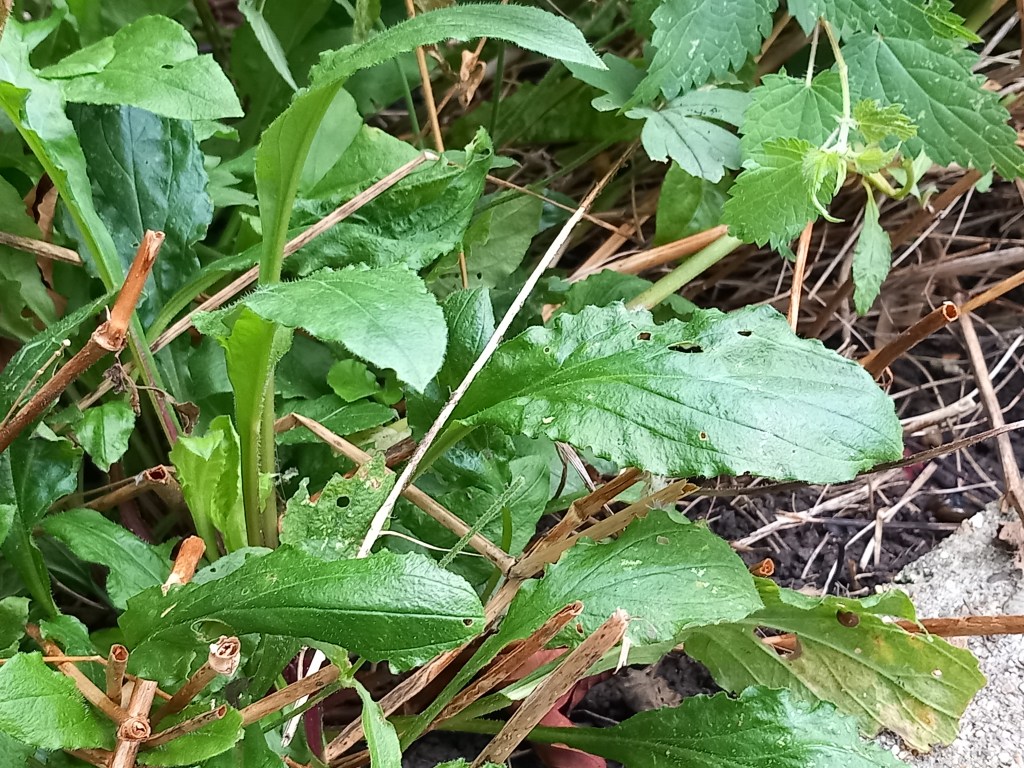
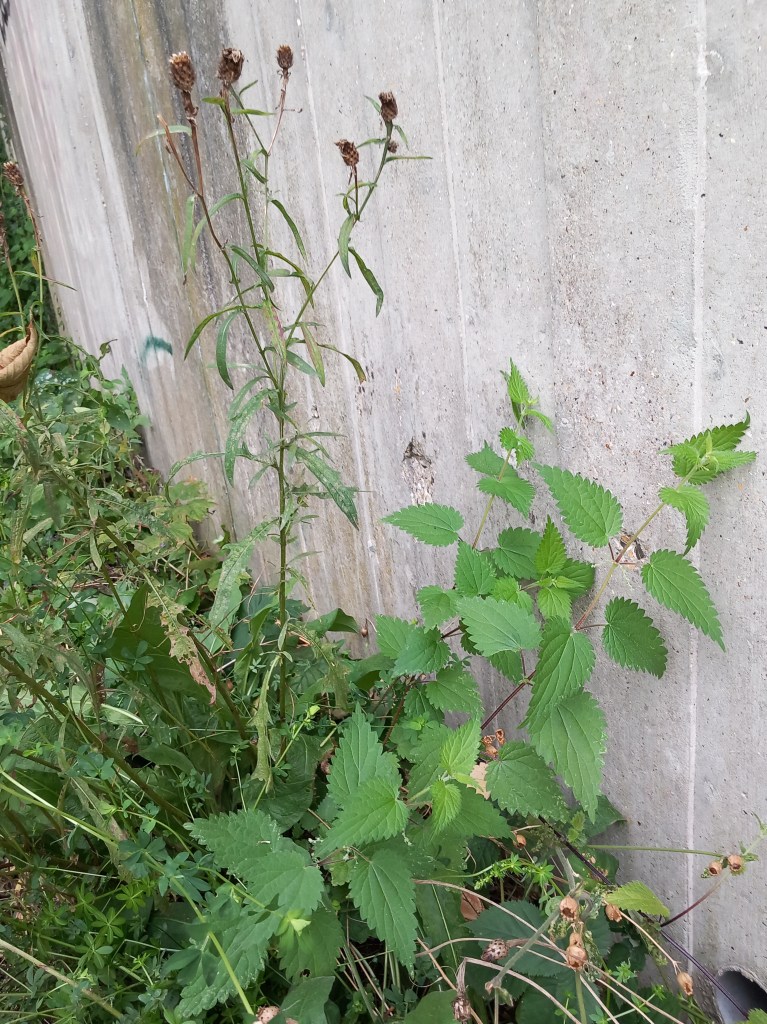
The end closest to the subway is quite shady, with ivy and nettles. Both are wonderful for wildlife, with ivy providing shelter and late summer nectar, and nettles being a food source for red admiral butterfly caterpillars. But nettles also sting, and are seen as weeds, which probably increases the chances of rubbish being thrown in this corner. They can also take over, swamping other plants, so for all these reasons I cut them back without removing them completely.
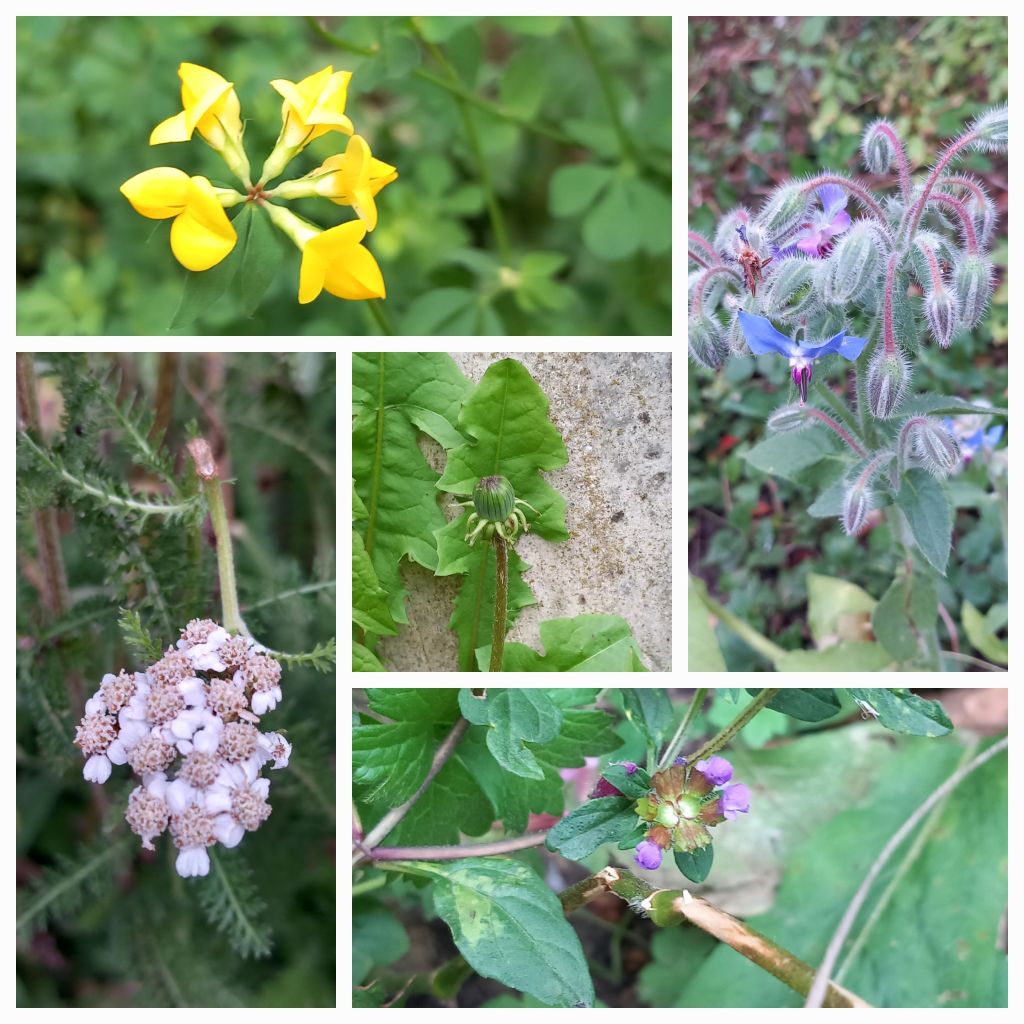
To finish, here are some of the flowers that were in bloom or bud in September. From top left, the yellow one is Birdsfoot Trefoil, Borage (still blooming in November), Self-Heal, Yarrow, and, in the centre, a Dandelion bud. Of course!





 Dandelion Nature