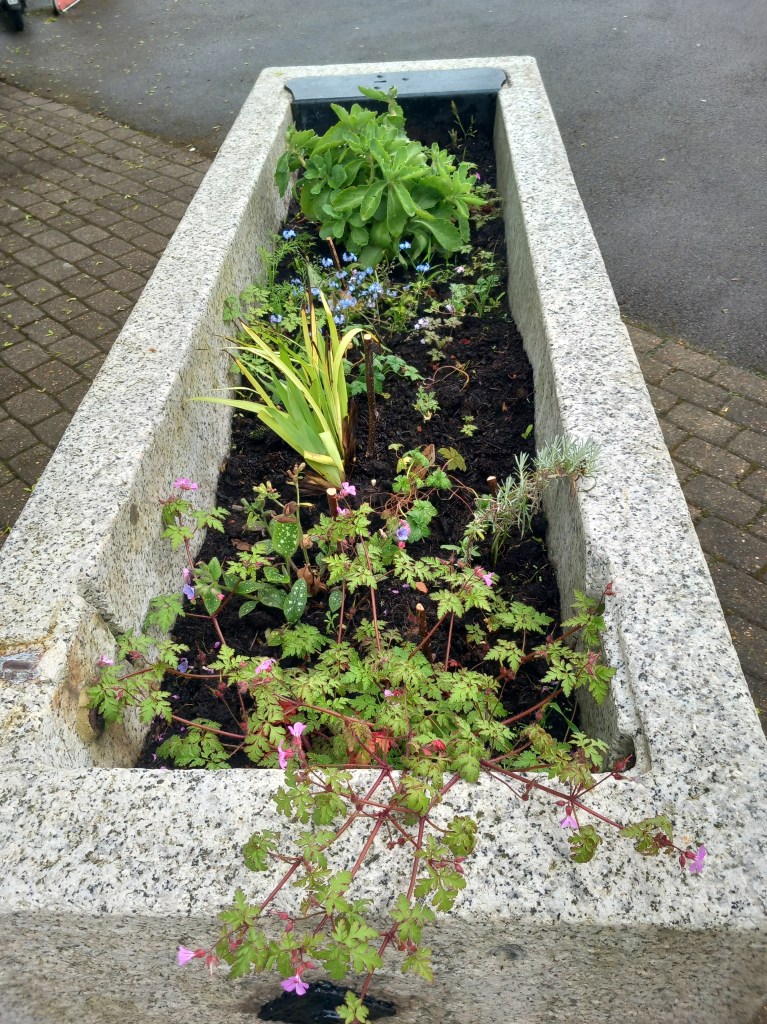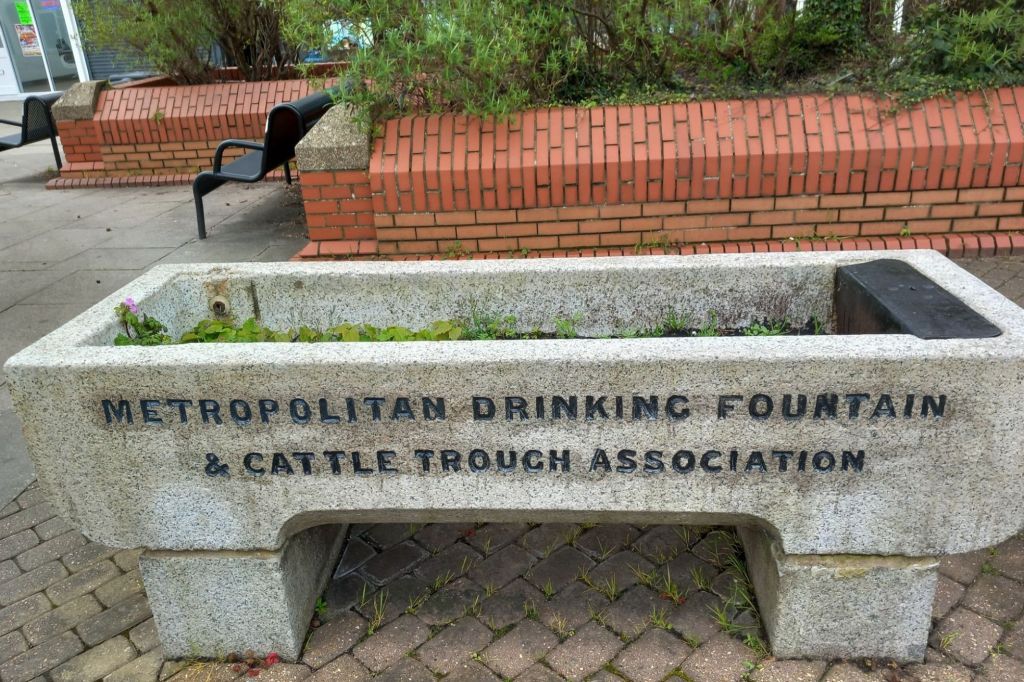
Bitterne shopping precinct is, to be blunt, pretty lifeless. There are a few trees and shrubs at either end, but under the shrubs (seen in the background in the first photo), the ground is pretty compacted, and nothing grows. In March, I was getting increasingly concerned about the lack of flowers for pollinators, so I decided to take action. The horse trough seemed the only feasible place to do something that wouldn’t take much looking after, particularly as I’d recently started going to Bitterne every week to go swimming. Why am I telling you this? Because it’s something I’ve learned over the years doing my Pollinating Peartree project, which involves maintaining a few patches in the Peartree ward. I do this as a volunteer, largely on my own, and since I’ve been working on the Wilder Southampton project I’ve used the experience to offer advice to others who are thinking of doing something similar. One crucial thing, I think, is how convenient it is to check on your patch, especially in summer when watering is needed.
I checked with my councillor if it would be ok to plant the trough, and he thought it was a great idea, particularly as a local man had recently cleaned the outside and refreshed the lettering. On Saturday 6 April I cleared some of the ‘weeds’, including the sycamore saplings, but kept the Herb Robert, and added some pollinator plants from my garden (so it hadn’t cost me anything if they failed or were pulled out). I chose a Saturday so I’d be able to go back on the Sunday to check on it. Before and after pictures are below.
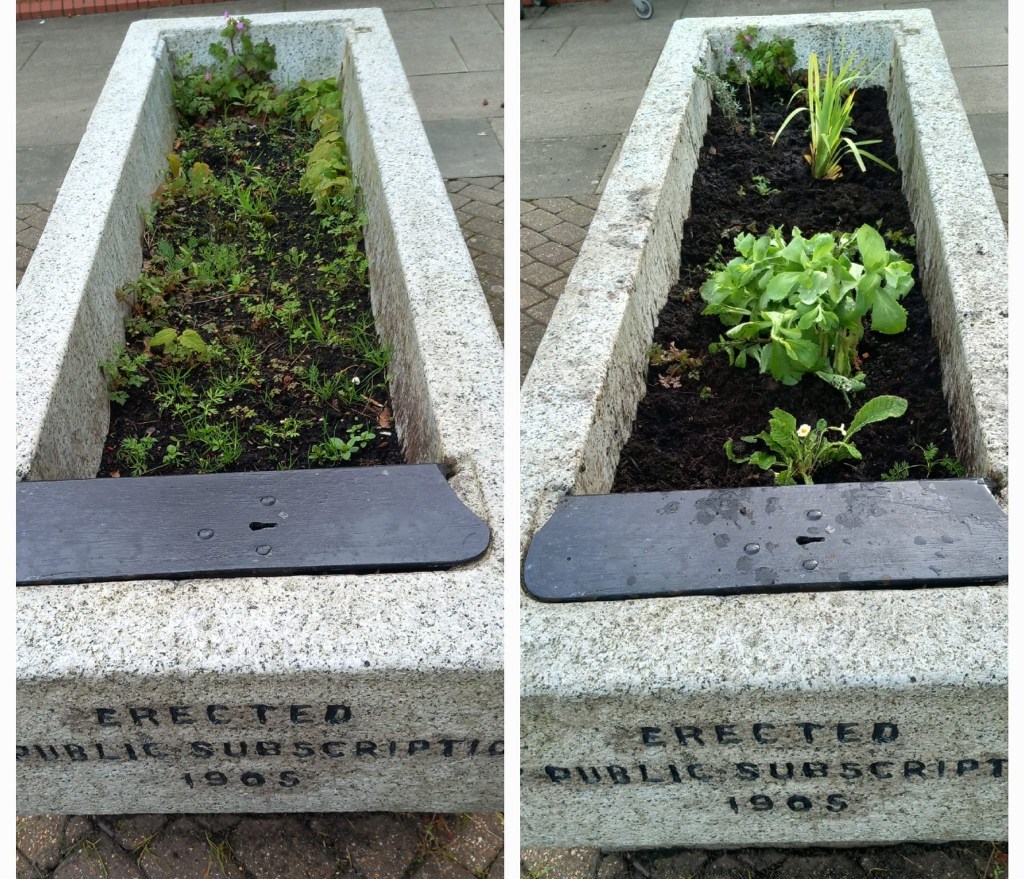
You can see from the pictures that the trough dates back to 1905, so it’s part of the history of the area. This is why the local man, Paul, decided to clean it up. I didn’t know him when I planted it, but when I was adding some plant labels two weeks later, on 18 April, he approached me and introduced himself. We got chatting and I took a photo of him to post on social media, with his permission.
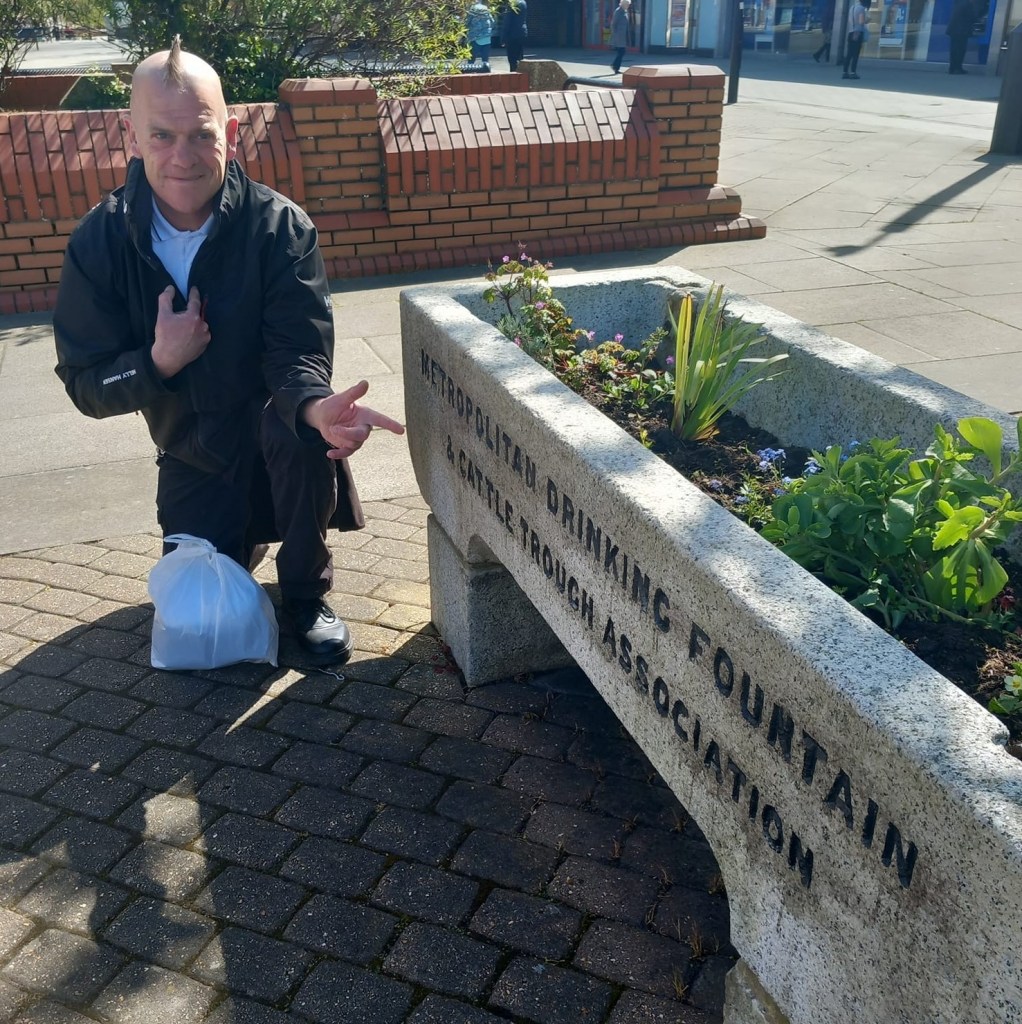
I put the photo on the SO19 Community Group on Facebook. I’ve posted on there before about my own planting or the Victoria Road beds that were started as my first Wilder Southampton project and are now maintained by the Victoria Road Gardeners. I usually get up to a hundred ‘likes’ and some positive comments, but this post was different. At the last count, it had attracted 1,400 likes, 103 comments and 21 shares. I was stunned. I think it must be down to the combination of two strangers independently acting to improve something historic. From the comments, it became clear that Paul is well-known and well-liked, so I’m sure that helped. In my case, the improvement wasn’t for humans, though I didn’t make that clear in my post. Maybe if I had done, the reaction would have been different. I think later in the year, when there are more flowers, I might post again and spell out why I put the plants in. It’ll be interesting to see how people respond to that!
Another group I posted in was Southampton Heritage photos. This was to find out more about the history of the trough. I love this group as there is always someone who knows the answer, plus it often starts conversations about memories. It wasn’t long before someone mentioned other troughs around the city, followed by another person recommending a book by AGK Leonard with the wonderful title “Southampton Memorials of Care for Man and Beast“. Fortunately for me this was available from the Bitterne Local History Society shop just along the road from the trough, at the bargain price of £1! It’s been fascinating to read more about its origins. Bitterne Precinct its third location – it was first positioned at the top of Lance’s Hill for the benefit of horses that had made the slow and difficult climb. What I really love though are the personal stories, such as one comment on my Facebook post that said “When my dad was a kid, he dived into it to escape hornets.” I wonder what his dad would think of it being enhanced for bees!