Exploring Itchen Ferry shore

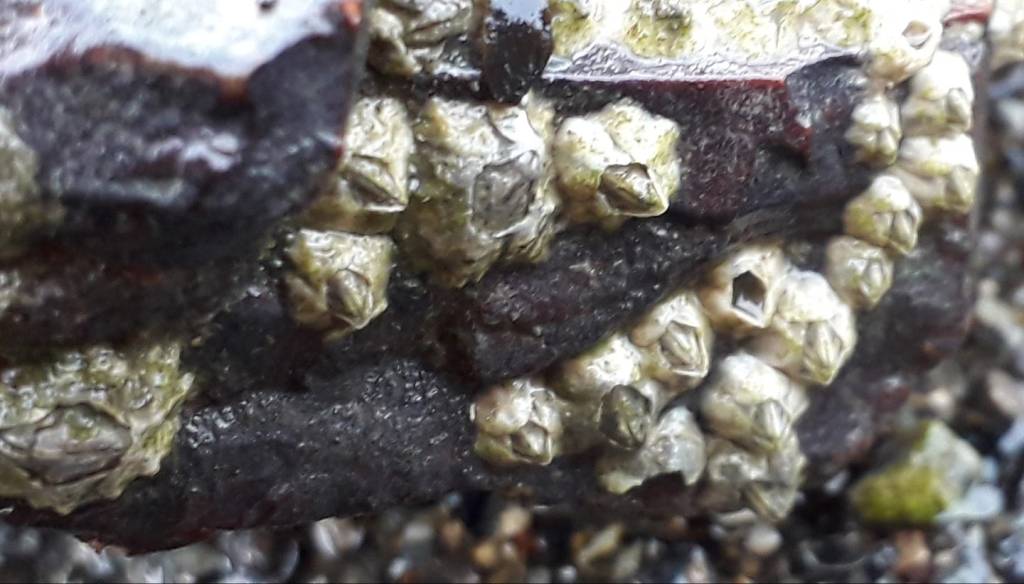
Until a few days ago, I didn’t know my limpets from my barnacles. Now though I can tell you a limpet is a mollusc whereas a barnacle is a crustacean, and I can recognise a barnacle because I found some on a rock at Itchen Ferry shore.

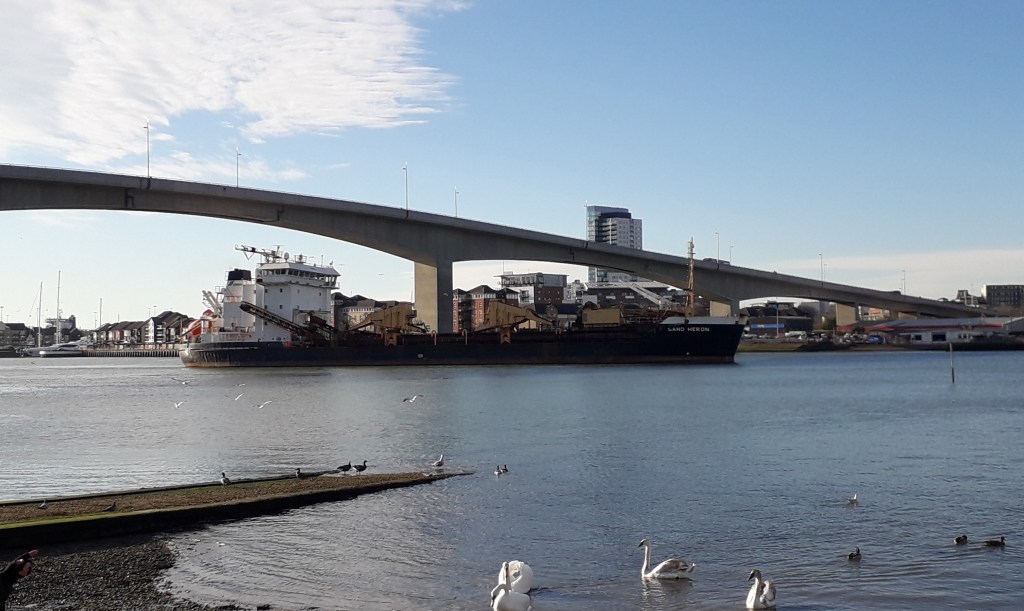
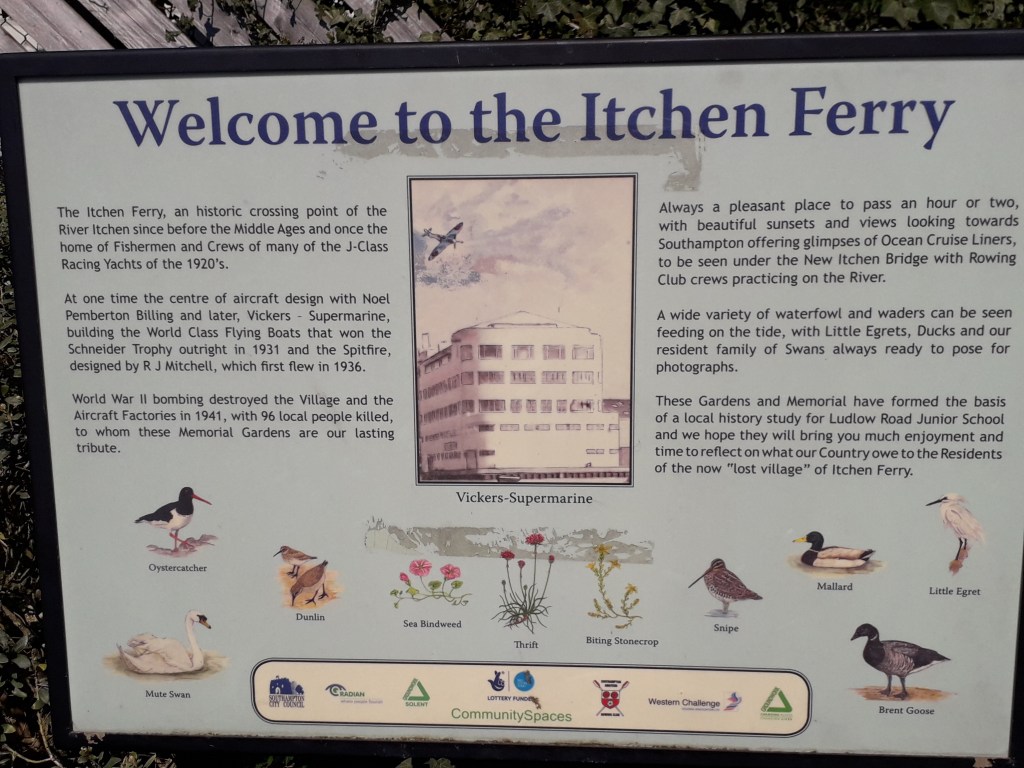
Itchen Ferry was a village destroyed when the Supermarine factory was bombed during WWII, and there is now a memorial garden at the river’s edge (read more about the area here). It’s a small shore with a tiny sandy beach, and a surprisingly wide range of wildlife. That’s why I was here: it was the last day of the Waves in Weston alphabet challenge, and I’d come up with the idea of looking for an example of zooplankton. I’d checked the tides and gingerly walked towards the water, ignoring the fishermen seated on the slipway, and the ducks on the water. A little bit of careful looking and bingo! Limpets! Actually they were barnacles, I realised when I got home – but still zooplantkon. So this is how I learned the difference between the two – from taking part in a fun Facebook challenge to find something beginning with each letter of the alphabet while out and about getting daily exercise. There was no rule about finding only natural things, that was a challenge I set myself – and I managed it most days.
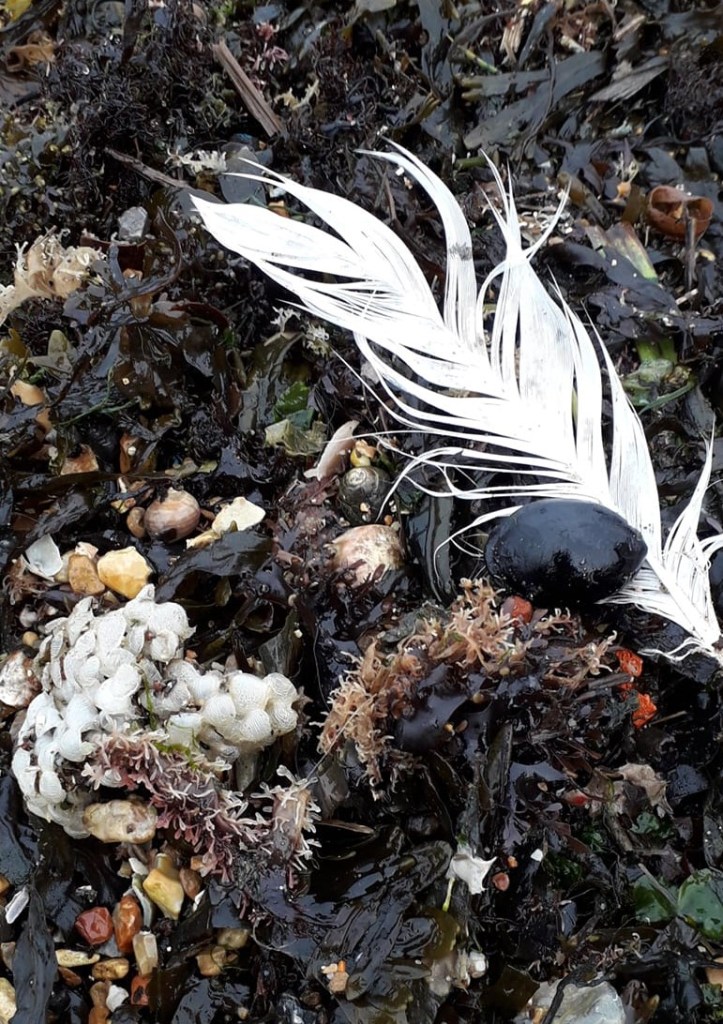
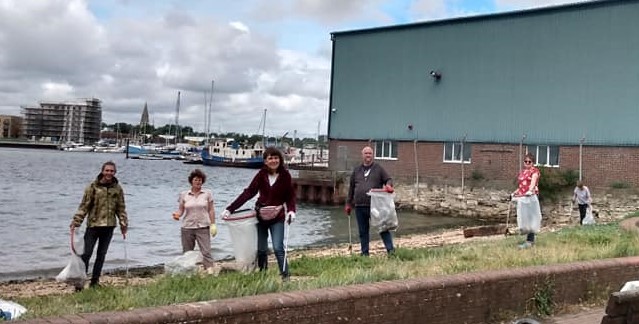
After I’d got my picture, I decided to explore the strandline, picking up some litter as I went along. When you take the time to look down, it’s remarkable what you can find, and how colourful it can be. As well as shells, shingle and several types of seaweed, I found seaglass and pieces of china, two of my favourite finds. The seaglass was not quite ‘done’, having some sharpish edges, so I left it there for the tides to do their work. There were also a few feathers, a bundle of whelk egg cases – known as a sea wash ball – and a mysterious ‘sea bean’. Well, I’d like it to be a sea bean from a faraway place, but I think it might actually be a blackened, hollow conker!

I felt inspired to write this post because of the impact this mini expedition had on me. I’ve walked past this spot many times, and only occasionally lingered. Often my gaze is upwards at the clouds or the sunset, or the sea birds flying out to Southampton Water and the Solent at dusk. I’m usually much more at home in woodlands and grasslands, where I can easily spend hours exploring. The water and the shore is much less familiar, and slightly scary. This was the first time I’d really connected with this shore. It was exhilirating and absorbing, and I’ll be returning to discover more.
A wilder garden

Lunchtime today, and I glanced out of the window and spotted a wren hopping around in the front garden. What’s the connection with this photo? Well, ‘my’ wren might be paying me frequent visits because it’s finding food. Not the seeds and fatballs that are popular with the sparrows and starlings, but the insects it prefers – and I hope there are more now, thanks to the mini log piles I added to the garden last spring.

In spring and summer 2020, as I spent more time at home, I started to pay closer attention to the wildlife in my garden. One way I did this was by taking part in the local wildlife trust’s How wild are we? citizen science project, recording my plants and the insects and birds that visited. Around the same time, I joined Team Wilder, and was inspired by what other members were doing to help pollinating insects. Having persuaded my partner not to pull up the ‘weeds’ at our front gate, I made a sign to tell passersby why they were there – to take #ActionForInsects. Only a few days later, a delivery driver noticed it, and we had a chat about wilder gardens.

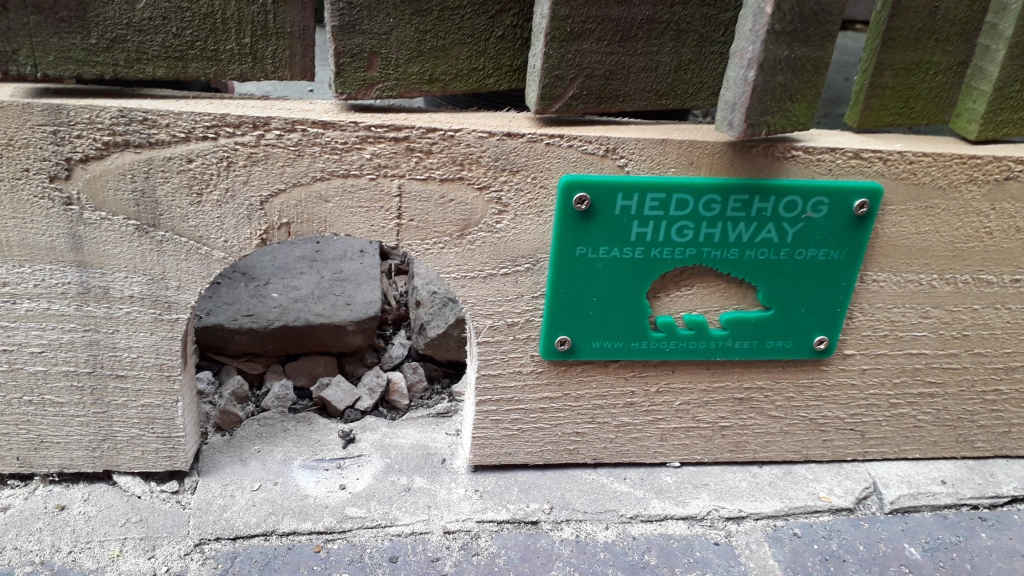
Another wildlife-friendly change I made was to put a hedgehog hole in the fence, together with a Hedgehog Highway sign to raise awareness – it would be great if more people did this, as hedgehogs need to roam quite far to get enough to eat. I provided food and water during the warm, dry summer, and soon the hogs came. The most we counted were six eating together! But my favourite thing was just listening to them in the dark, as they rooted around in the undergrowth.

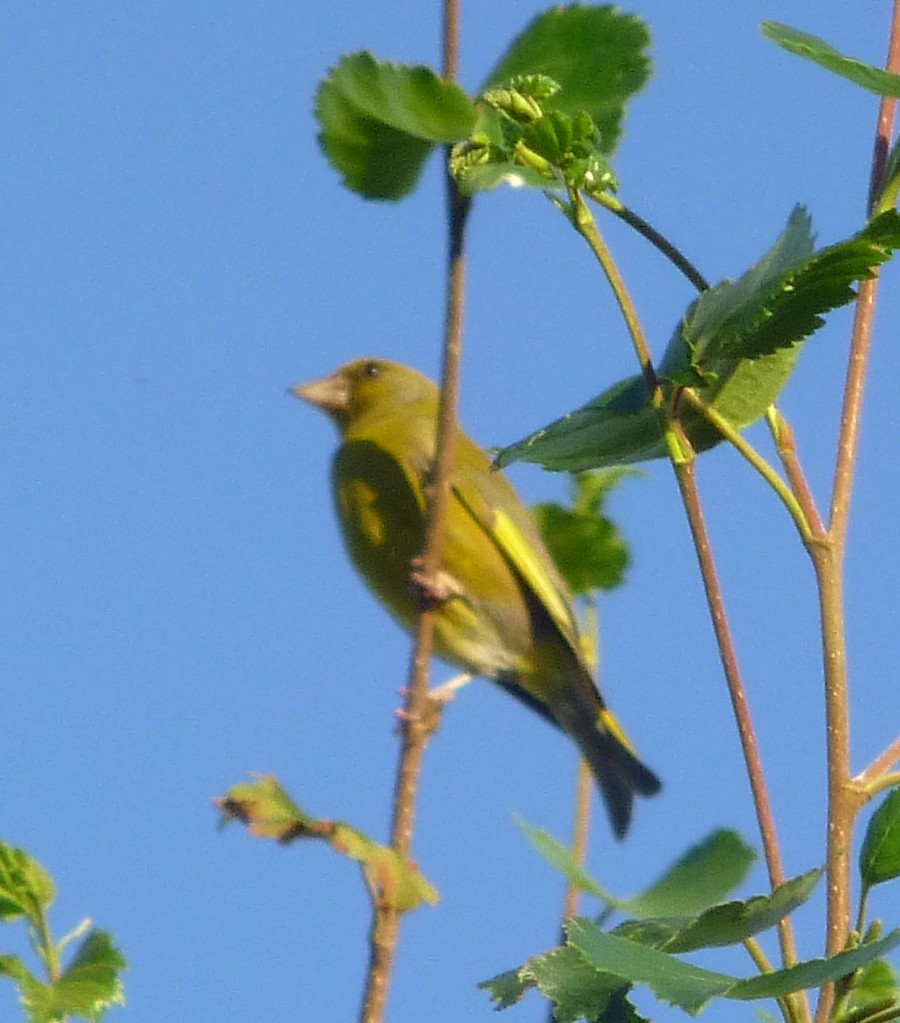
2020 was a special year for wildlife in my small suburban garden. We’re on a busy road, part of a terrace, but we have alleys at the back and side. We also have Peartree Green local nature reserve a few minutes’ walk away. Maybe this is why we had a couple of unexpected visitors – a grey squirrel on the shed roof, and a week before Christmas, a red fox in the front garden at six in the morning. That was a memorable encounter, but possibly my favourite first was the greenfinch, presumably nesting nearby as he visited my sunflower seed feeder daily. I learned his call, and listened out for him as he perched at the top of our silver birch. Sometimes he was joined by a female, and once or twice they came with two juveniles. They were new and exciting, but my regular gang of starlings continue to entertain me every morning and will probably be my ‘star’ birds for years to come!

Pollinating Peartree

I am fortunate to live a three-minute walk away from Peartree Green local nature reserve, with its wildflowers, bees and butterflies. I know though that there has been a huge decline in pollinating insects in recent years. As I walked around my local area during the first lockdown of 2020, I noticed other places that had wildflowers too. Some are green spaces, such as Freemantle Common, and others are not, like the alleys behind my house.

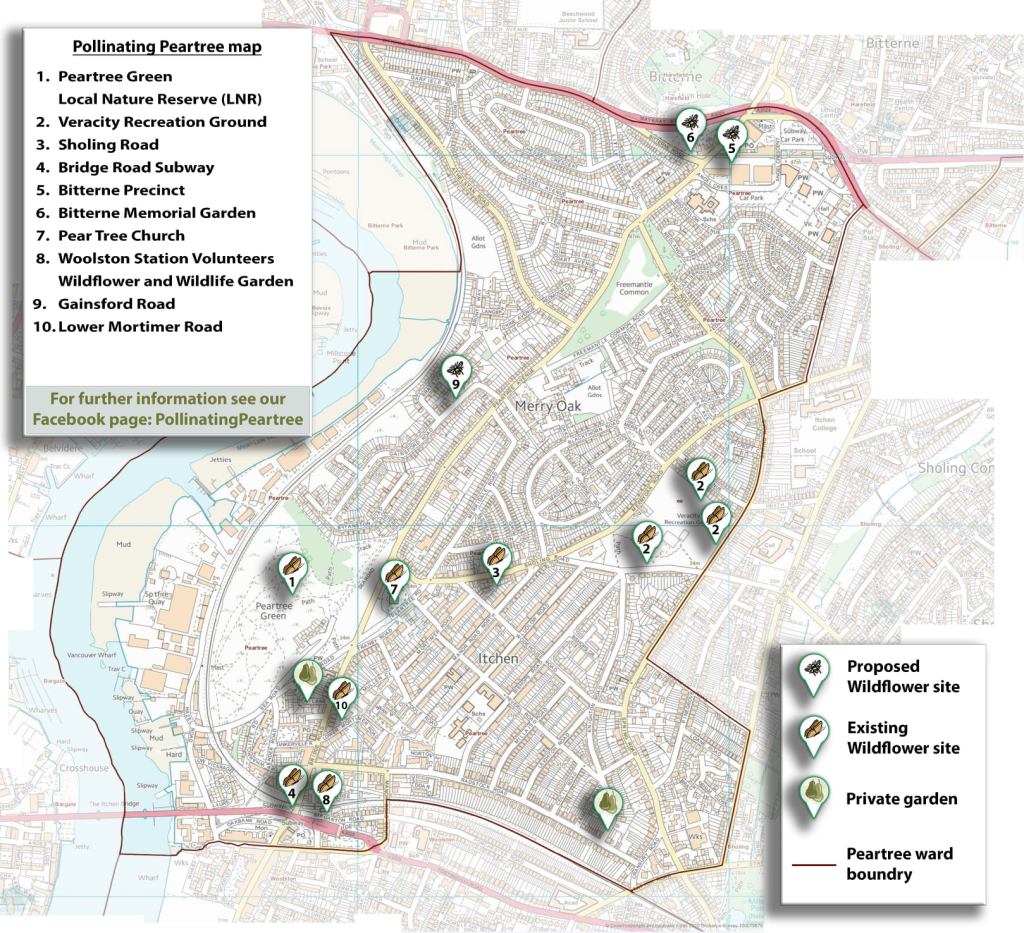
I’d been reading about Plantlife’s road verges campaign and seeing posts on the Team Wilder Facebook page about things community groups were doing. Campaigns and projects such as Buglife’s B-lines and X-Polli:nation’s Polli Promise also inspired me. The idea of Pollinating Peartree started to take shape through discussions with friends in the area. Pollinating Peartree is a community project to map the existing wildflower areas in the Peartree ward and to create new ones. These areas might be natural, such as on Peartree Green LNR, or sown, as is the case on Veracity Recreation Ground. They can be public spaces or private ones – gardens, car park edges, planters in front of businesses in the shopping area. We want people to not only tell us what is already there but also to let us know about any areas that we could transform into pollinator re-fuelling stops by growing wildflowers.

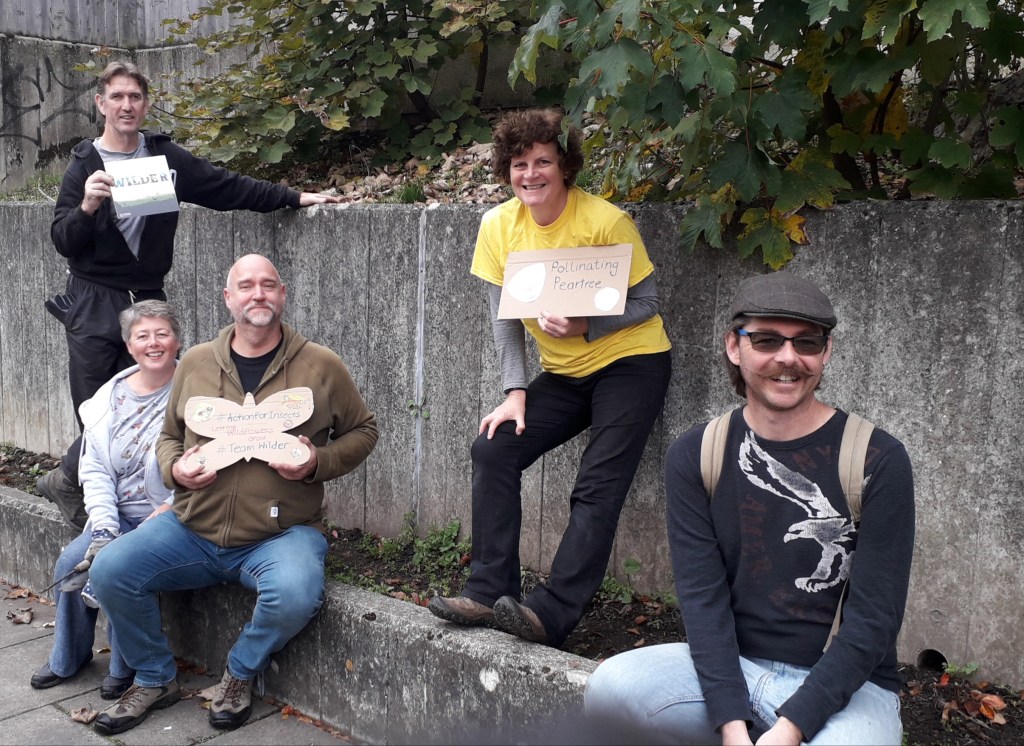
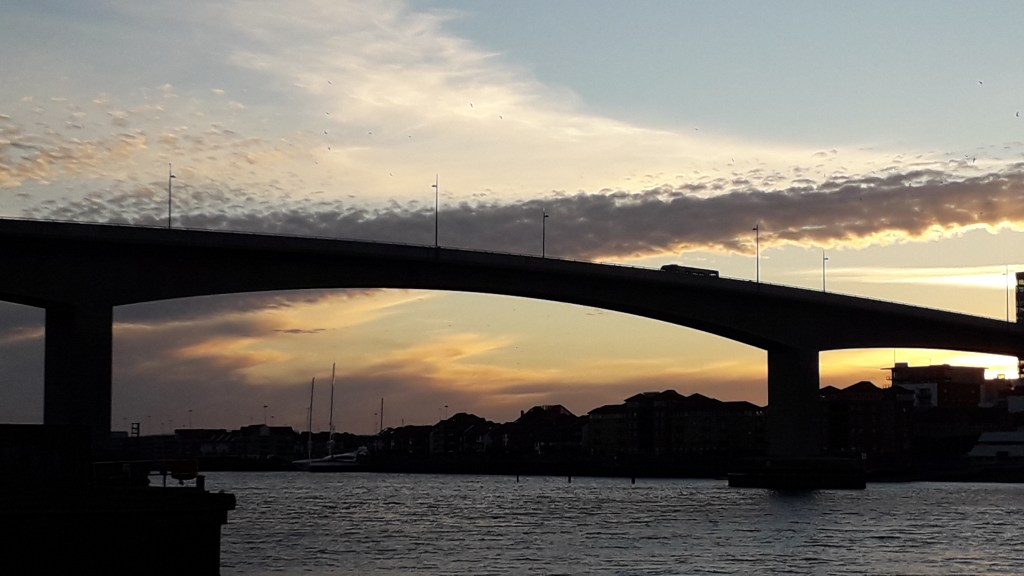
In October 2020, six of us sowed seeds in three areas near the Itchen Bridge. There were already a few wildflowers there, such as red dead nettle and groundsel, but we hope that in spring, a wider variety will grow, not only helping pollinators but improving the look of the area – as you can see from the photo, it is dominated by concrete.

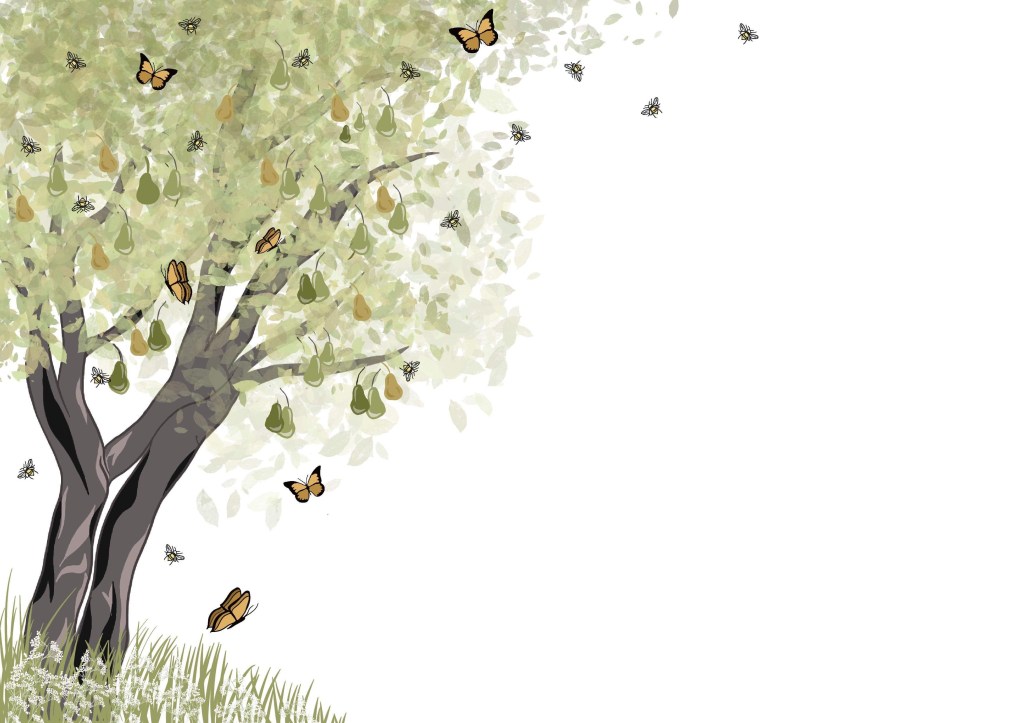
In January 2021, we launched our Facebook page Pollinating Peartree, using the eye-catching artwork (above) created for us by Jessica of Florala.

Our map, created by Mark, already shows nine existing sites, along with three that we hope to sow in spring. One of our group, Eamonn, has secured funding from Southampton City Council’s Community Chest. Our plan is also to mark the sites with small signs featuring Florala‘s design.

We hope that people will join us in sowing seeds when times allow, and that everyone will take pleasure from seeing the flowers – and will also have a greater appreciation of the importance of pollinators.