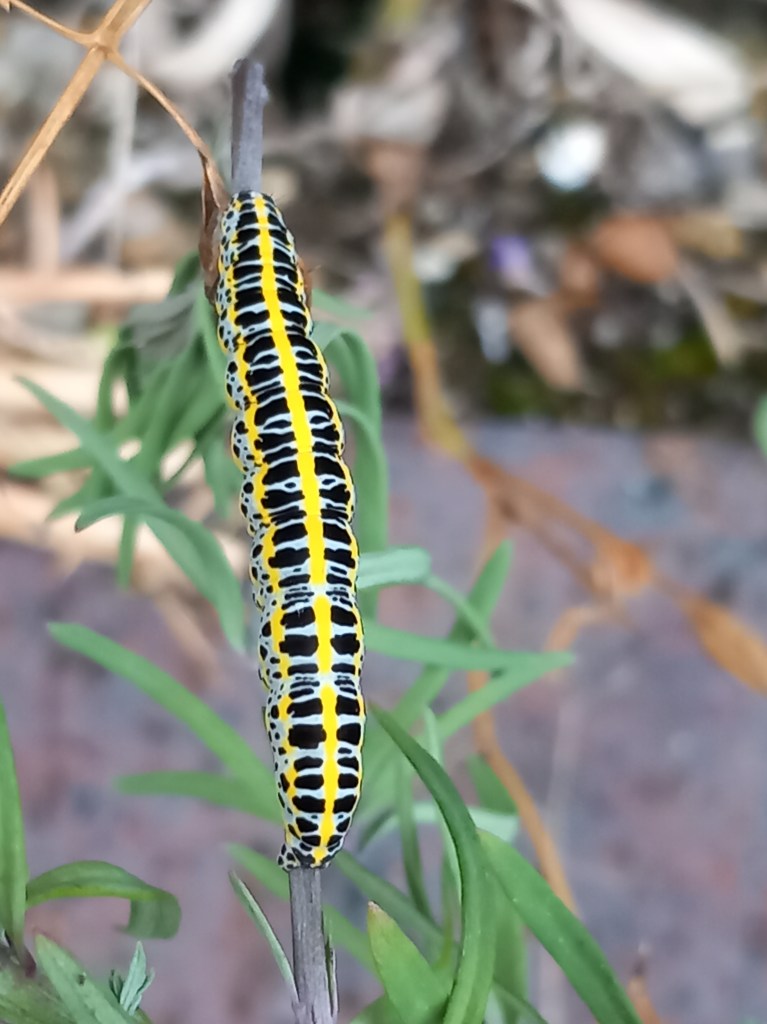
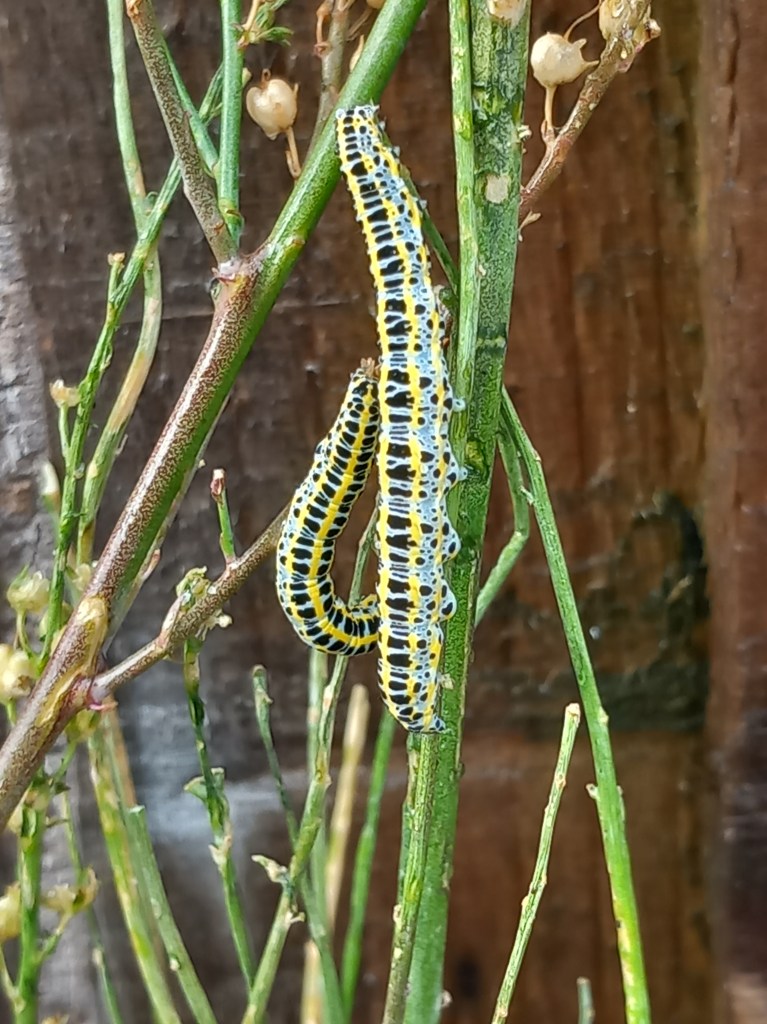
Meet the Toadflax Brocade moth caterpillar, which came into my life on Wednesday, 23 August 2023. They feed on Purple Toadflax, a plant that I first identified on Peartree Green a few years ago, and which is abundant in the alleys close to our garden. This post is about noticing wildlife in unexpected places and about the value of leaving wild edges – even if the flowers are garden escapes. Purple Toadflax was introduced to gardens from Italy and first noted in the wild around the 1830s. It thrives on walls, pavement cracks and rough ground, and is often found near houses. It’s also attractive. Look at the individual flowers in the photo below.
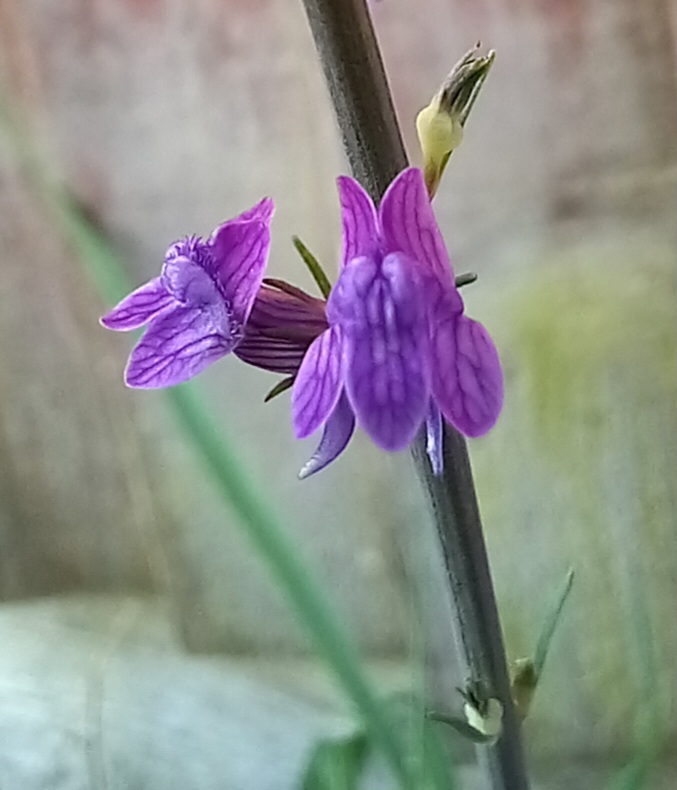
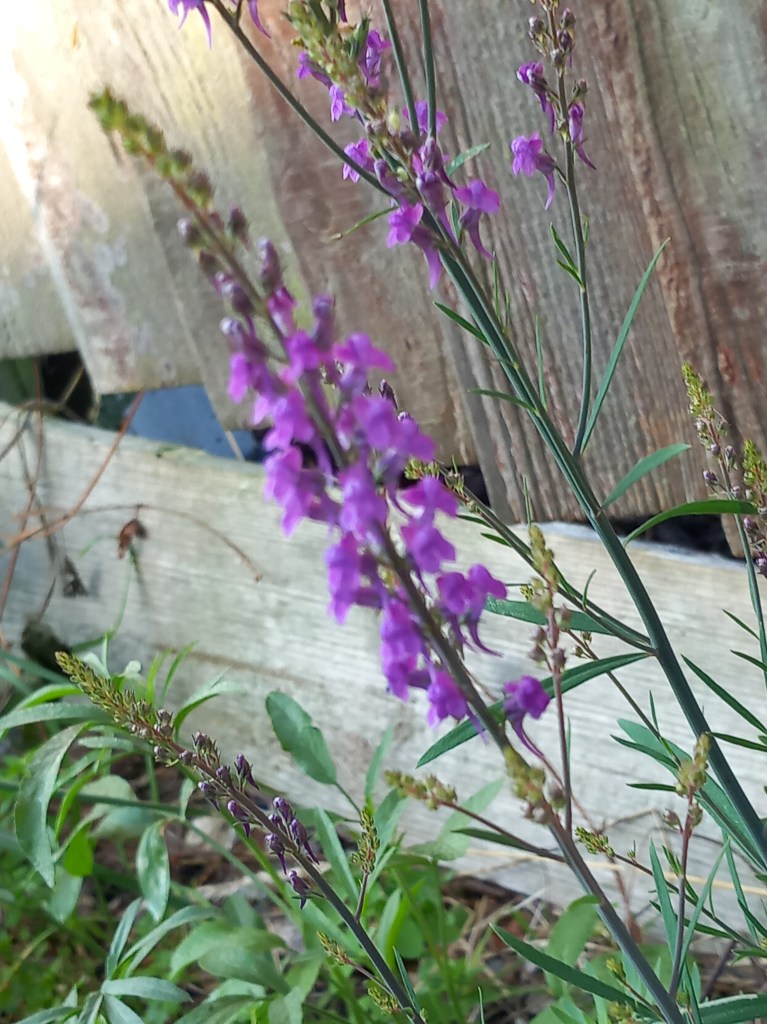
Bees love the flowers, so I’m happy that it self-seeds easily. I also collect seeds to scatter on my Pollinating Peartree wildflower patches. But while I’m familiar with the plant, I’d never seen the caterpillars before. Then I bent down to pick up some sultanas that had overshot the shed roof (bird food!) and noticed one, two, three … actually six caterpillars on one plant.
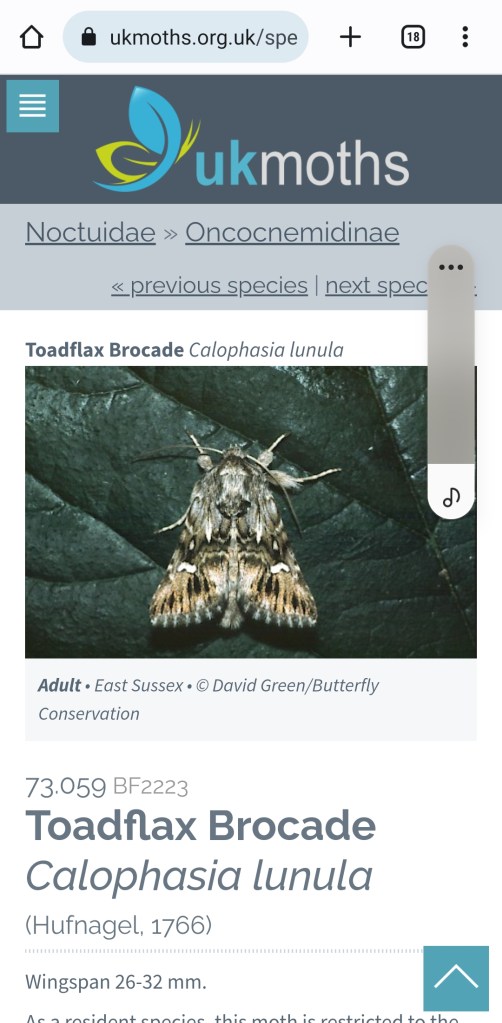
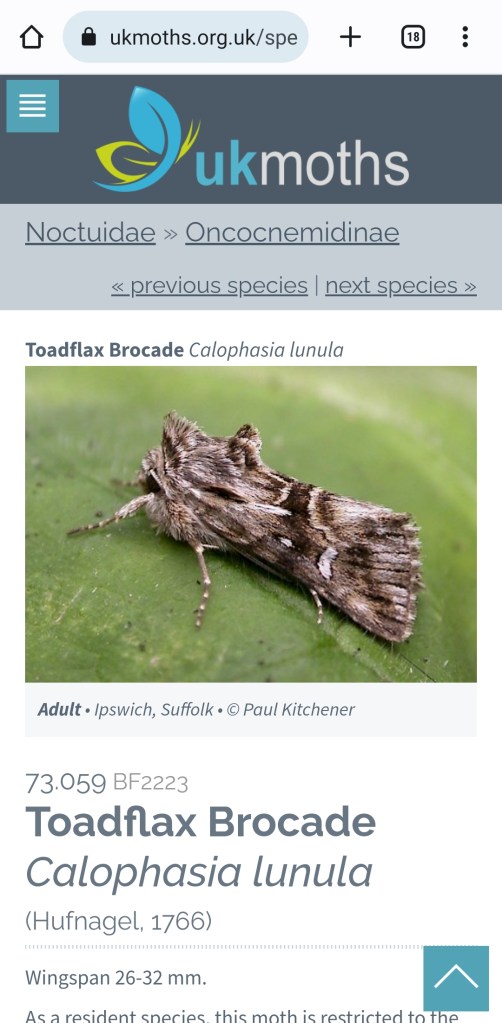
I thought the caterpillars were the larvae of Mullein moths, but it wasn’t an exact match, so I searched for ones that eat Purple Toadflax, and soon found the attractive Toadflax Brocade moth. According to Moths UK, it arrived in England in the 1950s, and is found around south-east and central southern coasts. I’m not far from the coast, but haven’t seen the moth so far, so here are two photos from the Moths UK website.
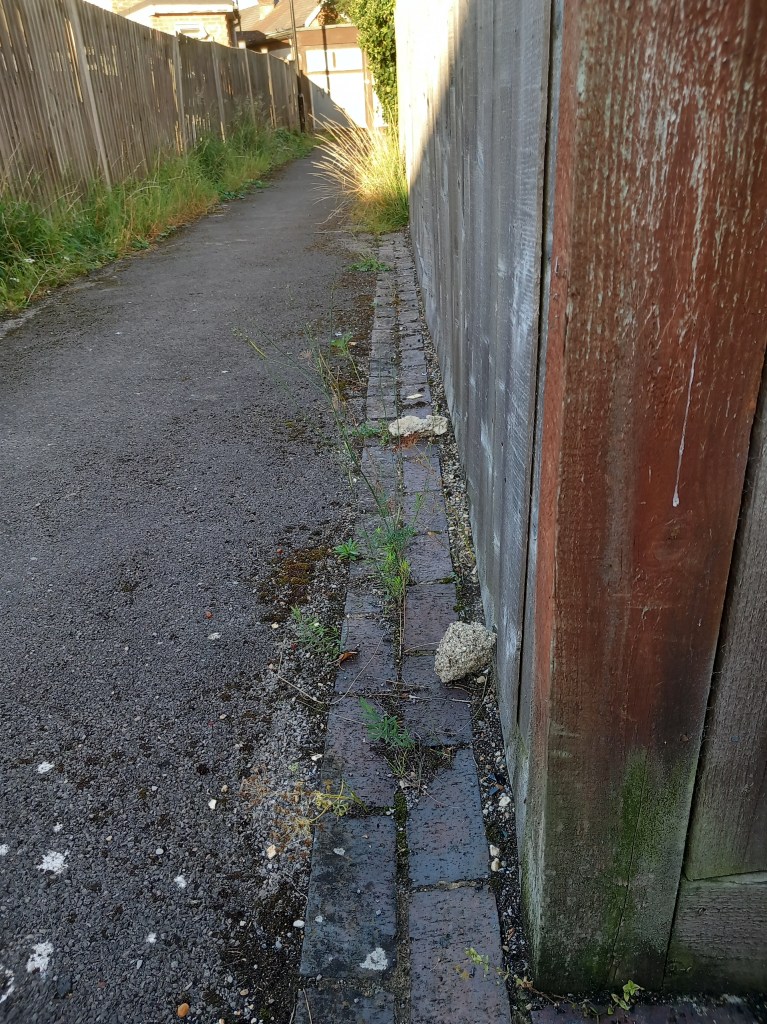
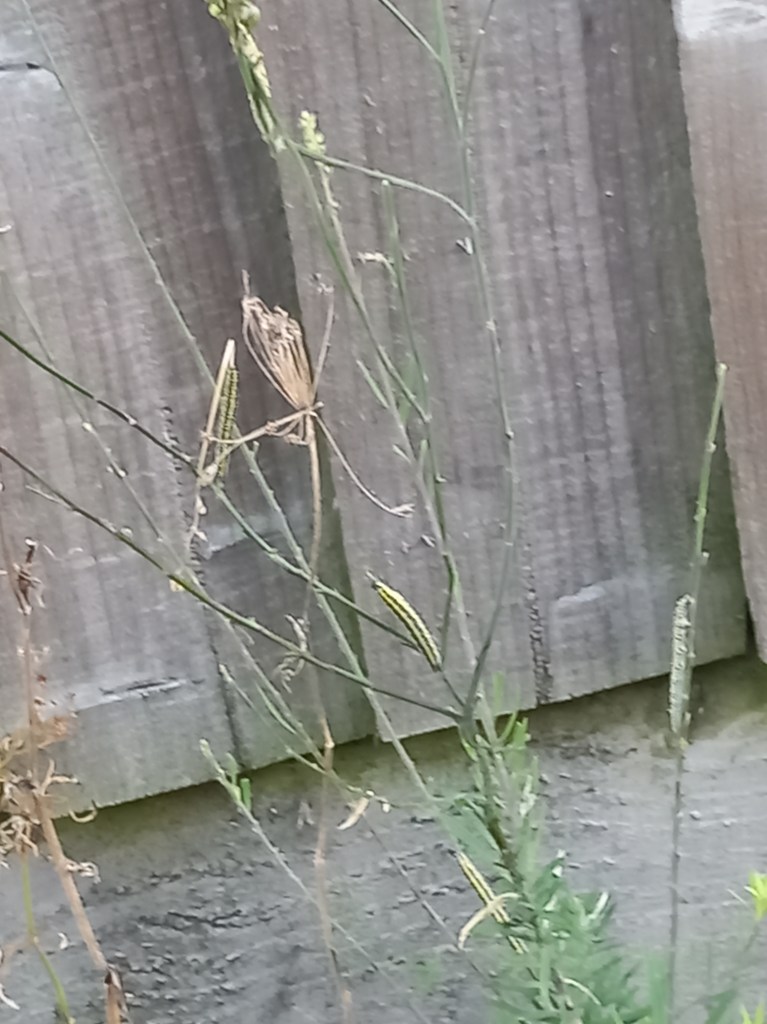
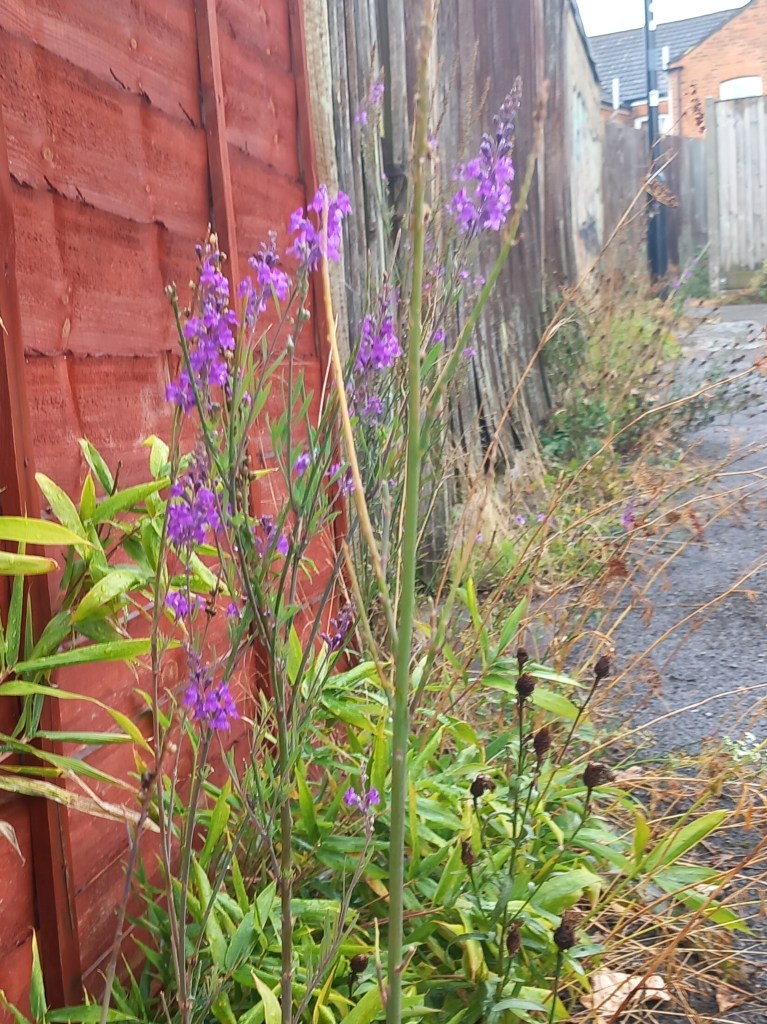
The plant was quite isolated, as the stretch of alley behind our shed is unusually clear. In the photo, you can see that, further along, there’s tall grass next to our neighbour’s fence, and opposite there are also plenty of places for little creatures to live. So it was quite a surprise to find a colony of caterpillars, but also a bit worrying – where would they go to eat once that plant was stripped? And where would they go to overwinter as chrysalises?
I surveyed the other plants nearby, including on the Alley Flowerbed, and found 8 more caterpillars on two other Toadflaxes. Next morning, I checked them again. I was alarmed to see that three of the six I’d first noticed were ‘queued up’ at the top of a stem, nose to tail, with nowhere to go!
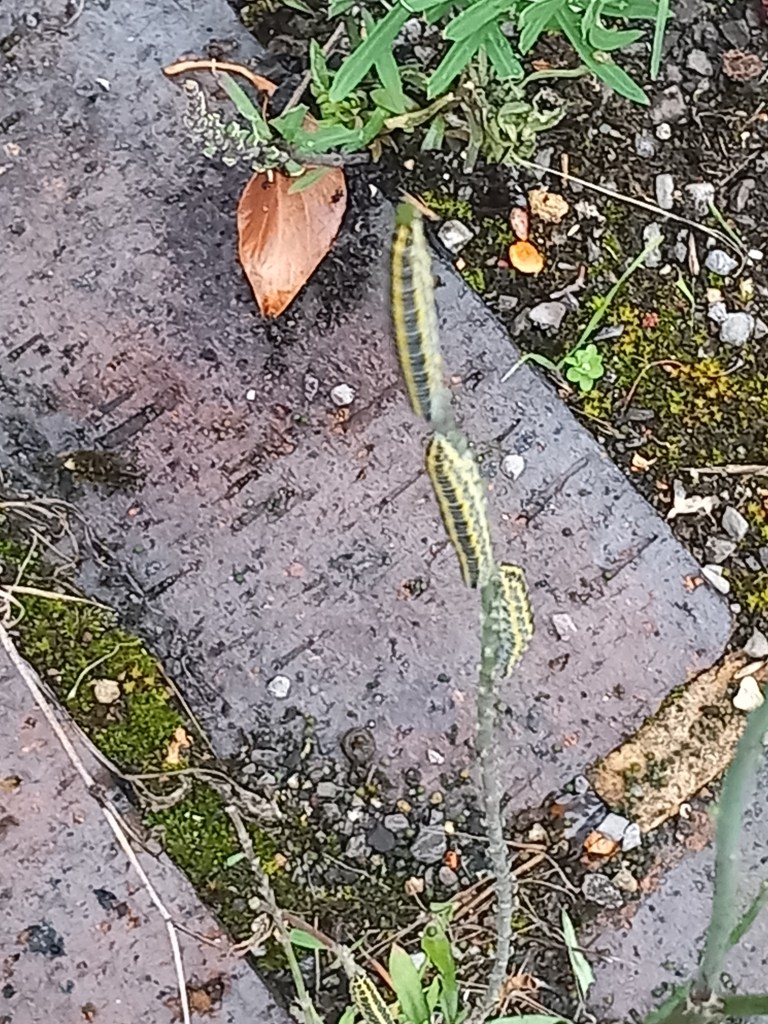
That photo, taken from above, shows how little of the plant is left. It was tempting to stay and watch, to see what would happen next, but, fascinated as I was – I had other things to do. I pulled up a few unoccupied stems that had finished flowering and put them next to the isolated plant. When I had another look, around 10 hours later, I could only see these two on the fresh foliage, and one heading under the fence.
Where were the others? Eaten by birds? Under my shed? Or had they travelled across the alley to the other plants? There were now about 20 caterpillars of various sizes on several plants, but none on the flowerbed itself, nor on the spikes along the east-facing fence.

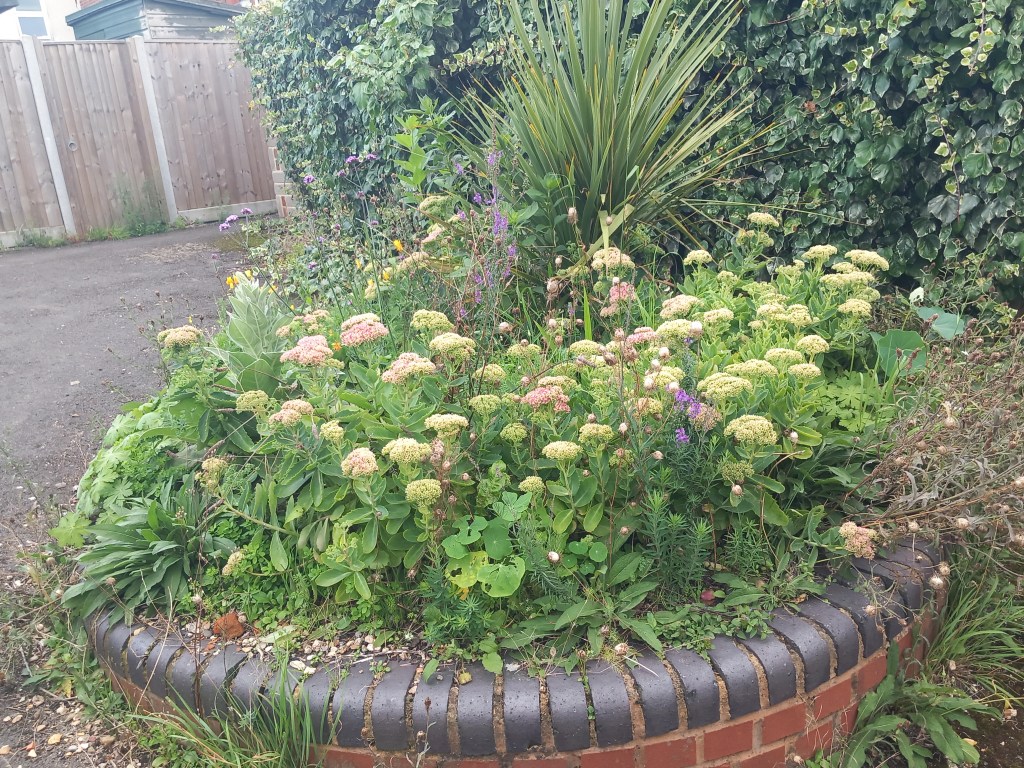
This photo shows a section of the Alley Flowerbed, with Sedum, Great Mullein, Verbena, Welsh Poppies and Marigolds, as well as the Purple Toadflax just right of centre. I have no idea if Toadflax Brocade larvae eat other plants, but I’m keeping a close eye out for them on there!
The fence behind the bed is north facing, with no Toadflaxes. The west-facing fence has several plants, and with some already occupied, I’m expecting to see more caterpillars appearing. I wonder how far north they’ll go though? Perhaps the moths prefer to lay their eggs on spikes oriented to the south or west?
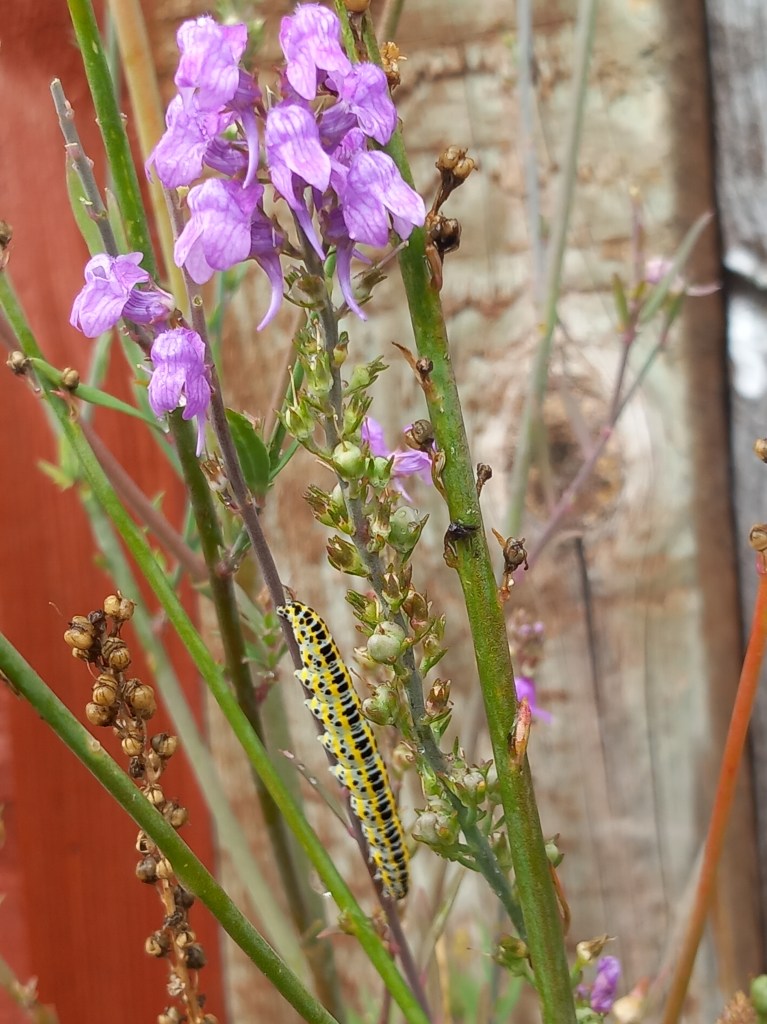
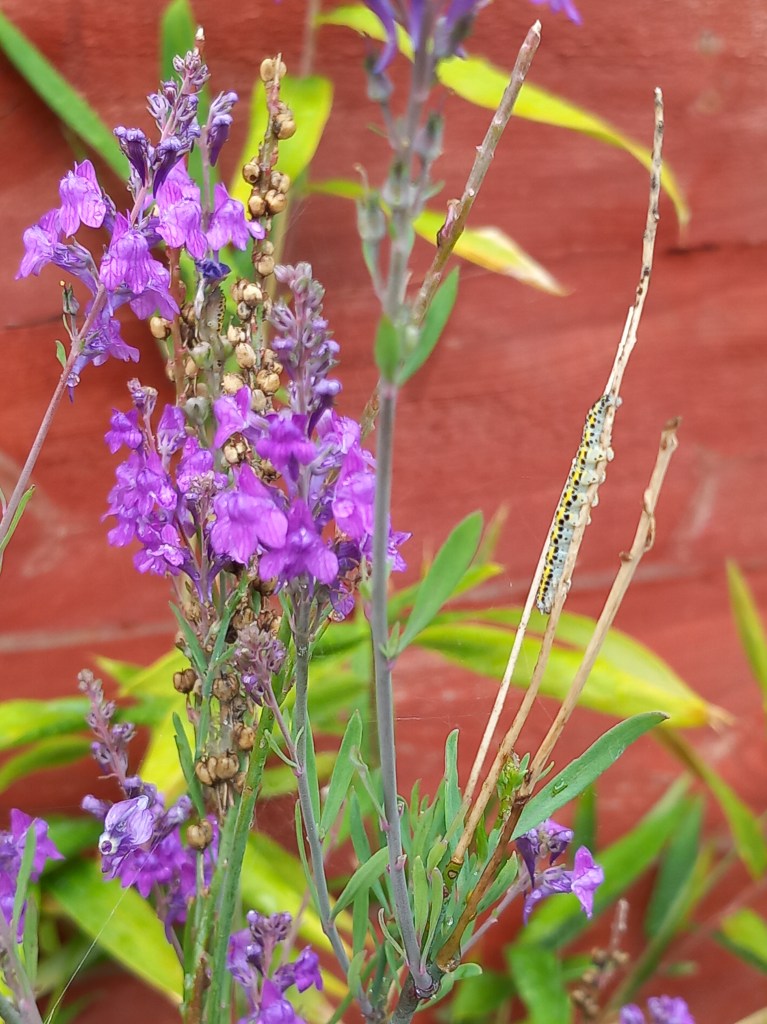
Maybe the reason I’d not seen these caterpillars before is because the eggs hatch and the larvae grow over just a few days, and I hadn’t stopped and looked at the right time before. Now though, I know what’s caused the bare stems I’ve seen.
Day Three, 25 August, and the fun of seeing what would happen next – and wondering what else I might see – prompted me to spend several hours working around the alleys, litter picking and clearing some of the messier and dead vegetation. This was strategic – there is always a risk that someone will come along and scrape away the ‘weeds’, or – worse – spray them. The latter is a risk outside one particular house. So, I wanted to make the area reasonably looked after, and perhaps subconsciously, I wanted to be there in case anyone came along. That last point had only just occurred to me as I write, but the fact that the owner of the garden behind the east facing fence has ripped out a huge bank of ivy on the alley side this week probably put me on alert. You can see where the ivy was in the second photo below.

Later, I spotted two caterpillars climbing the fence. I watched as one moved sideways, onto another slat. It reached over with its head end, gripped with two pairs of feet, and swung the rest of its body over. Quite an impressive grip.
Day Four. No caterpillars on the fence, but still some on the plant. For a while, I watched one nibbling a leaf. You can see the head at the bottom of the picture.
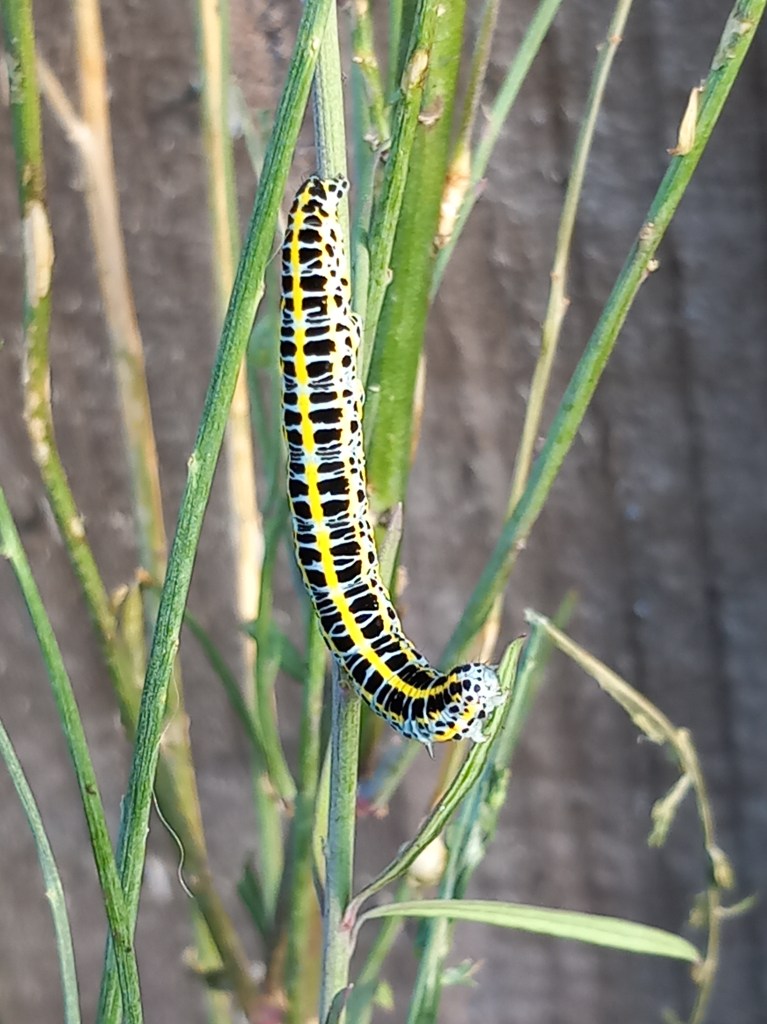
Then I noticed one on an east-facing plant. As I looked for a good angle to take a photo, I realised there were actually four of them. The colours and pattern that look so striking against a fence actually act as great camouflage against the food plant.

This camouflage is probably even more effective on the Common Toadflax, which is yellow. But now I have my eye in, so I easily spotted a couple on some plants on Victoria Road.
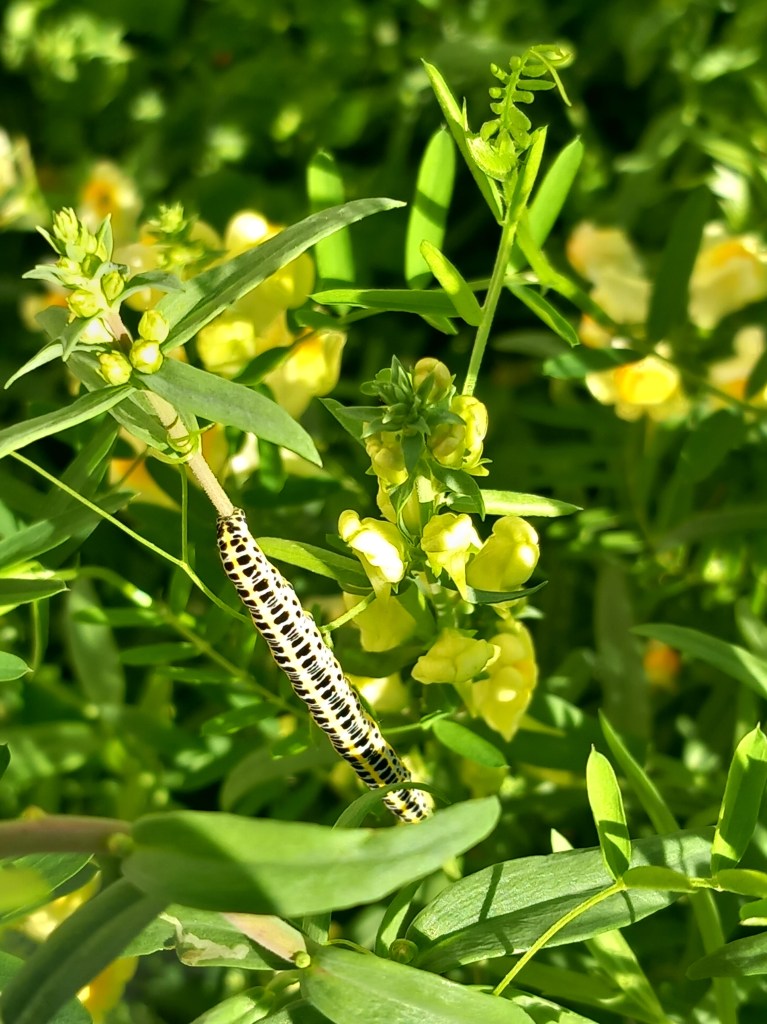
I’m aware that I may be a little unusual in paying so much attention to this caterpillar, but it goes to show what might be living right under your nose. The beauty of it is that no special equipment is needed, and it’s all happening ten paces from my door. Naturally, I’ll be continuing to observe these creatures, hoping to see a chrysalis and a moth one day. And I’ll be see looking and listening more carefully to see what else might be there. Watch this space!
 Dandelion Nature