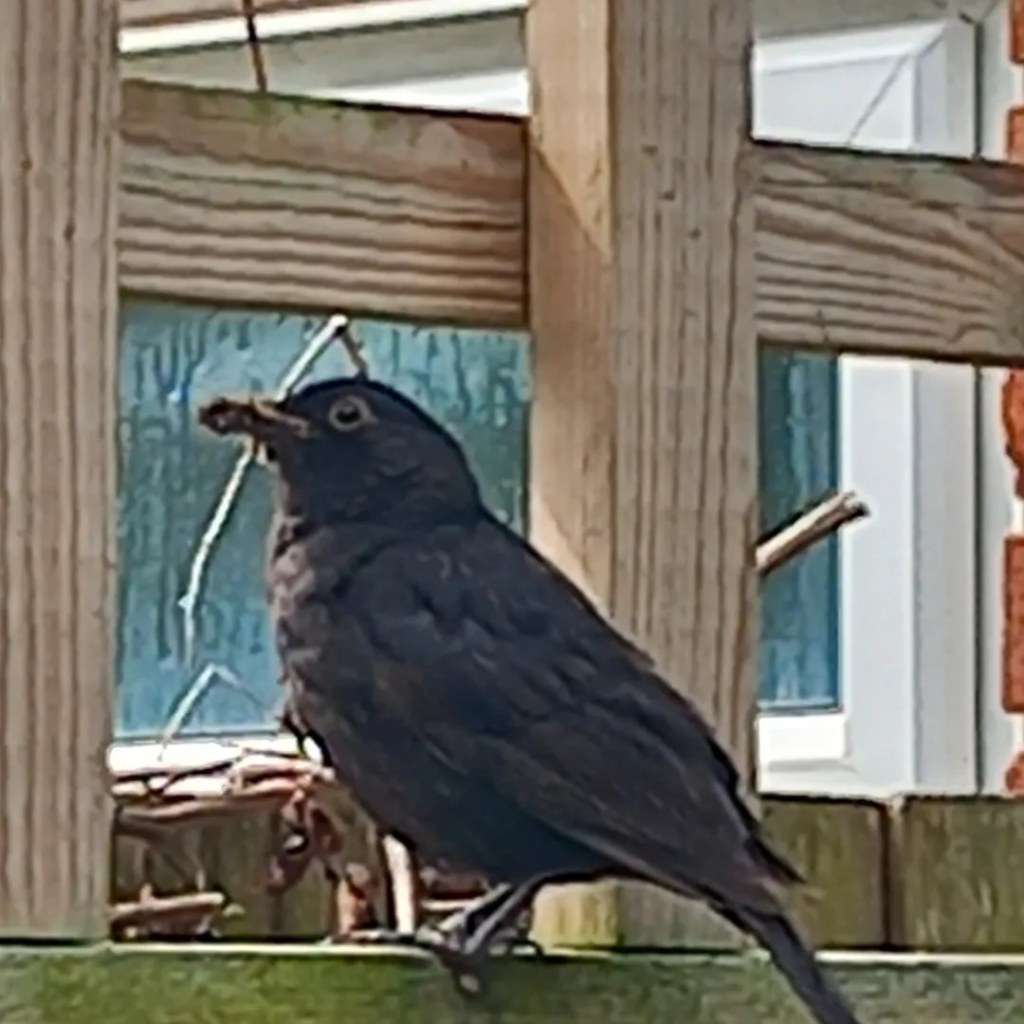
OK, that isn’t a swift, it’s a blackbird. But I think the title works better with ‘swift’, for the alliteration and the alternative meaning. This isn’t a blog post about eating a sandwich quickly, it’s me trying to come up with a title that’s more original than ‘A day in the life of my garden’. Blackbirds, like swifts, are often around at the start and end of the day, so they ‘sandwich’ the rest of the activity.
Swifts are only here from May to August, and I don’t always see or hear them. But if it’s fine and warm I’m lucky enough to have regular screaming parties, when they race low over the rooftops. On the day I wrote this, there were up to ten at a time, and they were still around at lunchtime. I think that’s when I decided to forget all the chores and tasks I’d set myself, and just hang out with the wildlife for a few hours. I thought I might read or snooze – but then I noticed the spiders.
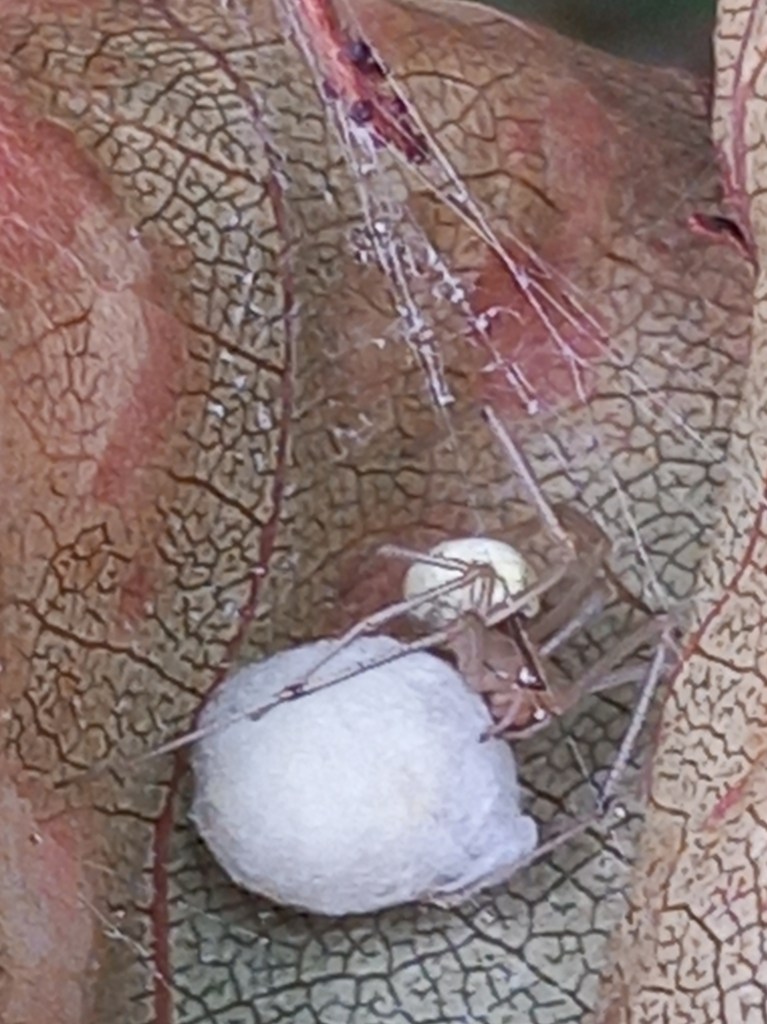
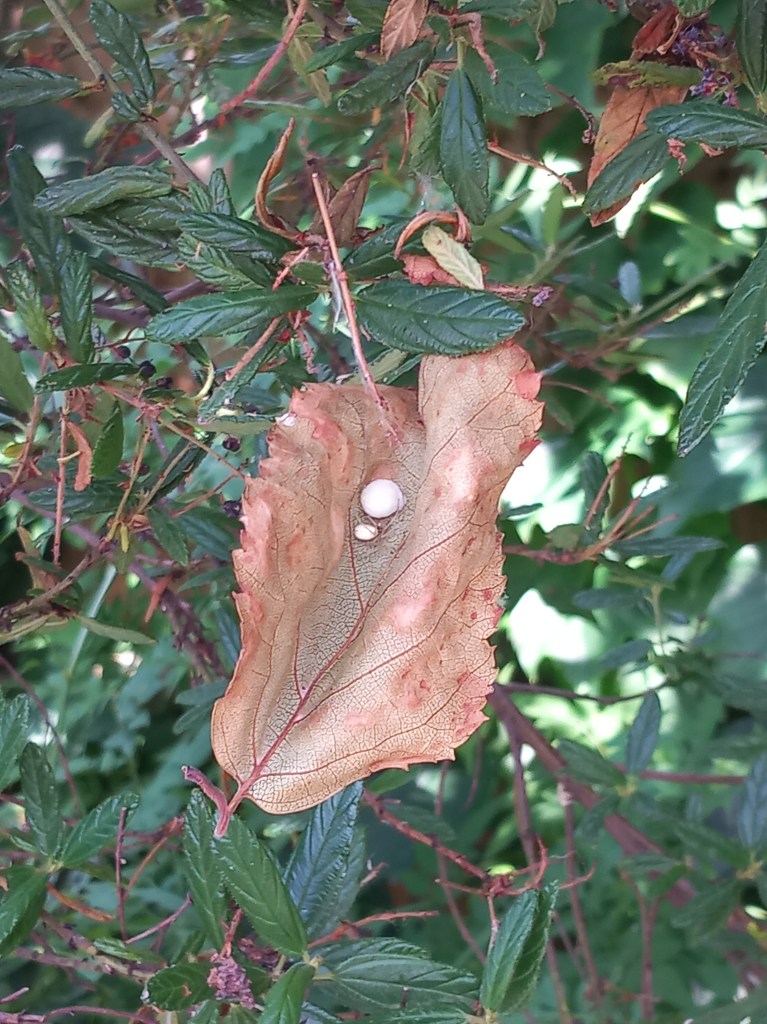
When I spotted a raspberry leaf folded over, I thought the caterpillars that decimated the plants last year were back, but it turned out to be a spider with a nest of eggs. On the other side of the garden, there was another one, this time in a dead leaf that was hanging in the lilac shrub. I got out my spider ID chart and I think it’s a comb-footed spider. It doesn’t really matter what we call it though, as I was just interested in looking at her and watching her methodically bring the edges of the leaf together to protect the eggs.
Meanwhile, the swifts were coming and going, but impossible for me to photograph. The day before, I’d done the Big Butterfly Count almost by accident. Eating lunch in the garden, I counted five different types in 15 minutes: comma, red admiral, small white, holly blue and gatekeeper, so later I logged the. There were lots of bees and hoverflies too, and I’d been thinking about how we’d provided more for pollinators this year. Some plants, such as verbena, thyme and marjoram, were deliberately added to the lavender and perennial wallflower we already had, but growing runner beans is an added bonus as the bright red flowers are popular with bees too. I also let the purple toadflax in from the alley.
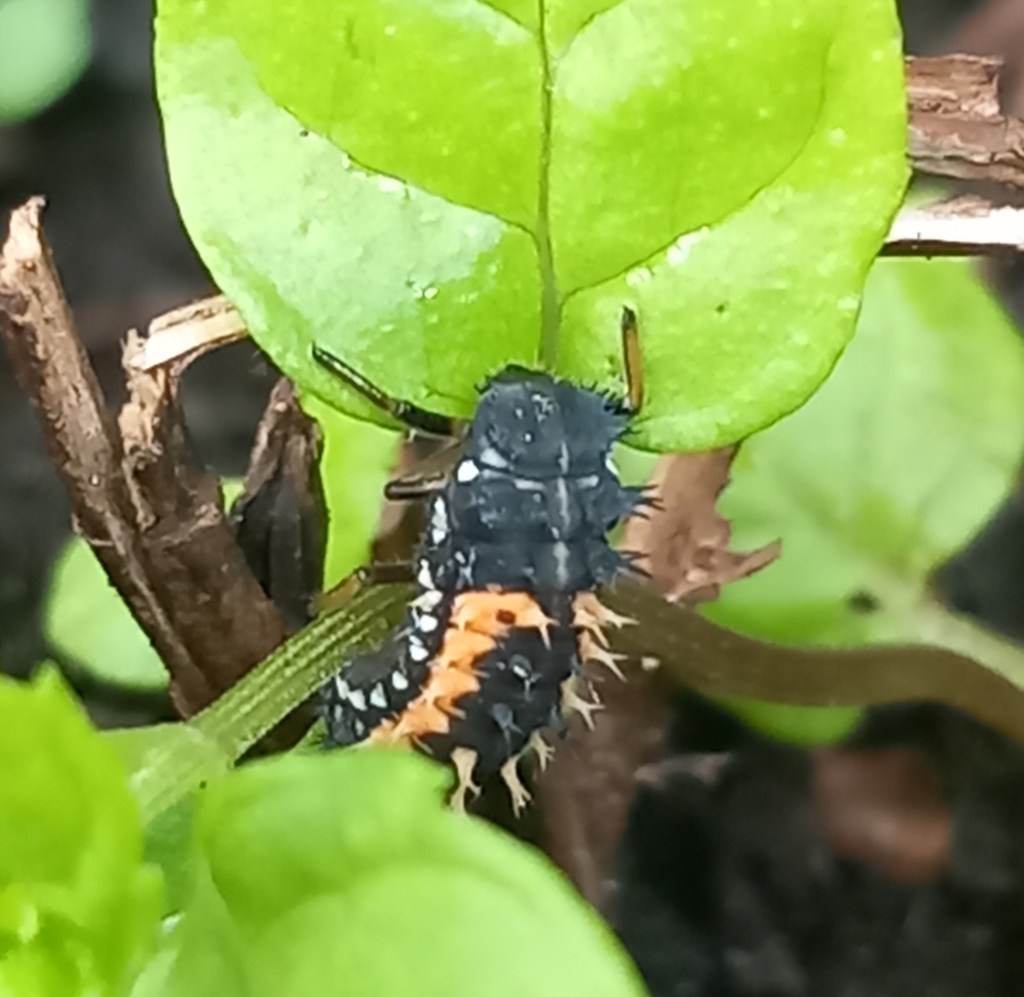
The next garden visitor to pop up was this ladybird larva. I know this is a harlequin because of how spiky it is – an indicator of its fearsomeness, perhaps. We’re not supposed to like them because they outcompete our native ladybirds, but I think the larvae look pretty striking. Reassuringly, I later found a 7-spot adult on the beans, then a 2-spot in the silver birch, and I’ve found a couple of 16-spots lately, so the balance seems ok in my garden.
Next up, something less common. Surprising, in a way, given we don’t have any grass, but I’d already seen several in the alley edges near the flowerbed. Still, it took me a moment to realise what I was looking at – a grasshopper! Then a bit later, on the other side of the garden, there was a cricket. Look closely at the cricket (the green one, facing the opposite way to the grasshopper) and you can just see the long antenna extending beyond the leaf.
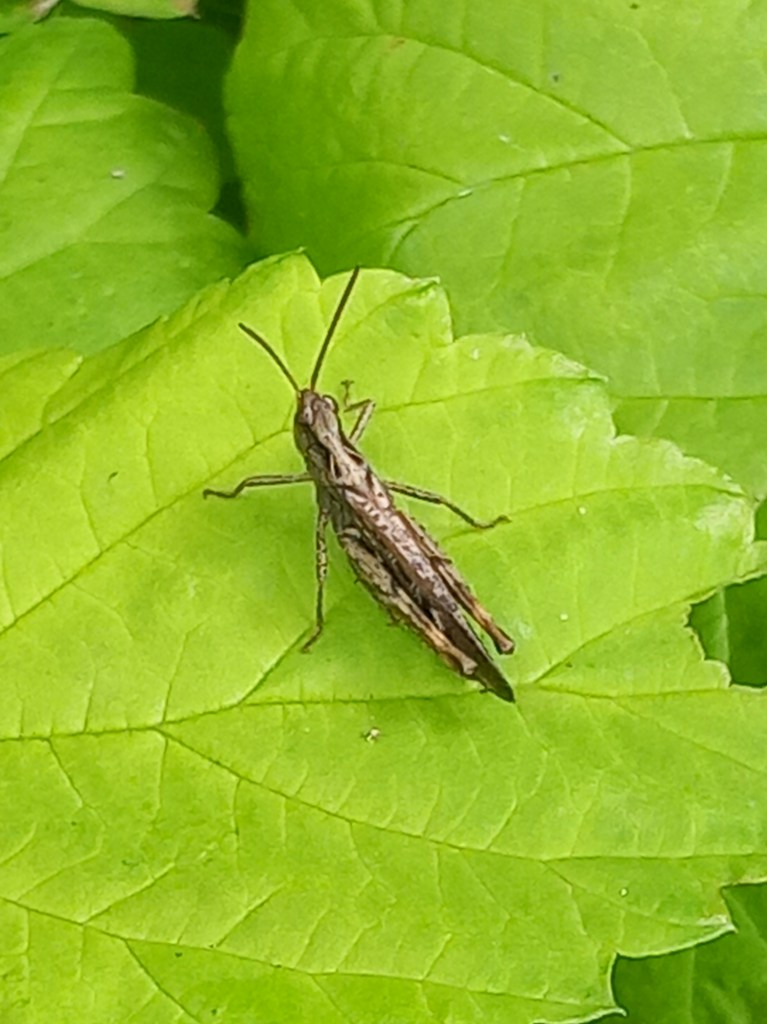

The grasshopper hopped off as soon as I photographed it, but the cricket was still there, in exactly the same position, three hours later. What was it doing? The next morning it had moved slightly, and after about 24 hours, I couldn’t find it any more. Talking of intriguing behaviour, that photo of the blackbird shows it in a typical pose, on its way to my neighbour’s garden with food for its chicks. Unusually though, he stayed there for a minute or two, then began quietly singing a short song. He was close enough that I could see his throat moving, but otherwise he was like a ventriloquist, with his beak shut. He kept an eye on me and kept singing while I got a bit closer, then moved to a different part of the garden. Soon, the female flew over from the direction of the nest, and landed on the opposite trellis. The male then flew over to her, there were some loud calls, and they both seemed to fall into the shrubs. All was quiet for what seemed like ages, then I heard some rustling. I was a bit concerned, so I crawled around, trying to peer under the shrubs. The female popped her head out, then retreated. A few more minutes and the male flew out and perched on the apple tree, beautifully posed with some roses behind him. He looked rather ruffled, but I guess he was trying to get rid of parasites.
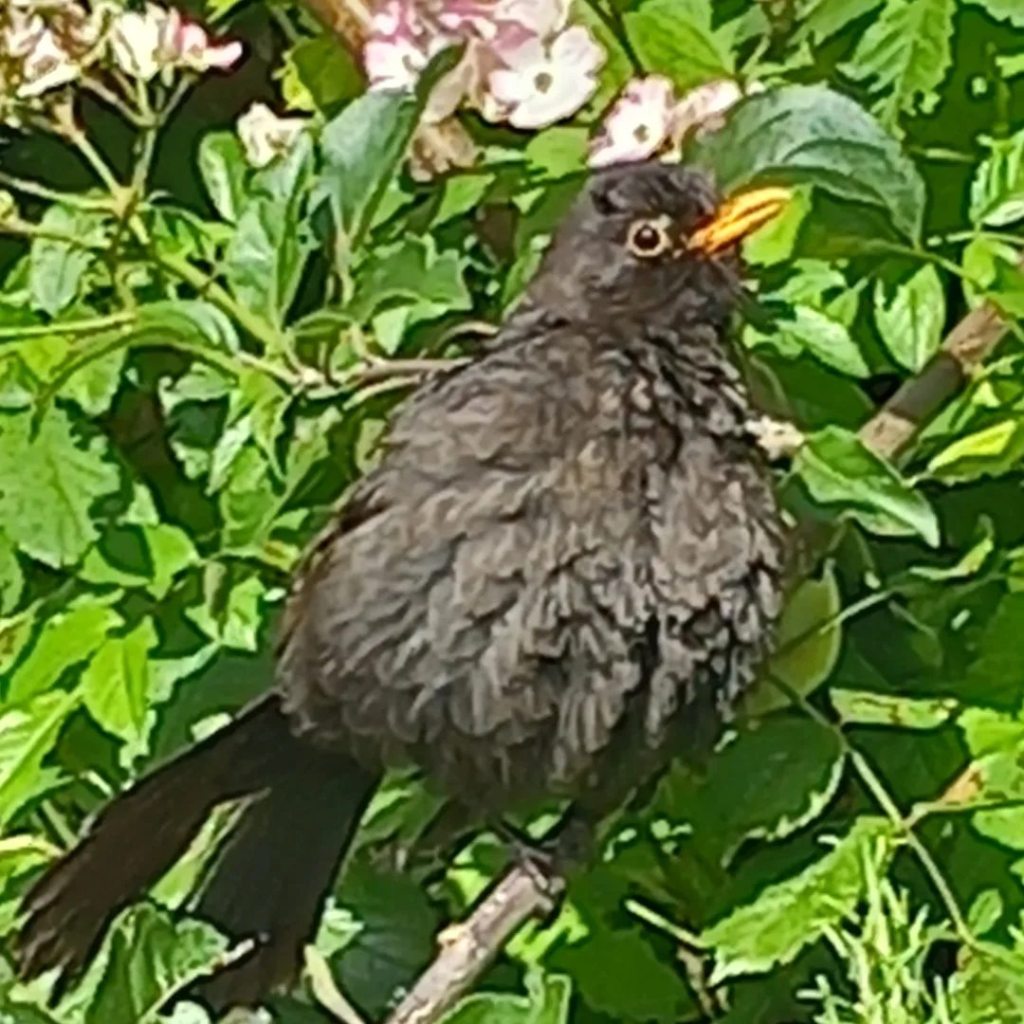
After a bit of preening, he spotted something, and flew over to where I was sitting to grab a few flying ants that were crawling around near my feet. Then he was off. I didn’t see the female come out, so maybe she flew off while I was distracted watching him preen. It was all fascinating, and I’m glad I’d taken the time just to be there and observe.
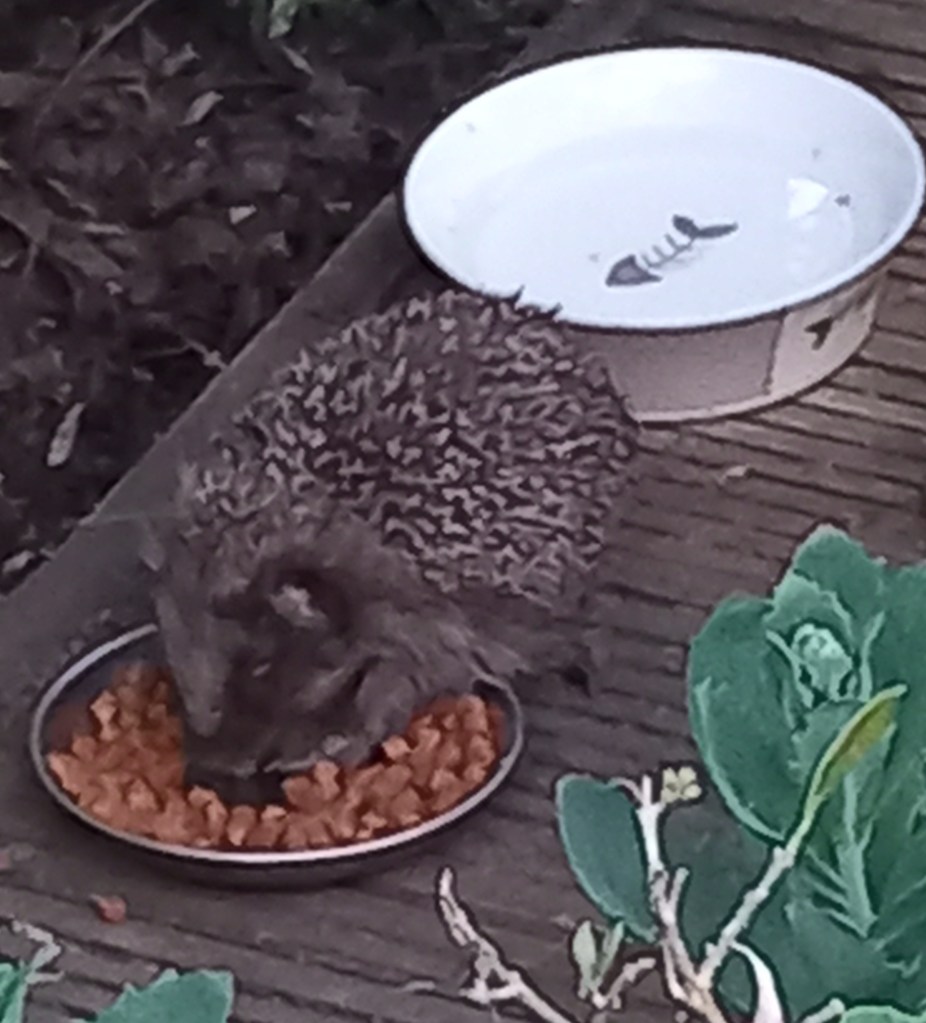
After the blackbird, it was time to go in, but I put my camera out that night to see how many hedgehogs were visiting. At dusk there were still swifts overhead, and the blackbird singing his full song from a chimney pot nearby. Two hedgehogs came, and there was also a mouse, caught briefly on video three times – each time running off just after the camera triggered, into that mysterious shrubby underworld of slugs and snails, woodlice and worms, the odd grasshopper, and sometimes blackbirds doing who knows what?
 Dandelion Nature